Home » How to Recycle and Reuse Aluminum Foil: Can You Recycle Aluminum Foil?
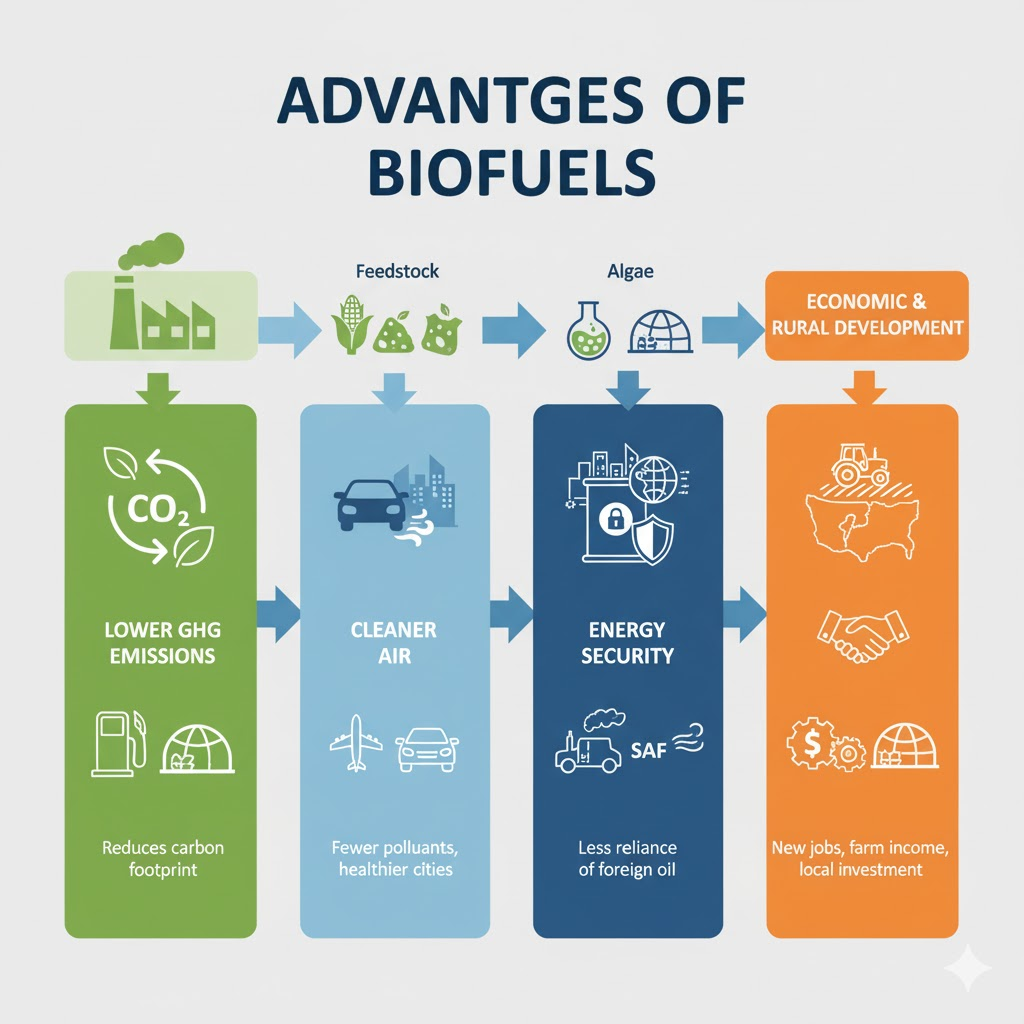
4 Advantages of Biofuels
Written by Admin | June 22, 2025
What Are Biofuels?
Biofuels are energy-dense fuels made from recent biological material—plants, agricultural residues, organic wastes, and even algae. Unlike fossil fuels, which unlocked carbon stored for millions of years, biofuels draw on carbon that’s cycling through today’s biosphere. Common road and aviation biofuels can be used neat or blended into conventional fuels, often with minimal engine changes, which is why you already see them in gas stations and at airports around the world.
Common Types (Ethanol, Biodiesel/Renewable Diesel, SAF, Biogas)
Ethanol (gasoline substitute/blendstock): Fermented from sugars/starches (e.g., corn, sugarcane). Most U.S. gasoline already contains 10% ethanol (E10); higher blends like E15 and E85 are also used.
Biodiesel (FAME) & Renewable Diesel (HVO): Both come from fats/oils (e.g., used cooking oil, tallow). Biodiesel is an oxygenated ester; renewable diesel is a drop-in hydrocarbon chemically similar to petroleum diesel and compatible with existing diesel engines and infrastructure.
SAF (Sustainable Aviation Fuel): Jet-A compatible fuels made from biomass or captured carbon + green hydrogen; used in blends today and mandated to scale in the EU from 2025.
Biogas/RNG: Methane from digesters or landfills that can fuel vehicles or be upgraded for pipelines; while not a liquid road fuel, it’s a major transport fuel in some fleets.
How Biofuels Are Made (At a Glance)
- Feedstock (waste oils, crops, residues, organic waste) →
- Conversion (fermentation, transesterification, hydrotreating, gasification) →
- Blending (E10/E15/E85; B20/HVO; SAF blends) →
- Use (road, marine, aviation).
Key Terms (Quick Definitions)
- LCA/Lifecycle: Emissions from feedstock through combustion (“well-to-wheel”).
- ILUC: Indirect land-use change from expanding feedstock production.
- FAME: Fatty acid methyl esters (biodiesel chemistry).
- HVO/Renewable Diesel: Hydrotreated vegetable oil—drop-in diesel.
- SAF: Sustainable Aviation Fuel blended with Jet-A.
Advantage #1 — Lower Lifecycle Greenhouse Gas Emissions
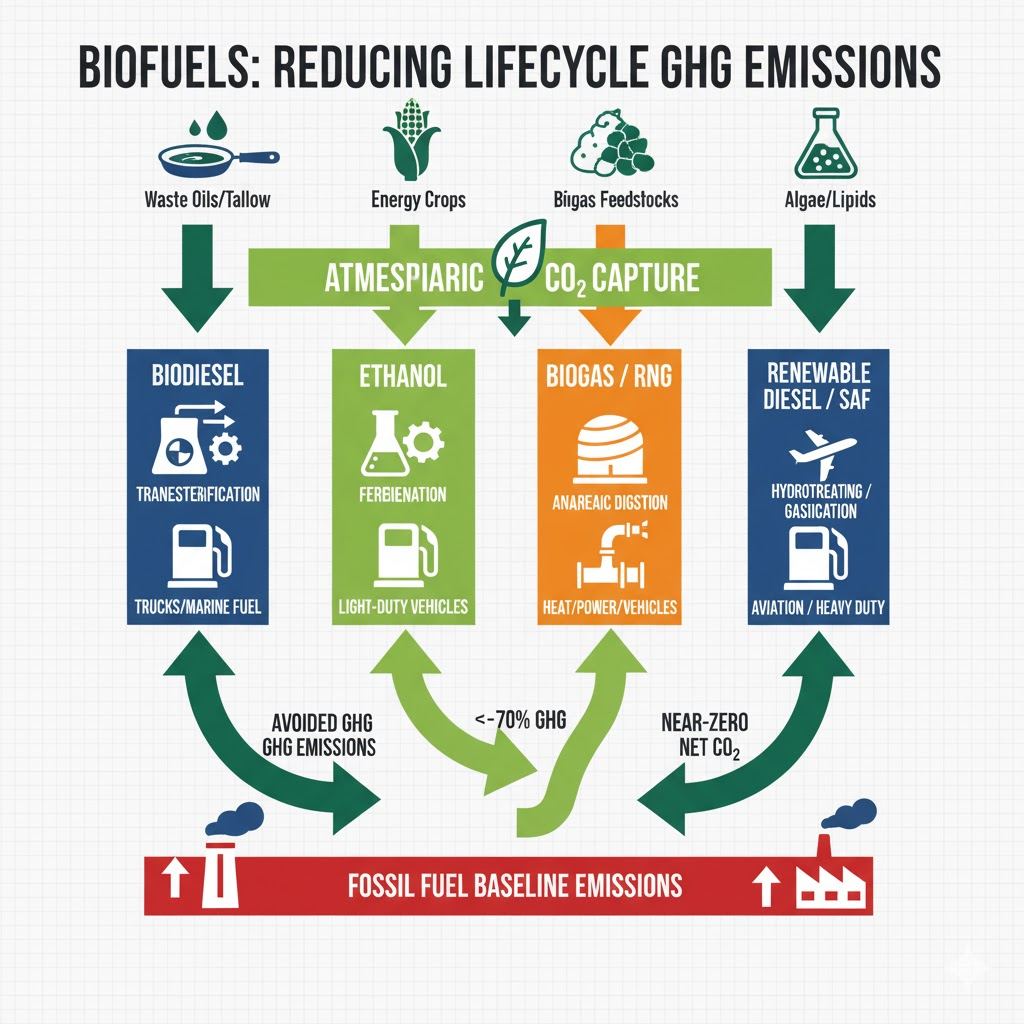
When people say biofuels are “lower-carbon,” they mean across the whole life cycle—from growing or collecting feedstock, through processing, distribution, and combustion. Because the carbon in biomass was recently captured from the air, well-designed biofuel pathways can markedly reduce net greenhouse gases (GHGs) compared with fossil fuels. Regulators assess this with standardized lifecycle analysis before fuels can qualify for programs like the U.S. Renewable Fuel Standard.
Why Biofuels Can Cut Net CO₂
Plants and other feedstocks take up CO₂ as they grow; when that carbon is turned into fuel and burned, much of it returns to the air—but the process can still be net-lower than pumping, refining, and burning petroleum, especially when production uses efficient processes, low-carbon energy, or captures methane that would otherwise escape (e.g., from wastes). That’s why pathways like waste-oil biodiesel/renewable diesel and biogas-derived fuels often achieve the biggest reductions in official assessments.
What Affects the GHG Benefit (Feedstocks, Land Use, Blends)
The climate value varies with feedstock, process energy, and land-use impacts. Waste oils and residues tend to score best; purpose-grown crops can be beneficial but outcomes depend on farming practices and potential indirect land-use change (ILUC). The U.S. EPA and Argonne’s GREET model quantify these factors; the National Academies highlight uncertainties (e.g., ILUC, nitrous oxide from fertilizers) that analysts must handle transparently. Blend level also matters because it determines how much fossil fuel you displace.
Example & Evidence Snapshot
- Wastes & residues (used cooking oil/tallow) typically show the deepest lifecycle cuts.
- Cellulosic/biogas pathways can perform strongly by avoiding methane leaks.
- Crop-based pathways vary by farming practices, yields, and land-use effects.
Advantage #2 — Cleaner Tailpipe Emissions & Better Air Quality
Besides climate, many communities care about what we breathe. Compared with their petroleum counterparts, several biofuels lower certain pollutants that affect lungs and hearts.
Particulates and Toxic Aromatics
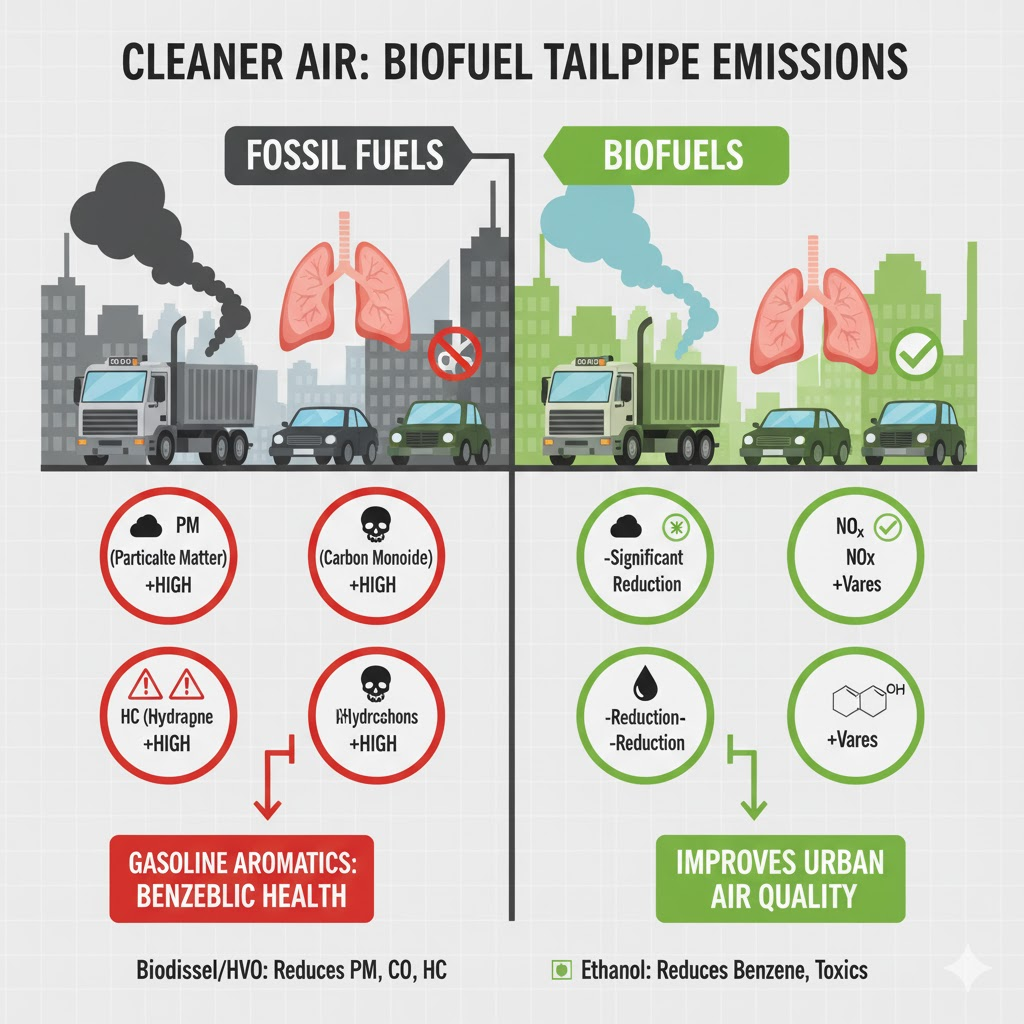
Biodiesel and renewable diesel typically reduce particulate matter (PM), carbon monoxide (CO), and unburned hydrocarbons from diesel engines; some biodiesel blends can increase NOₓ slightly depending on engine and control tech, while renewable diesel often avoids that trade-off. On the gasoline side, ethanol’s high octane allows refiners to cut toxic aromatics (like benzene precursors) in blends, which can lower PM and BTEX tailpipe emissions under many conditions.
Health Implications in Urban Areas
Benzene—an aromatic present in gasoline and a known carcinogen—is a regulated “air toxic.” Reducing aromatics and diesel soot exposure is linked to fewer respiratory and cardiovascular risks in dense cities, especially for groups living near traffic corridors. Cutting these pollutants is a public-health win independent of climate targets.
Example & Evidence Snapshot
- Diesel side: Lower PM/CO/HC with biodiesel/HVO; manage NOₓ with engine controls and blend choice.
- Gasoline side: Lower aromatics with ethanol blends helps reduce certain toxics in many use cases.
Advantage #3 — Energy Security & Reduced Oil Import Dependence
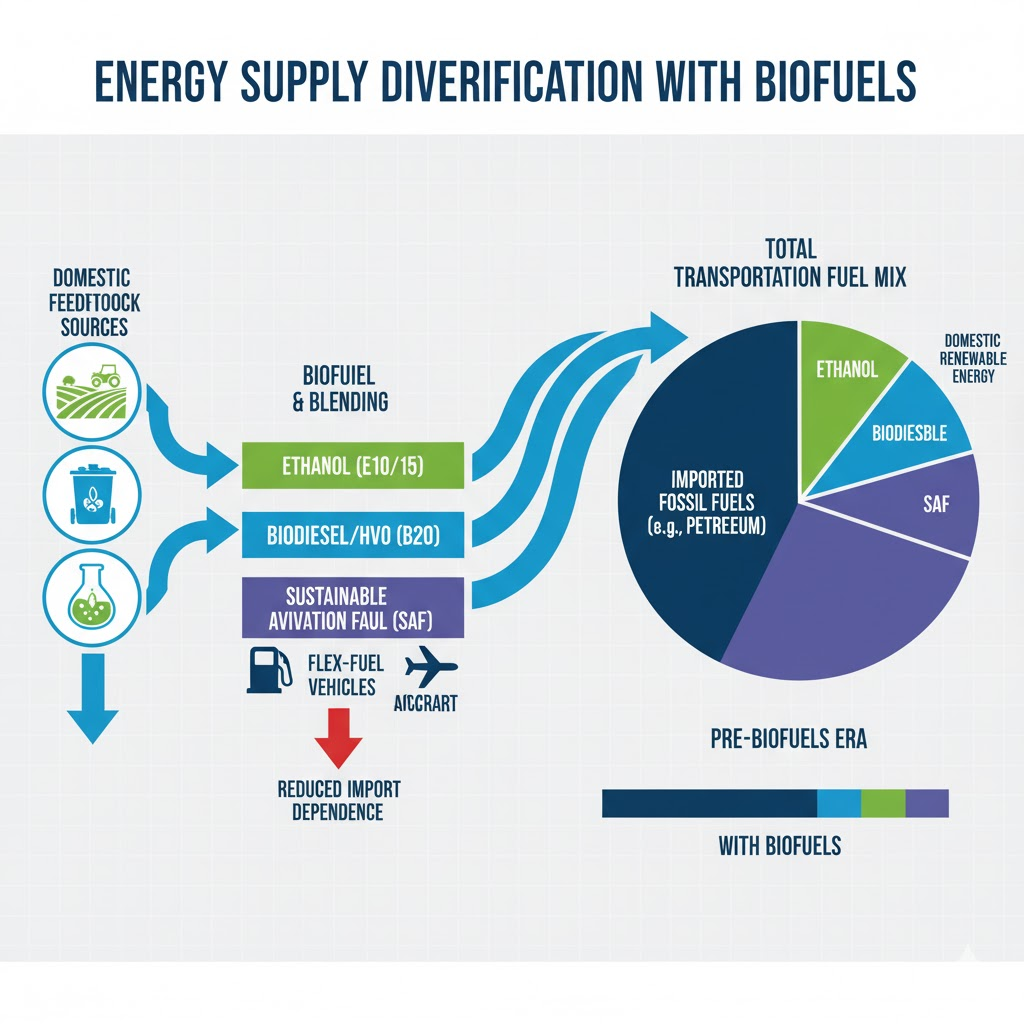
Biofuels diversify the energy mix with domestically produced alternatives that use farms, forests, waste streams, and local refineries. This spreads risk and can cushion supply shocks. In practice, governments use blending policies (E10/E15, B20, SAF mandates) to keep supply flexible and resilient during disruptions.
Domestic Supply Diversification
Allowing higher blends like E15 in more places and seasons increases the usable fuel pool and can reduce exposure to crude price spikes. U.S. emergency waivers in 2024 enabled summer E15 sales to support supply—one example of blending policy used as an energy-security tool.
Real-World Blending Policies & Resilience
The EU’s ReFuelEU Aviation law requires SAF shares starting at 2% in 2025 and ramping to 70% by 2050, creating a predictable market to scale domestic and allied supply chains. Similar credit frameworks and tax incentives (e.g., U.S. SAF 40B/45Z) are designed to de-risk investments and keep transportation moving during geopolitical turbulence.
Example & Evidence Snapshot
- E10/E15 are common gasoline blends; B20/HVO widely used in fleets; SAF blending growing via mandates and incentives.
Advantage #4 — Economic & Rural Development
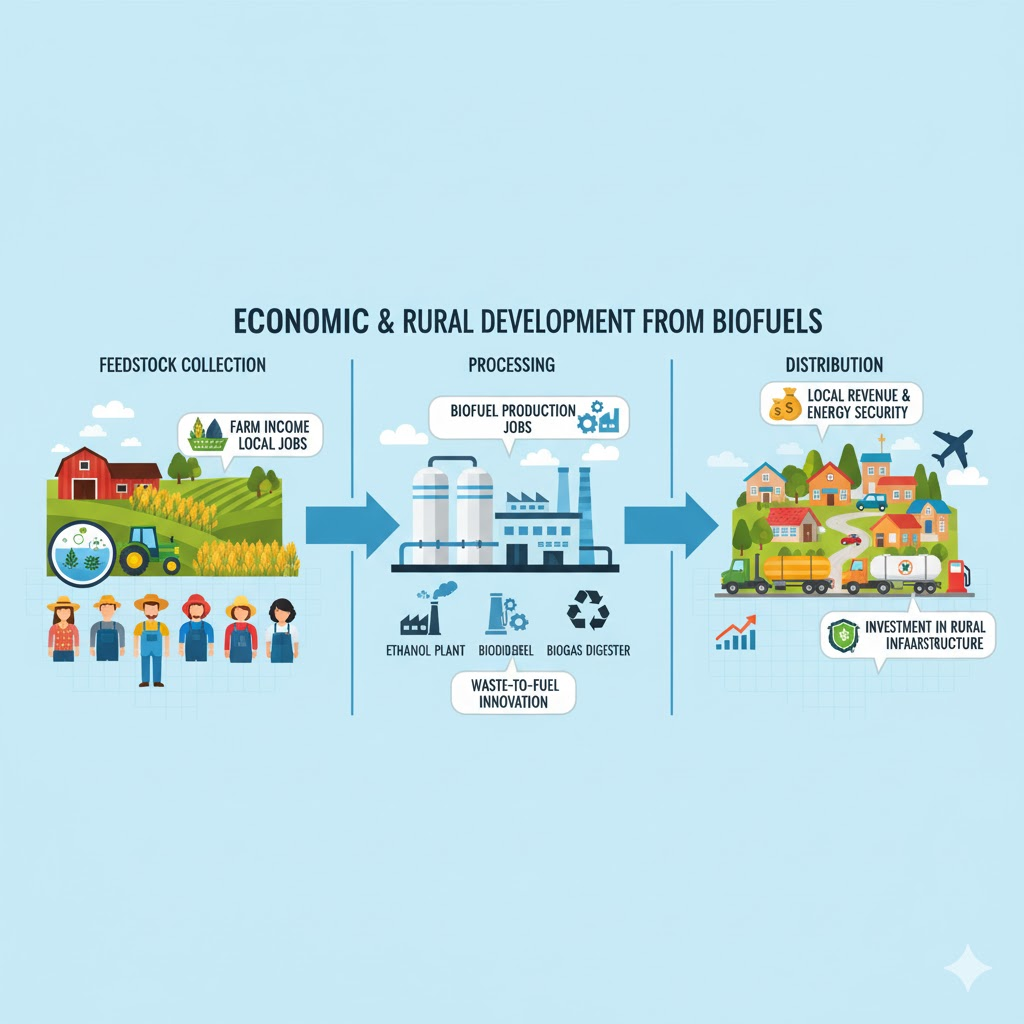
Biofuels mobilize local value chains—from growers and waste collectors to engineers, drivers, and plant operators—keeping more energy dollars circulating at home.
Jobs, Farm Incomes, and Local Value Chains
Across the broader U.S. bio-based economy, federal reporting shows hundreds of billions in economic contribution and strong job multipliers; biofuels are a prominent slice of that activity within transport energy. Globally, renewable energy employment has grown to tens of millions of jobs, with liquid biofuels a material contributor in farm-rich regions.
Waste-to-Fuel Opportunities
Turning used cooking oil and other wastes into renewable diesel or biodiesel creates revenue from materials that would otherwise be discarded. Municipal and fleet case studies (e.g., Oakland, California’s citywide switch to renewable diesel) show this can cut carbon while remaining cost-effective with minimal equipment changes.
Mini Case Study
A West Coast port authority moved its equipment and contracted fleets to renewable diesel, reporting lower smoke/odor, no engine retrofits, and simplified winter operations compared with high-blend biodiesel.
Where These Advantages Apply (By Fuel & Use Case)
Light-Duty Road Fuels
E10/E15 gasoline is widely compatible with model-year 2001+ cars in the U.S., making ethanol the most immediate way to lower gasoline’s carbon intensity and toxic aromatic content in everyday vehicles.
Heavy-Duty Transport & Marine
Renewable diesel (HVO) is a true drop-in for diesel fleets—no engine retrofits—and is being adopted by cities, logistics companies, and even ferries; the marine sector now has IMO guidance for counting biofuels in carbon compliance, and large trials with B-blends are underway on major shipping routes.
Aviation (SAF)
Airlines blend SAF with conventional jet fuel today; mandates like ReFuelEU Aviation lock in demand growth. Pathways using wastes/oils or alcohol-to-jet can deliver sizable lifecycle reductions and are central to near-term aviation decarbonization.
Which Biofuel When? (Quick Chooser Table)
| Use case | Best-fit fuel | Typical blend | Pros | Watch-outs |
| Daily gasoline cars | Ethanol | E10–E15 | Broad availability; lowers aromatics | Older small engines may prefer E10 |
| City diesel fleets | Renewable diesel (HVO) | Up to 100% | Drop-in; good cold flow; lower PM | Feedstock availability/cost |
| Legacy diesel trucks | Biodiesel | B5–B20 | Lower PM; lubricity benefits | Cold gelling at high blends |
| Aviation | SAF | 10–50% today | Jet-compatible; scalable via mandates | Higher cost; supply ramping |
| Waste/landfill fleets | RNG/biogas | Varies | Methane capture; strong LCA | Infrastructure needs |
Limitations & Trade-Offs to Keep in Mind
Land-Use Change & Food-vs-Fuel
If expanding biofuel feedstock production displaces forests/grasslands or competes with food, climate benefits can shrink or reverse. Policymakers account for these risks (e.g., ILUC factors), and the scientific community stresses careful feedstock sourcing and safeguards.
Water, Fertilizer, and Biodiversity
Water footprints vary widely—corn vs. sugarcane ethanol show different profiles, and cellulosic/waste-based pathways can be far less water-intensive. Fertilizer and pesticide use also matter for local ecosystems. In short: context is everything, which is why sustainability criteria and better agronomy are essential.
Engine Compatibility & Cold-Weather Issues
E15 is approved for 2001+ light-duty vehicles in the U.S., but legacy engines and some fueling hardware may need precautions. High-blend biodiesel can gel in cold weather unless managed via additives, blending, or fuel selection, whereas renewable diesel typically retains cold-flow advantages closer to petroleum diesel.
Cost & Policy Dependence
Advanced pathways (notably SAF) remain costlier than fossil counterparts, so policies and credits are doing heavy lifting while scale ramps. Markets can also swing—e.g., renewable diesel supply/demand imbalances—so stable policy and diversified feedstocks are crucial.
Troubleshooting & Practical Tips
- Cold weather: Prefer winterized B blends or renewable diesel; add anti-gel where recommended.
- Compatibility: Check your owner’s manual for E15/B20 approval; small engines often require E10.
- Storage: Keep biodiesel blends dry and turn stock to avoid oxidation.
- Fleet rollout: Pilot with a subset of vehicles, monitor PM/NOₓ, and document fuel handling SOPs.
Biofuels vs. Fossil Fuels: Quick Benefit Comparison
GHG Emissions: Many certified biofuel pathways show substantial lifecycle reductions versus petroleum; the exact number depends on feedstock/process (waste-based and advanced routes are typically best).
Air Pollutants: Diesel-biofuel use generally lowers PM/CO/HC; ethanol blending enables lower aromatics in gasoline, cutting several toxics under common scenarios.
Energy Security: Domestic biofuels broaden the fuel pool and help buffer price/supply shocks; temporary E15 waivers illustrate this lever in practice.
Economic Impact: Bio-based industries support large GDP and job contributions, with biofuels anchoring rural value chains and waste-to-fuel markets.
Comparison Table
| Dimension | Biofuels (today’s best pathways) | Fossil fuels |
| Lifecycle GHG | Often markedly lower, esp. wastes/residues | High baseline |
| Tailpipe toxics/PM | Lower PM/CO/HC; ethanol enables lower aromatics | Higher aromatics & diesel soot (without controls) |
| Energy security | Diversifies domestic supply via blends | Exposed to crude/oil shocks |
| Local economy | Jobs across farms, logistics & refining | Value concentrated upstream |
How We Evaluated the 4 Advantages (Methods & Sources)
Lifecycle Assessment (LCA) Basics
Regulators and researchers use ISO-based LCA to compare fuels on a like-for-like basis. Tools such as GREET (Argonne) and EPA’s RFS lifecycle assessments track emissions from feedstock to wheels so only genuine reductions qualify for credit.
Data Quality & Uncertainty
The National Academies emphasize uncertainty ranges (e.g., ILUC, fertilizer N₂O, co-product handling). Sound comparisons report assumptions, run sensitivity tests, and prefer measured data where available.
For Professionals: LCA Assumptions
- System boundary: Feedstock cultivation/collection → processing → distribution → combustion.
- Co-products: Allocation or displacement documented (e.g., glycerin, animal feed).
- Energy inputs: Electricity grid factors stated; process fuels specified.
- Land-use: ILUC factors or scenario ranges reported.
- Measurement: Emissions factors and datasets versioned (e.g., GREET year).
Frequent Ask Questions

James Parker
James Parker is an environmental expert, writer, and the founder of Envirose.com. Over the years, he has dedicated his work to studying sustainable practices, renewable energy solutions, and eco-conscious lifestyles. Through Envirose, he aims to inspire individuals to make small yet powerful changes in their daily lives that can collectively create a positive impact on the planet. When he’s not writing or researching, you’ll often find him outdoors, exploring nature and finding new ways to live in harmony with it.