Green Energy Solutions: Definition, Types, Benefits & How to Implement
Written by Admin | Nov 20, 2025
What Are Green Energy Solutions? (Definition & Key Terms)
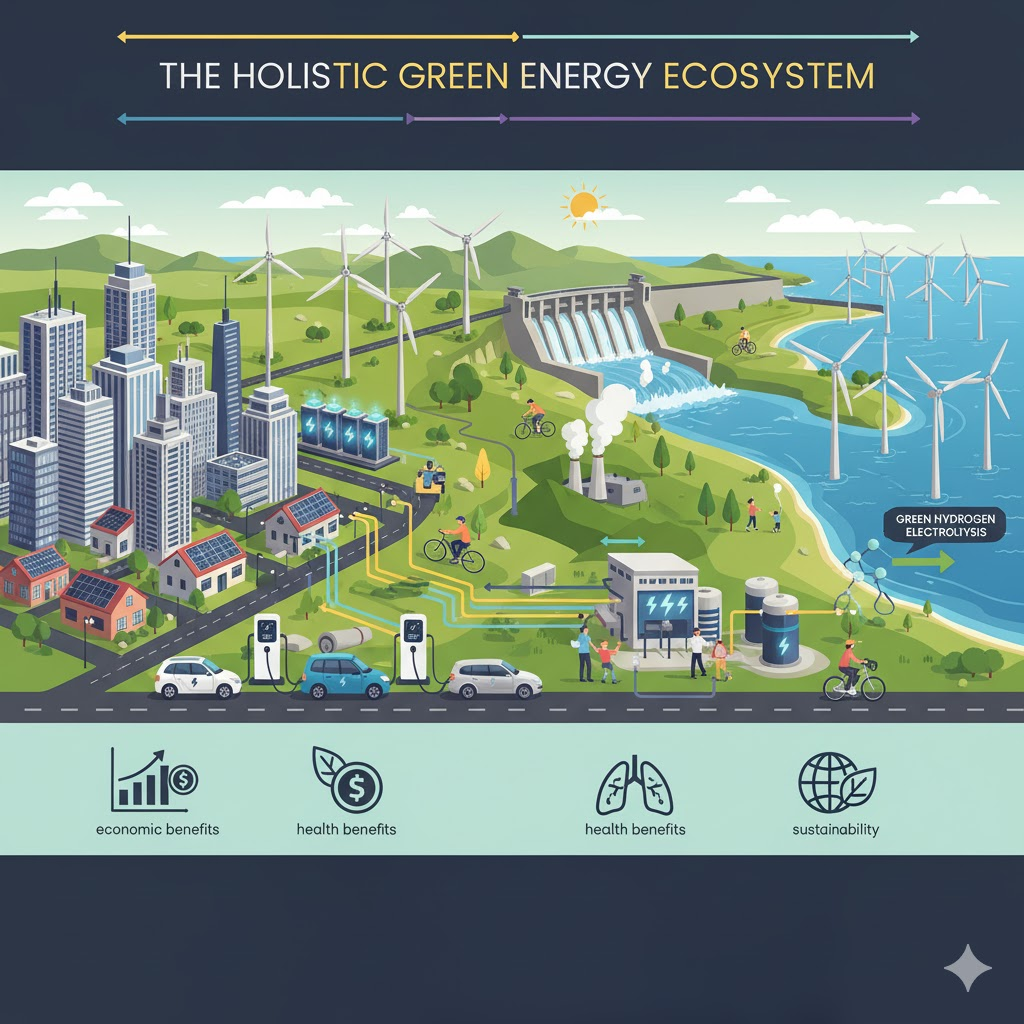
Green energy solutions are ways of producing, managing, and using energy that minimize harm to people and the planet. In practice, “green” means sources and strategies that avoid significant pollution across their life cycle—especially greenhouse gases—and that rely on naturally replenished inputs like sun, wind, heat from the earth, and moving water. In 2023, countries added almost 510 GW of new renewable capacity—a near-50% jump year-over-year—showing how fast these solutions are scaling.
Green vs. Renewable vs. Clean Energy — Quick Differences
Renewable: Fueled by resources that naturally replenish (sun, wind, water, geothermal heat, sustainably sourced biomass).
Clean: Low air and climate pollution at the point of generation (can include nuclear; some “renewables” like poorly managed biomass may not be truly clean).
Green: A practical overlap—renewable and low-polluting across the life cycle.
To buy “proof” of renewable generation, organizations often use renewable energy certificates (RECs)—each REC represents 1 MWh of renewable electricity generated and delivered to the grid.
One-glance comparison
| Term | What it focuses on | Can include | Caveat |
| Renewable | Fuel replenishes naturally | Solar, wind, hydro, geothermal, sustainably sourced biomass | Some renewables can still have non-trivial lifecycle impacts |
| Clean | Low/zero operational emissions | Nuclear, most renewables | May not capture full lifecycle/supply-chain impacts |
| Green | Renewable and low lifecycle impacts | Best-practice solar/wind/geothermal | Needs rigorous accounting (e.g., additionality, end-of-life) |
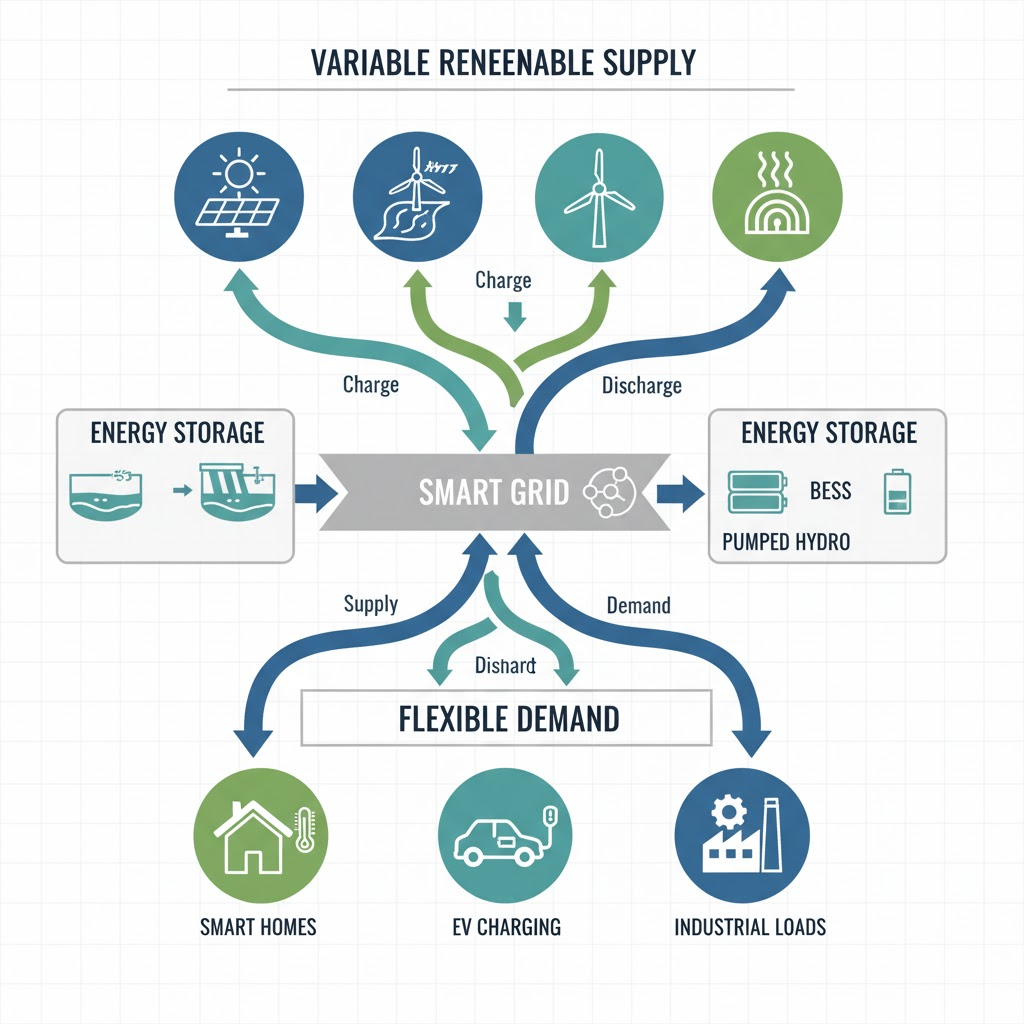
How Green Energy Works (Generation, Demand & Grid Integration)
Green energy isn’t just about adding wind turbines and solar panels. It’s a system: clean supply, smart demand, and flexible grids that balance variable generation with storage and responsive loads. After COP28, countries were urged to triple global renewable capacity and double the rate of energy-efficiency improvements by 2030, while transitioning away from fossil fuels—a signal that supply, demand, and grid actions must move together.
Types of Green Energy Solutions (Supply-Side)
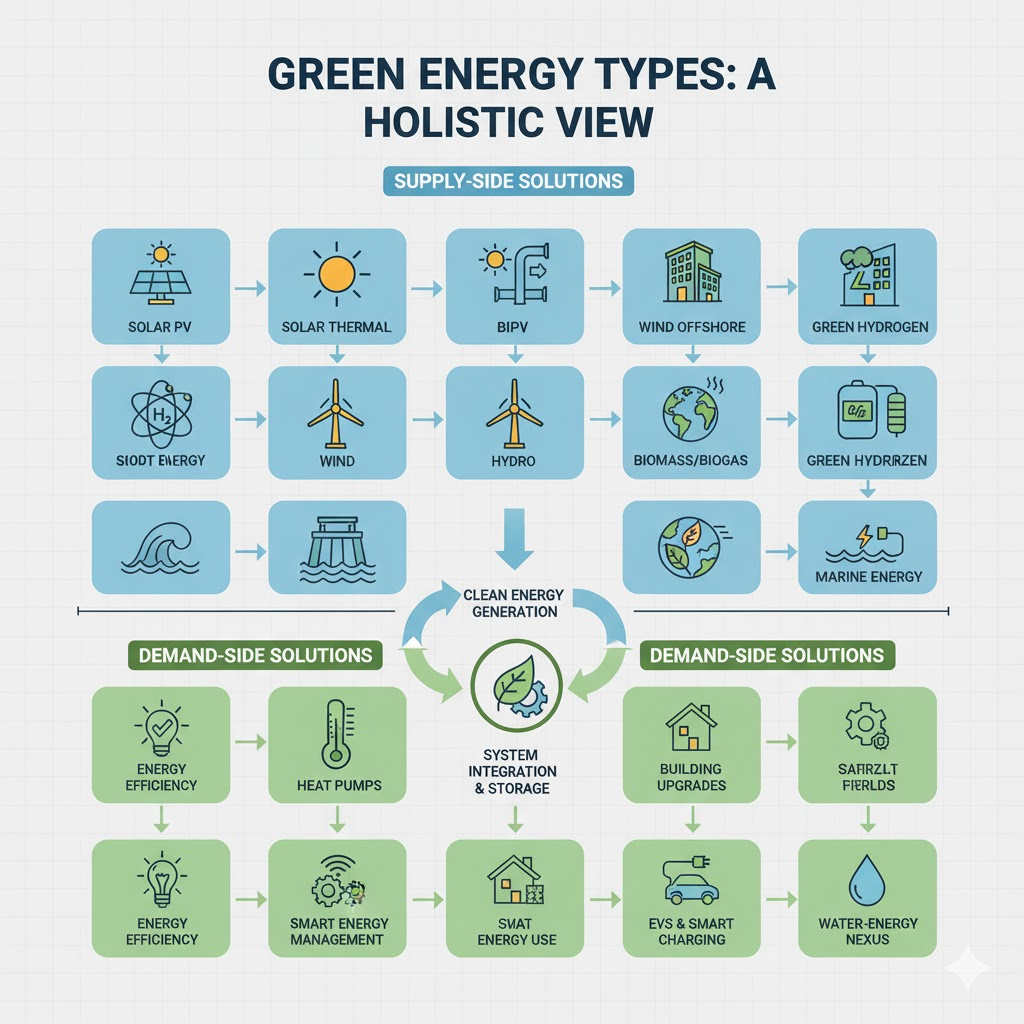
Solar (PV, Solar Thermal, Building-Integrated PV)
Solar photovoltaics (PV) convert sunlight directly into electricity; solar thermal captures heat for water and space heating, and building-integrated PV (BIPV) blends generation into roofs, façades, and glazing. Rapid cost declines and mass manufacturing made PV the largest contributor to new renewables in 2023.
Wind (Onshore & Offshore)
Wind turbines capture kinetic energy from moving air. Onshore wind is widely deployed; offshore wind taps steadier, stronger winds but requires marine foundations and specialized grids.
Hydropower (Large, Small/Micro, Run-of-River)
Hydropower converts flowing water into power via dams or run-of-river systems. Small/micro setups can electrify remote sites; large reservoirs add storage but can affect river ecosystems, fish passage, and sediment flows—impacts that need careful mitigation.
Geothermal (Electricity & Direct-Use Heat)
Geothermal taps underground heat for baseload electricity and highly efficient space/water heating. Suitability depends on local geology; monitoring drilling and fluid management is key to keeping projects truly “green.”
Biomass & Biogas (Including Advanced Biofuels)
Biomass combusts or digests organic material (residues, wastes) to make electricity, heat, or biogas; “advanced biofuels” upgrade these into transport fuels. Sustainability hinges on feedstock type and full life-cycle emissions.
Green Hydrogen (Electrolysis)
“Green” hydrogen is produced by electrolysis, splitting water with electricity from low-carbon sources. It can store energy seasonally or fuel industry and heavy transport. The Hydrogen Shot aims to cut clean hydrogen costs to $1/kg in one decade via innovation and scale.
Marine Energy (Tidal & Wave)
Oceans offer predictable tides and energetic waves. These emerging technologies can complement wind and solar in coastal grids where resource quality is strong.
Demand-Side & Electrification Solutions
Energy Efficiency (Lighting & Appliances)
Using less energy for the same service is the cheapest “negawatt.” LEDs, efficient motors, and modern refrigerators dramatically cut demand, freeing clean supply to decarbonize harder sectors.
Heat Pumps & Efficient Water Heating
Electric heat pumps move heat rather than generating it, often delivering up to three times more heat energy than the electricity they consume (and modern models work in cold climates). Heat-pump water heaters can be up to 4× more efficient than standard models.
Building Envelope Upgrades (Insulation, Windows, Air Sealing)
Better envelopes keep comfort in and energy waste out—insulation, high-performance windows, and air-sealing lower loads so smaller, cleaner systems suffice.
Smart Energy Management (Thermostats, EMS, Sub-Metering)
Smart thermostats, sub-metering, and energy-management systems optimize when and how energy is used—shifting consumption to cheaper/cleaner hours and surfacing hidden waste.
EVs & Smart Charging
Electric vehicles slash tailpipe pollution. Smart charging staggers charging to off-peak, cleaner hours; vehicle-to-grid (V2G) and vehicle-to-home (V2H) programs are expanding to provide backup and grid services (where available).
Water–Energy Nexus (Pumping, Treatment, Hot Water)
Saving water saves energy because heating and moving water is energy-intensive. Efficient fixtures, leak detection, and variable-speed drives on pumps can cut utility energy use; well-managed hot-water systems reduce wasted heat at home.
Storage & Flexibility
Battery energy storage systems (BESS) absorb excess solar/wind and release it later to reduce curtailment and manage peaks. Pumped-storage hydropower remains the most widely used grid storage globally, with significant additional potential; thermal storage (hot/cold) time-shifts building and industrial loads. Demand response pays or nudges customers to reduce/shift consumption at peaks—critical alongside storage for integrating variable renewables.
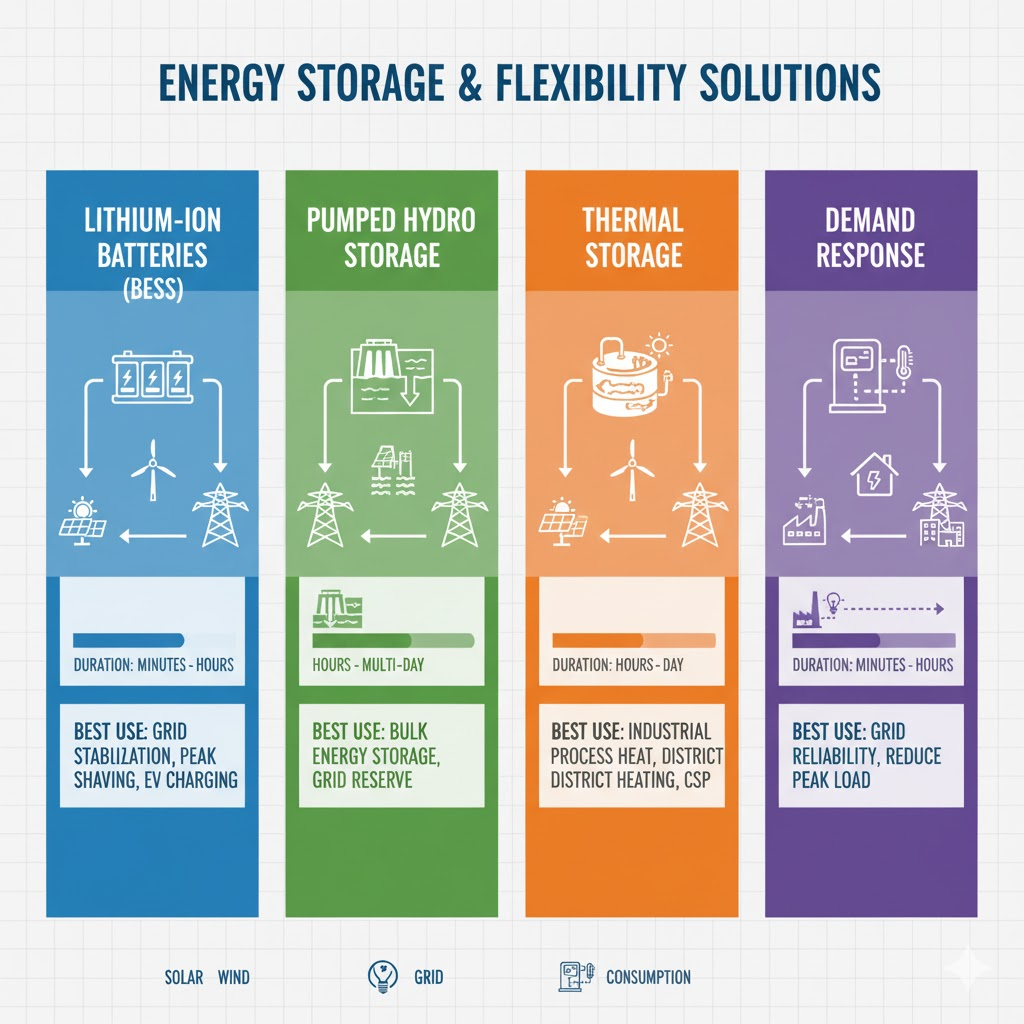
Comparison—when to use what
| Flex option | Best for | Typical duration | Notes |
| BESS (lithium-ion) | Fast balancing, TOU arbitrage | Minutes–4 hours | Highly modular; costs improving; pairs well with solar |
| Pumped hydro | Bulk shifting, reliability | 6 hours–multi-day | Largest global share of storage; needs suitable topography |
| Thermal storage | HVAC/industrial heat/cold | Hours–daily | Low cost per kWh-thermal |
| Demand response | Peak reduction/system reliability | Minutes–hours | Incentive-based; complements all supply/storage |
How to Access Green Energy at Home
Rooftop Solar & Net Metering / Feed-In Tariffs
Rooftop PV can offset much of a home’s annual use; policies like net metering or feed-in tariffs determine how exported power is credited.
Community Solar Subscriptions
If rooftop PV isn’t an option, subscribe to community solar: you buy a share of an off-site array and receive bill credits for your portion of its generation—great for renters and shaded roofs.
Utility Green Tariffs & Time-of-Use Plans
Green tariffs let customers match usage with renewable supply via the utility. Time-of-use rates reward shifting consumption to lower-cost, cleaner hours.
Home Energy Audits & Ongoing Monitoring
Start with an audit (professional or DIY) to find low-cost fixes first; keep an eye on usage with sub-metering or smart monitors to maintain gains.
7-step homeowner checklist
- Energy audit → 2) Air-seal + insulate → 3) Heat pump + HPWH → 4) Rooftop solar (if viable) → 5) TOU plan + smart controls → 6) Community solar/green tariff if rooftop isn’t feasible → 7) Battery if you need backup or TOU arbitrage.
Troubleshooting—common snags
- Interconnection delays: apply early; keep paperwork tidy; confirm utility timelines.
- Undersized inverters: right-size for your array and export rules.
- Heat-pump comfort issues: ensure proper sizing, duct sealing, and thermostat setup.
Mini case snapshot
Suburban home (3BR): audit + attic insulation + heat pump + HPWH → ~28% bill reduction; rooftop PV later covers remaining daytime use; battery added for outage resilience.
Green Energy Solutions for Business & Public Sector
On-Site Generation (Rooftop, Ground-Mount, Solar Carports)
Generate power on campuses, warehouses, and parking lots—reducing bills and showing visible climate leadership.
Off-Site Procurement: Physical & Virtual PPAs
Long-term power purchase agreements (PPAs) can lock in price and enable additional renewable projects.
Renewable Energy Certificates (RECs/EACs) & 24/7 CFE Strategies
RECs (or EACs/GoOs) certify renewable attributes. Leaders are moving toward 24/7 carbon-free energy (CFE)—matching consumption with clean supply hour by hour for deeper grid impact.
Energy Efficiency Retrofits & ISO 50001
Adopt an energy-management system (e.g., ISO 50001) to set policies, targets, and continuous-improvement processes that lock in savings.
Power-Intensive Facilities (AI/Data Centers): Load & Cooling Optimization
Combine high-efficiency IT/cooling (free-air, liquid) with load shifting, storage, and granular clean-energy procurement (e.g., 24/7 CFE).
Comparison—Procurement options
| Option | Cost certainty | Impact depth | Contract typical | Notes |
| RECs/EACs | High | Low–medium | Annual | Simple start; check additionality/quality |
| Green tariff | High | Medium | Utility-specific | Good where offered |
| Physical PPA | High | High | 10–20 yrs | Direct delivery; siting matters |
| Virtual PPA | Medium | High | 10–15 yrs | Financial hedge; hour-matching possible with add-ons |
| 24/7 CFE | Medium | Very high | Ongoing | Hourly matching + strong claims framework |
Advanced: for energy/procurement teams
Move from annual REC matching to hourly 24/7 CFE with grid-carbon data. Test additionality, track location- and market-based emissions, and embed ISO 50001 for durable results.
Mini case snapshot
Logistics campus: rooftop + carports + BESS + demand response → peak-charge cuts and improved reliability; PPA covers remaining load; hourly tracking verifies clean supply in real time.
Financing, Incentives & Project Economics
Upfront Purchase vs. Leases, PPAs & ESCOs
Choose the capital stack that fits your balance sheet: own the asset, lease it, sign a PPA, or partner with an ESCO for performance-based savings.
Grants, Rebates & Tax Credits
Public incentives can improve payback; availability varies by country/region via energy ministries and utilities.
Calculating Payback, LCOE & ROI
Use LCOE to compare technologies on a per-MWh basis. Despite recent macro headwinds, global syntheses find renewables remain among the lowest-cost new builds in many markets, with system fuel savings measured in the hundreds of billions.
Benefits & Limitations
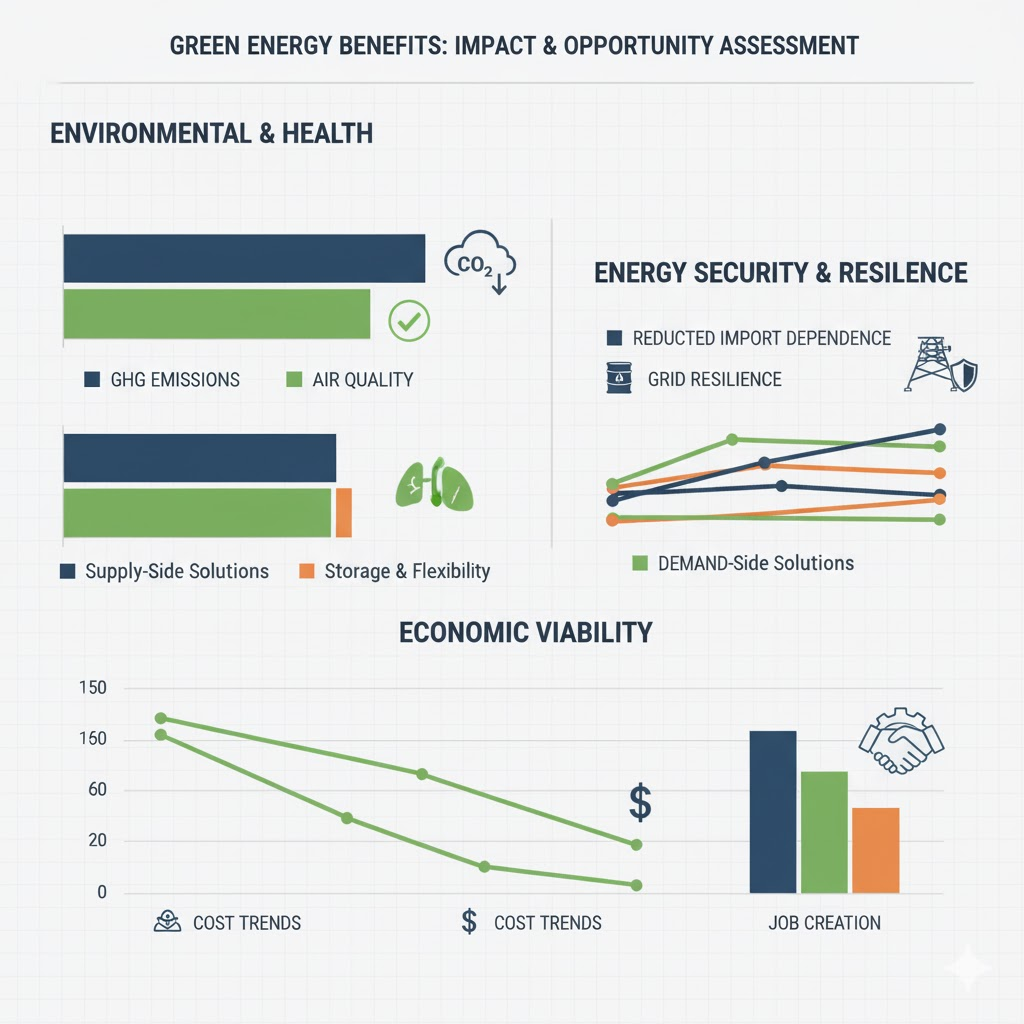
Environmental & Health Benefits (GHG, Air Quality)
Green energy cuts greenhouse gases and air pollutants, reducing climate risks and improving public health.
Energy Security, Resilience & Microgrids
Local renewables plus storage/demand response reduce exposure to fuel price spikes and outages; microgrids keep critical services powered during grid failures.
Economic Viability & Cost Trends
Renewables continue to show strong cost competitiveness at scale, even as financing conditions fluctuate.
Which Technologies Are Most Efficient — And When?
“Efficiency” depends on the job: wind/hydro for bulk power, heat pumps for building heat, batteries for short-duration balancing, pumped hydro for long-duration flexibility.
Can Green Energy Replace Fossil Fuels?
With efficiency, electrification, storage, demand response, and clean fuels like green hydrogen for hard-to-abate sectors—yes. That’s reflected in COP28’s shared goals for 2030.
Sustainability & Risk Considerations
Lifecycle Emissions & Additionality
Prefer projects that add new clean capacity and disclose lifecycle impacts transparently.
Land, Water & Biodiversity Impacts
Site wind/solar to avoid sensitive habitats; manage hydro and bioenergy carefully; design with the water–energy nexus in mind.
Recycling & End-of-Life (Panels, Turbines, Batteries)
Plan early for take-back and recycling; markets are scaling specialized recycling and extended producer responsibility.
Procurement Integrity: Avoiding Greenwashing
Use credible certification, granular tracking (hourly where possible), and third-party verification so claims match reality.
Implementation Roadmap
- Set targets & baseline (audits, sub-metering, KPIs).
- Choose the right mix (efficiency first → supply + storage + flexibility).
- Procurement & vendor selection (clear specs, performance, warranties).
- Installation, commissioning & interconnection (standards, safety).
- Monitoring, optimization & scaling (M&V, continuous improvement).
Frequent Ask Questions

James Parker
James Parker is an environmental expert, writer, and the founder of Envirose.com. Over the years, he has dedicated his work to studying sustainable practices, renewable energy solutions, and eco-conscious lifestyles. Through Envirose, he aims to inspire individuals to make small yet powerful changes in their daily lives that can collectively create a positive impact on the planet. When he’s not writing or researching, you’ll often find him outdoors, exploring nature and finding new ways to live in harmony with it.