Home » How to Recycle and Reuse Aluminum Foil: Can You Recycle Aluminum Foil?
Can You Recycle Shredded Paper?
Written by Admin | Nov 20, 2025
Why Shredded Paper Is Treated Differently
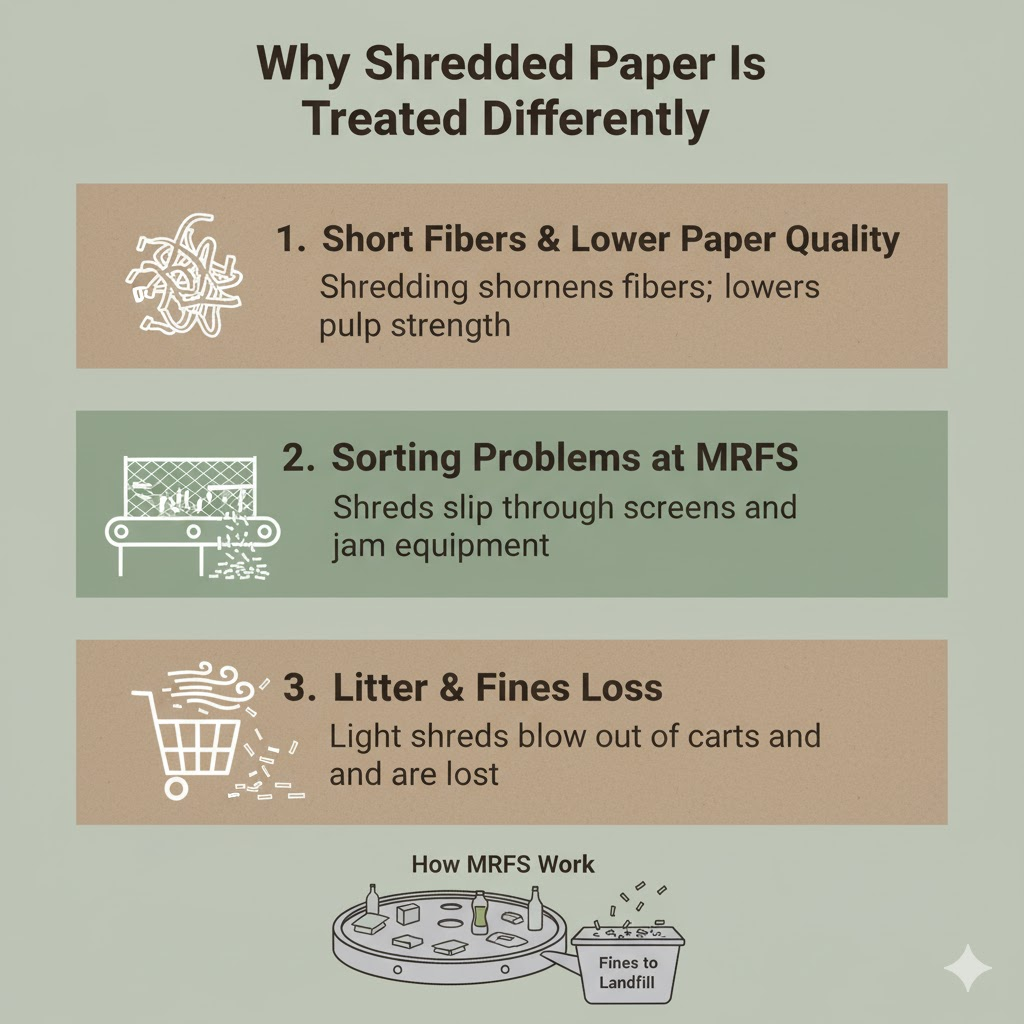
Short Fibers & Lower Paper Quality
Shredding chops paper fibers down, which shortens their useful life in papermaking. That’s why whole sheets make stronger recycled pulp than confetti-sized bits. Municipal guides and industry sources note that paper fibers can be reused multiple times, but each cut shortens that cycle—so shredding should be limited to what’s truly sensitive.
Sorting Problems at Material Recovery Facilities (MRFs)
Glossary: MRF = Materials Recovery Facility, the place your mixed recyclables are sorted before bailing.
Tiny strips escape screens and fall through “fines,” stick to other materials, or wrap around gears. Many cities therefore exclude loose shreds from mixed recycling because they contaminate other streams and slow equipment.
Litter & “Fines” Loss During Processing
Glossary: Fines = very small pieces that fall through sorting screens instead of being captured.
Because shreds are light, they blow out of carts, trucks, and conveyor lines, ending up as litter instead of baled paper. Some municipalities explicitly call shredded paper “dreaded” for this reason and send it to trash unless handled in a special way.
How MRFs Handle Paper (How It Works)
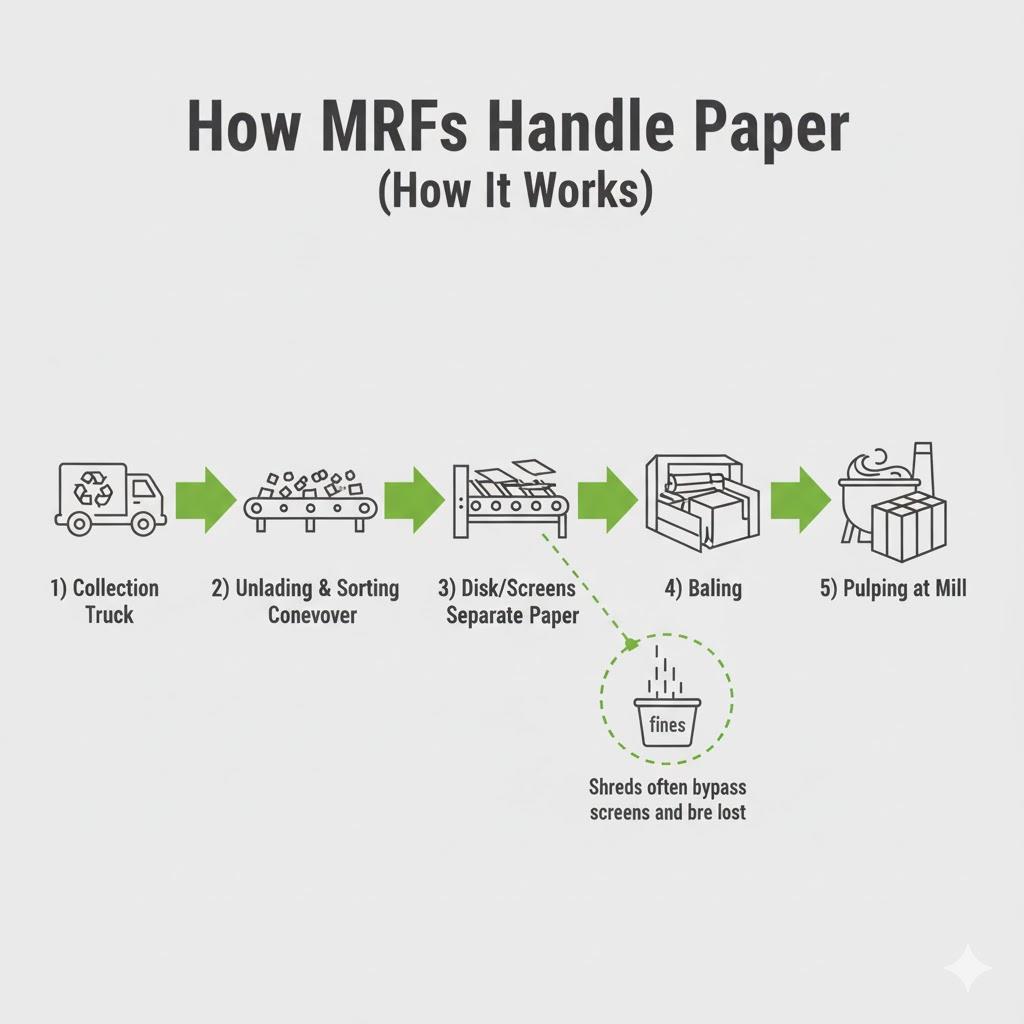
In single-stream systems, disks and screens separate paper from containers. Shreds are often too small/light to ride those screens, so they drop out as fines or contaminate other bales. That’s the core reason so many programs say “no loose shredded paper.”
First Step: Check Your Local Guidelines
Places That Accept Shredded Paper (With Special Prep)
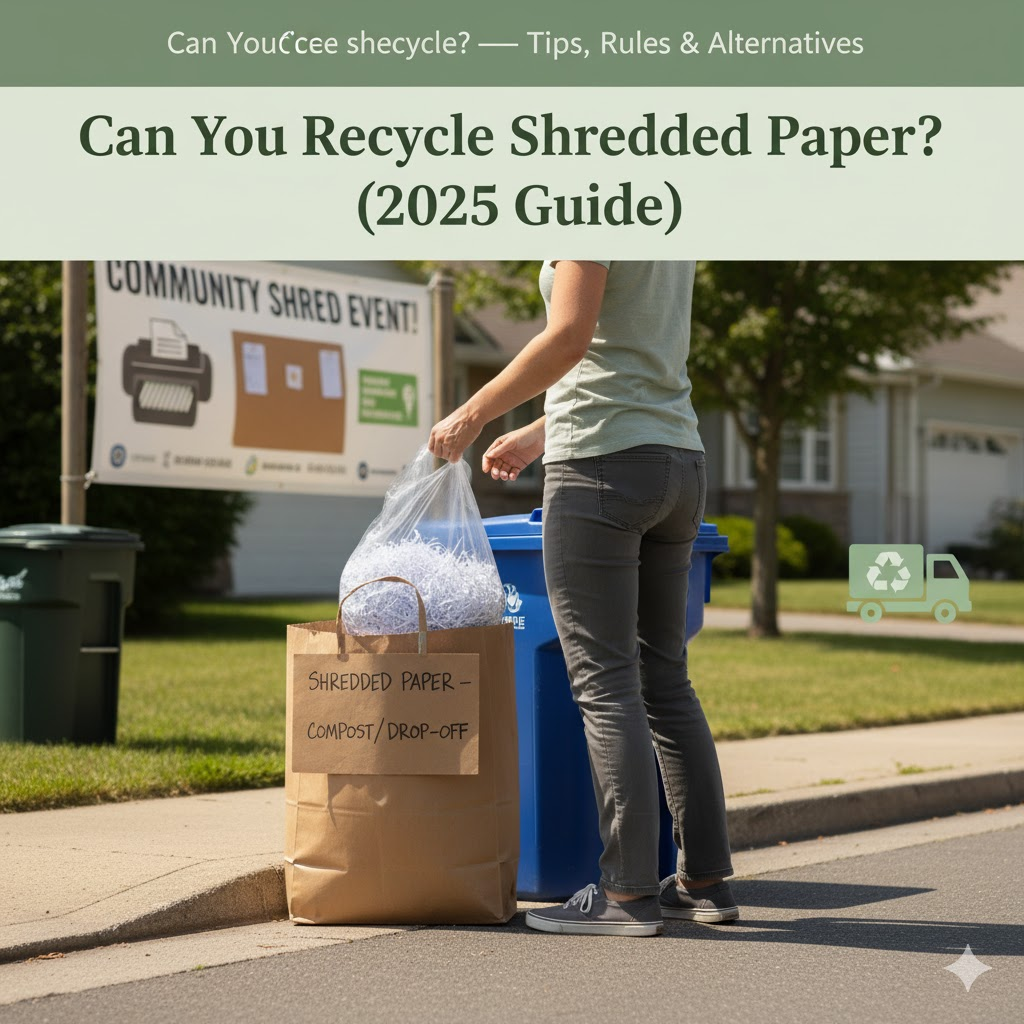
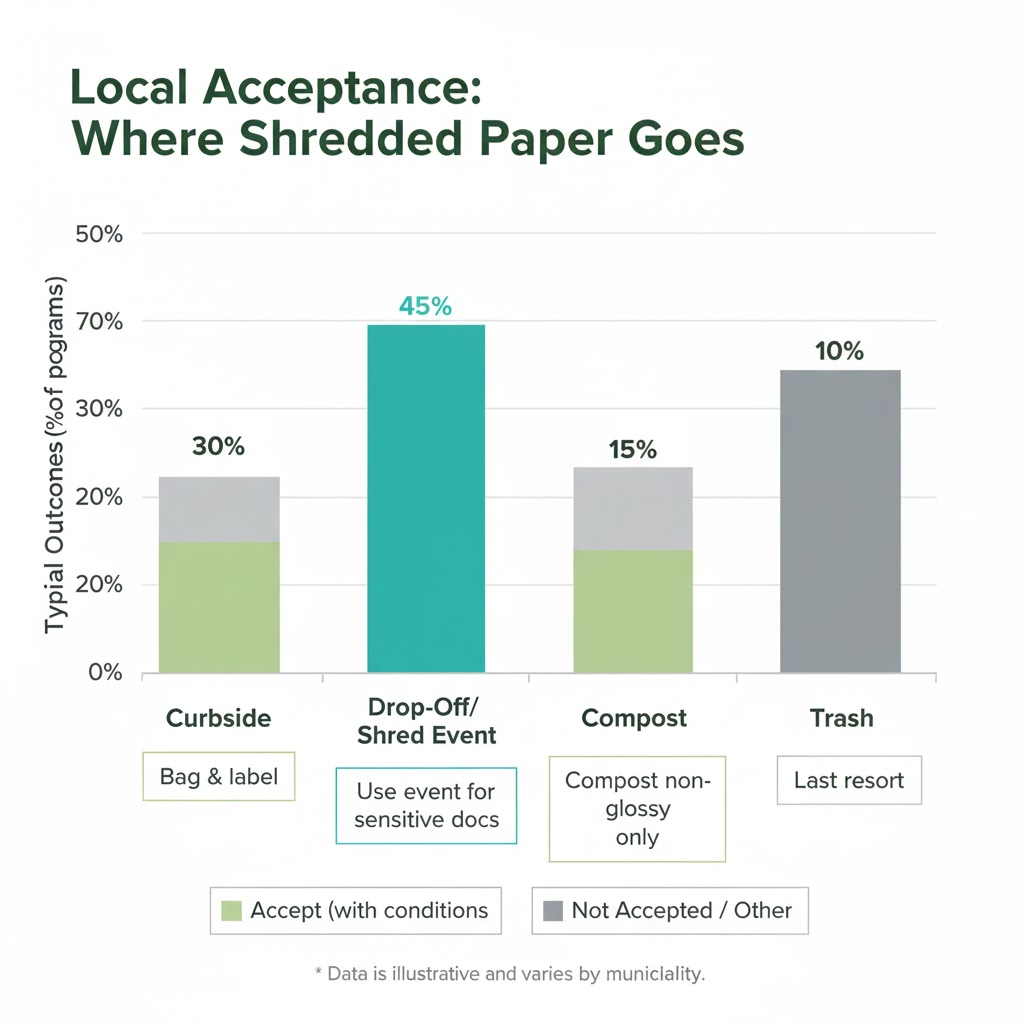
Some programs do accept shreds if you contain them—often in a stapled or taped paper bag, sometimes (in the UK, for example) in a tied carrier bag for the paper stream. Always verify your area’s exact prep rules before you set it out.
Places That Don’t Accept It—and Why
Other cities (e.g., Chicago; Northampton, MA) don’t allow shredded paper in curbside recycling because of sorting, contamination, and litter problems. They’ll direct you to drop-off or shred events instead.
How to Find Rules for Your City or Hauler
Use an official local guide or a reputable locator: check your city/hauler’s website, Recycle Coach (municipal info hub), Earth911’s locator, or state portals. Quick lookup: try Earth911’s search by ZIP to see options near you.
Local Rules Finder (1-minute check)
- Open a rules page or locator (e.g., Earth911).
- Type “shredded paper” + your ZIP/postcode.
- If accepted, note exact prep (bag/label/limits). If not, jump to shred events or compost.
If Accepted—How to Prepare Shredded Paper for Recycling
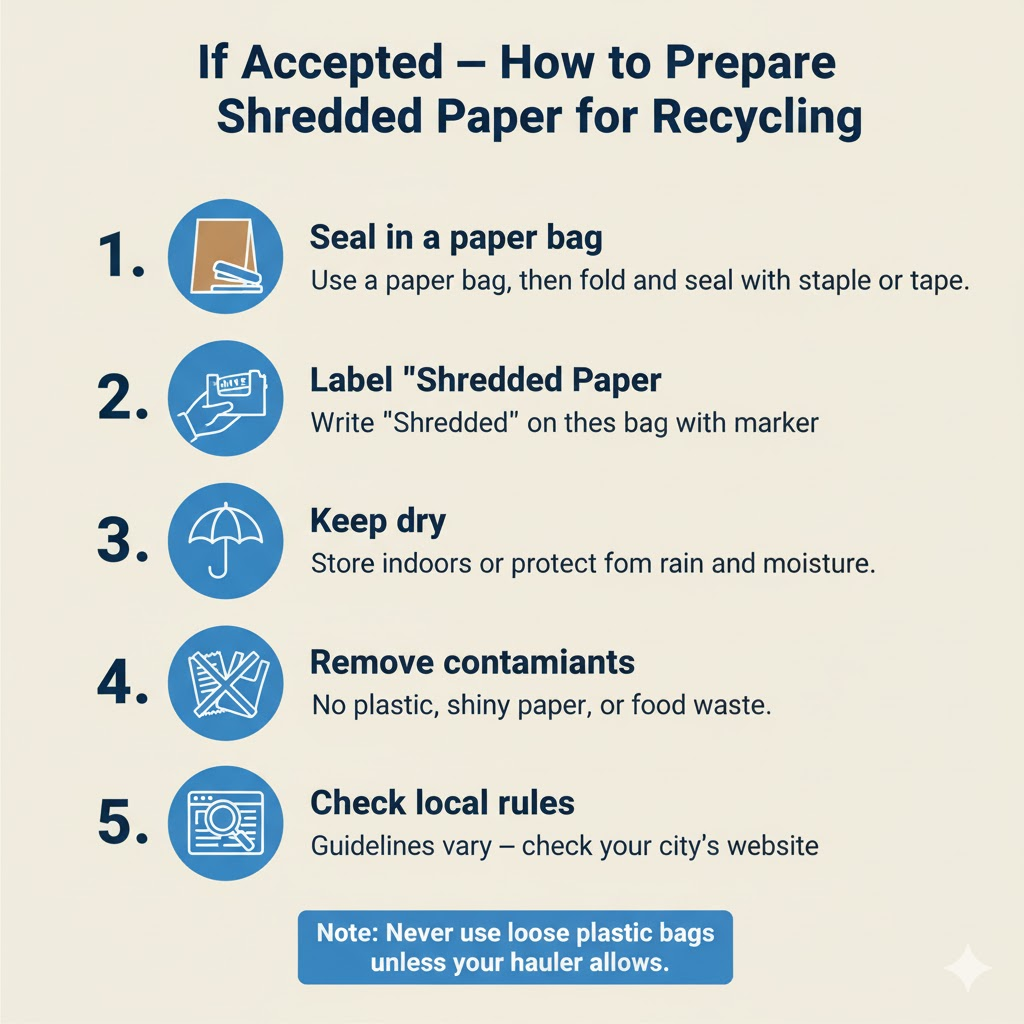
Bag in a Paper Bag and Clearly Label “Shredded Paper”
Where allowed, place shreds in a paper bag/box, seal it, and label it so it stays contained through collection and sorting. This simple step reduces mess and helps MRFs capture the material.
Keep It Dry; Never Use Plastic Bags
Moist shreds turn to pulp and stick to other items. And unless your hauler explicitly permits it, don’t use plastic bags—many programs ban bagged recyclables because bags jam sorting equipment.
Remove Contaminants (Plastic Windows, Stickers, Mixed Materials)
Before you shred, pull out plastic cards, laminated pages, padded mailers, and large stickers. While mills can screen small contaminants during pulping, minimizing them improves quality and capture.
Curbside vs. Drop-Off Instructions & Quantity Limits
Some places only take shreds at events or dedicated drop-offs; others set curbside limits or special “bag-in-bag” rules. Follow your local page for specifics. (Chicago, for example, points residents to community shared events.)
Troubleshooting (quick fixes)
- My bin was tagged: Re-bag in a paper bag, label clearly, and verify your program accepts shreds.
- Bag ripped/soaked: Dry the shreds, re-bag, or hold for the next shred event.
- Only loose shreds allowed at drop-off? Ask the site attendant how to contain them on arrival (many have their own bags/bins).
If Not Accepted—Best Alternatives
Secure Shredding Services & Community Shred Events (What Happens to the Paper)
Community events and commercial shredders collect documents separately and send fiber straight to paper mills, bypassing the mixed-recycling MRF where shreds get lost. Cities publish calendars for these events.
Composting Shredded Paper (What Types Are Compostable & How to Use as “Browns”)
If your organics program allows it, clean, non-glossy paper shreds can serve as a carbon-rich “brown,” especially as a layer or liner to absorb moisture. (Rules vary: some cities suggest lining green carts with shredded paper; others restrict compost to food/yard waste only.) For backyard compost, mix shreds with “greens” and keep the pile just damp.
Smart Reuse Ideas (Packing, Pet Bedding, Crafts)
When recycling isn’t an option, reuse shreds for shipping/cushioning, pet bedding (where appropriate), or papier-mâché. Several municipal guides suggest reuse to keep shreds out of landfill.
Which option should I choose? (Simple comparison)
| Option | Best for | Pros | Cons |
| Shred event/secure service | Sensitive documents, big volumes | Goes straight to paper mill; avoids MRF loss | Event schedules; may have limits/fees |
| Compost (non-glossy only) | Gardeners/home organics | Adds carbon “browns”; absorbs moisture | Not all programs allow it |
| Reuse | Shipping, crafts, bedding | Zero cost, immediate | Still need a final end-of-life plan |
For Offices/HOAs & Small Businesses (Advanced)
- Coordinate a bulk shred day with chain-of-custody.
- Ask vendors to confirm mill destinations for shredded fiber.
- Provide paper-only bins to reduce contaminants and improve quality.
Think Before You Shred
What to Shred (Sensitive Documents Only)
Shred items with personal data (account numbers, SSNs, medical/tax records). Limiting shredding preserves fiber quality and improves recycling outcomes overall.
What Not to Shred (Items Better Recycled Intact)
Mail without sensitive info, magazines, catalogs, and ordinary office paper recycle best as whole sheets. Keep them unshredded so mills can capture longer fibers.
Privacy-Safe Alternatives to Full-Page Shredding (Redact or Tear Off Personal Info)
When possible, tear off the address or redact a line instead of shredding entire pages—several city guides explicitly encourage “only shred what’s necessary.”
Frequent Ask Questions

James Parker
James Parker is an environmental expert, writer, and the founder of Envirose.com. Over the years, he has dedicated his work to studying sustainable practices, renewable energy solutions, and eco-conscious lifestyles. Through Envirose, he aims to inspire individuals to make small yet powerful changes in their daily lives that can collectively create a positive impact on the planet. When he’s not writing or researching, you’ll often find him outdoors, exploring nature and finding new ways to live in harmony with it.