Electric vs Gas vs Heat Pump Water Heater
Written by Admin | Nov 20, 2025
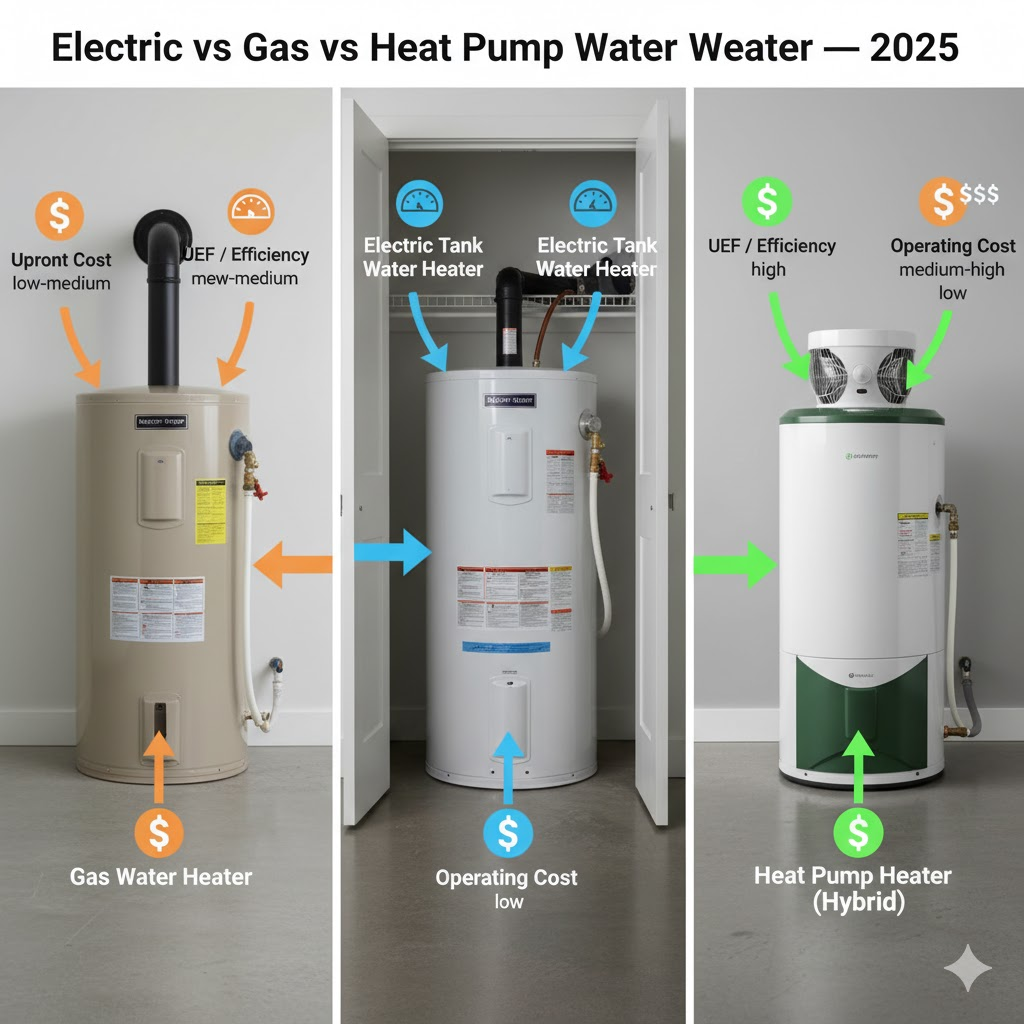
Key Takeaways & Comparison Table
Gas still wins on raw speed – that endless shower feeling for big families. Heat pumps crush it on bills if your electricity isn’t crazy expensive, especially with solar or off-peak rates. Plain electric tanks are the no-brainer swap when you already have the wiring. Tankless saves space but hits you with install headaches – venting for gas, monster breakers for electric. And yeah, those new DOE rules are basically forcing most new electric tanks to go hybrid/heat-pump style anyway.
Quick table (numbers are typical 2025 ranges – always double-check models):
| Type | Typical UEF | Upfront + Install | Where it shines | Rough yearly cost* |
| Electric tank | ~0.92 | $900–$3k | Easy swap, low complexity | Higher if elec pricey |
| Electric tankless | 0.90–0.99 | $1.2k–$3.5k + panel work | Compact, no standby loss | Can spike demand charges |
| Heat pump (hybrid) | 2.5–4.0 | $2.2k–$6.8k | Lowest bills, solar/TOU friendly | Often the winner long-term |
| Gas tank | 0.60–0.70 | $1k–$3k+ | Fast recovery, big households | Good if gas cheap |
| Gas tankless/condensing | 0.90–0.98 | $1.2k–$3.5k + venting | Endless hot water, high efficiency | Usually beats non-condensing gas |
*Yearly cost depends heavily on local rates – run the numbers with your actual ¢/kWh and $/therm.
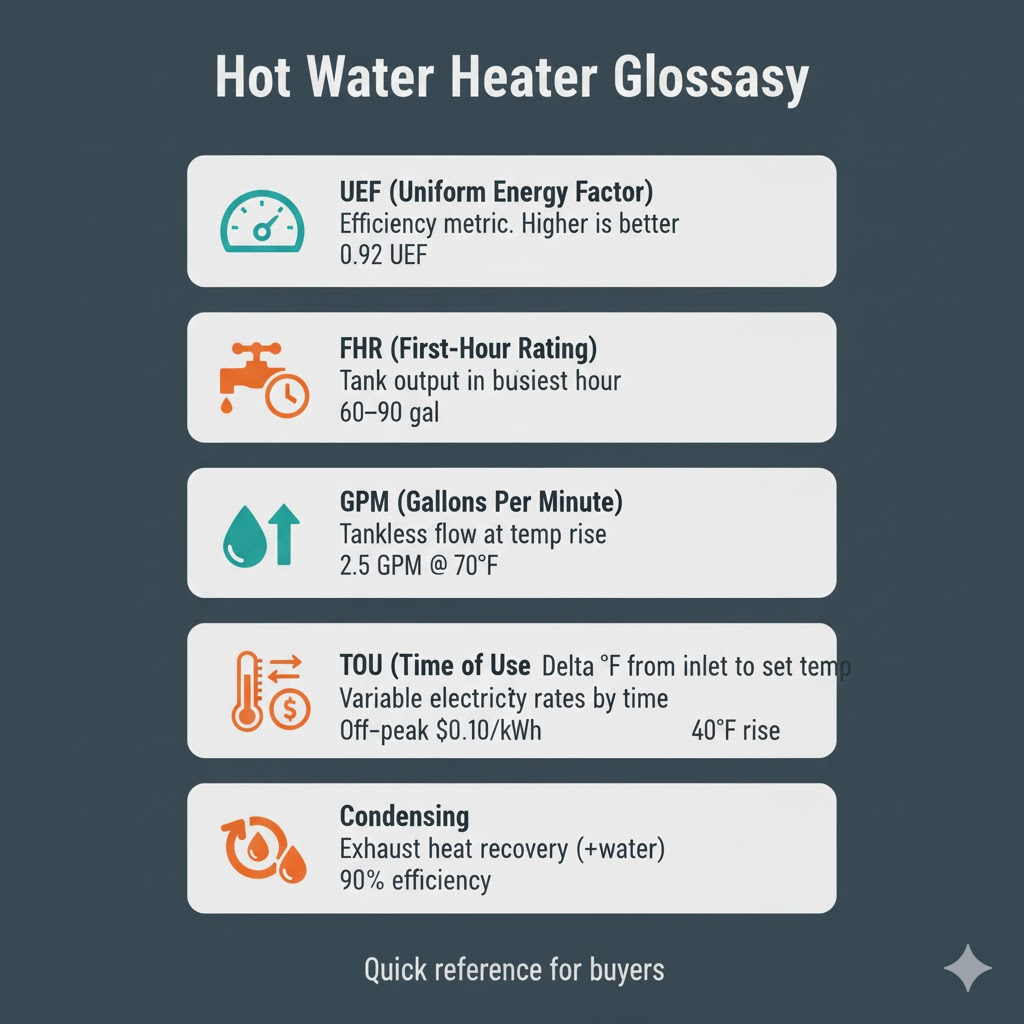
Quick Glossary (UEF, FHR, GPM & more)
- UEF: the official efficiency score – higher means less energy wasted.
- FHR: first-hour rating – how many gallons you get in the busiest hour (tanks).
- GPM: gallons per minute – the flow tankless can sustain.
- Temperature rise: hot setpoint minus coldest incoming water – bigger rise needs bigger unit.
- TOU: time-of-use rates – heat pumps love shifting to cheap hours.
- Condensing: gas units that squeeze extra heat from exhaust – way more efficient but need a condensate drain.
- CTA-2045: the little port that lets utilities (or you) tell the heater when to run – huge for demand response.
How Each Type Works
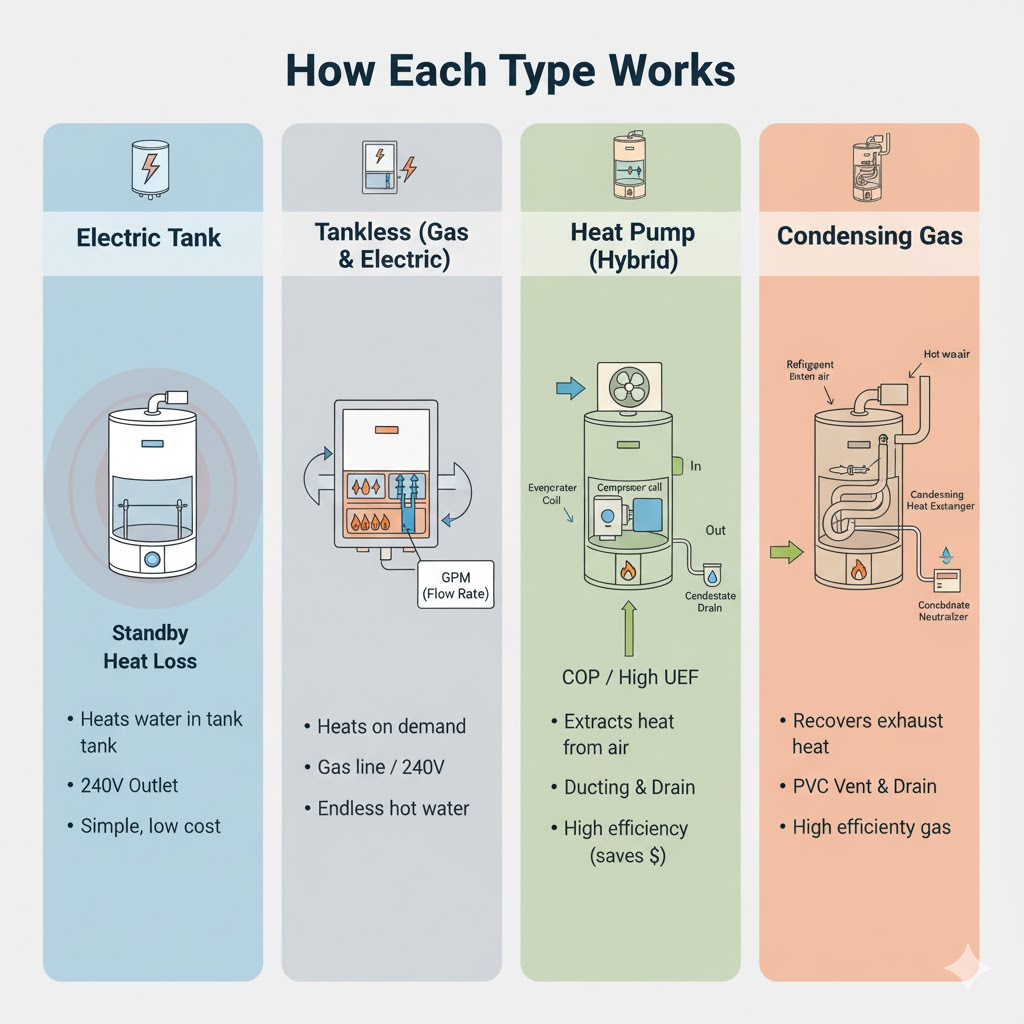
Storage (Tank) Water Heaters
Keeps 30-80 gallons hot and ready. Electric ones use big heating elements submerged in the tank; gas versions burn below and vented up the middle. Super simple, but you pay to keep that reserve warm even when nobody’s showering.
Tankless (On-Demand) Water Heaters
No tank – just heats water as it flows through. Gas models fire a big burner; electric ones slam a ton of amps through elements. You get endless hot water, but sizing is critical or you’ll run cold mid-shower.
Heat Pump (Hybrid) Electric Water Heaters
Basically an air-conditioner in reverse – pulls heat from the surrounding air and dumps it into the tank. Crazy efficient (2-4× a normal electric), but they like space and warmer air. Most have backup resistance elements for when demand spikes.
Condensing Gas Water Heaters
Like regular gas but smarter – they capture heat from the exhaust that normal units just vent away. Need plastic venting and a condensate drain (sometimes with a neutralizer), but you get tankless-level efficiency with a tank’s forgiveness on peak demand.
Electric vs Gas vs Heat Pump: Pros & Cons
Electric tanks are dead simple and quiet, but slow to recover and pricey to run if electricity is high. Gas gives you that instant recovery feel, but venting and combustion safety add hassle. Heat pumps are the efficiency champs – they basically print free hot water in mild climates – but cost more upfront and can struggle in freezing garages without planning.
Tankless (both fuels) gives endless supply and saves space, though electric ones often need a panel upgrade that makes you cry when you see the electrician bill.
Sizing & Performance Metrics
Don’t just guess gallons – look at first-hour rating for tanks or GPM at your temperature rise for tankless. A family of four doing laundry + showers at once can easily need 80-100 gallons FHR or 7-9 GPM from tankless. Cold groundwater makes everything harder – size up if you’re in the north country.
Upfront Costs & Installation
Plain electric tanks are usually the cheapest swap. Heat pumps look scary at $3-6k but rebates knock a chunk off. Gas tankless venting can turn a $1500 unit into a $4k project. Electric tankless? Hope you like $2k+ panel upgrades.
Operating Costs & Efficiency
Heat pumps win hands down on paper – UEF 3+ means roughly a third the energy of a normal electric tank. But if your electricity is 30 cents/kWh and gas is cheap, a condensing gas unit can still come out ahead. Run your own numbers – it’s 30 seconds on any online calculator with your rates.

Which Is Cheapest to Run in Your Area?
Grab last year’s bills, figure your monthly hot water energy, multiply by rates. Heat pump almost always wins unless gas is dirt cheap or electricity is brutal. Solar or TOU rates tip it even harder toward heat-pump’s way.
Environmental Impact & Safety
Gas units make CO – vent properly and put in alarms. Heat pumps have refrigerant but way lower lifetime emissions on most grids now. Electric resistance is clean at point of use but can be dirty upstream if your grid is coal-heavy.
Reliability, Maintenance & Lifespan
Tanks 8-12 years, tankless 15-20+ with descaling. Heat pumps splitting the difference but filters need cleaning. Flush everything yearly, replace anodes, and don’t ignore weird noises.
Troubleshooting & Common Mistakes
People undersize tankless all the time and get lukewarm showers. Or they put heat pumps in freezing garages and wonder why recovery sucks. Biggest rookie move: buying on price alone without checking your actual peak demand.
When Each One Wins
Heat pump if you want lowest bills and can stomach the upfront hit. Gas if you need speed and already have the line. Plain electric when you just want it done cheap and easy.
Heat Pump vs Gas: When Each One Wins
Heat pump for mild/moderate climates, solar, or TOU rates. Gas when you have cold incoming water, huge peak loads, or super cheap natural gas.
Incentives, Rebates & Regulations (2025)
25C credit is up to $2k for heat pumps. Some states stacking another $1-2k. Gas getting squeezed in a few places with low-NOx rules.
Special Cases & Installation Contexts
Cold garage? Duct the heat pump or go gas. Tiny condo? Tankless. Off-grid cabin? Probably propane tankless or heat pump with big battery bank.
Advanced Settings & Integrations (For Power Users)
CTA-2045 port lets your utility shift load – free money on some plans. Mix with solar diverter and you basically get free hot water midday.
How to Choose (Step-by-Step)
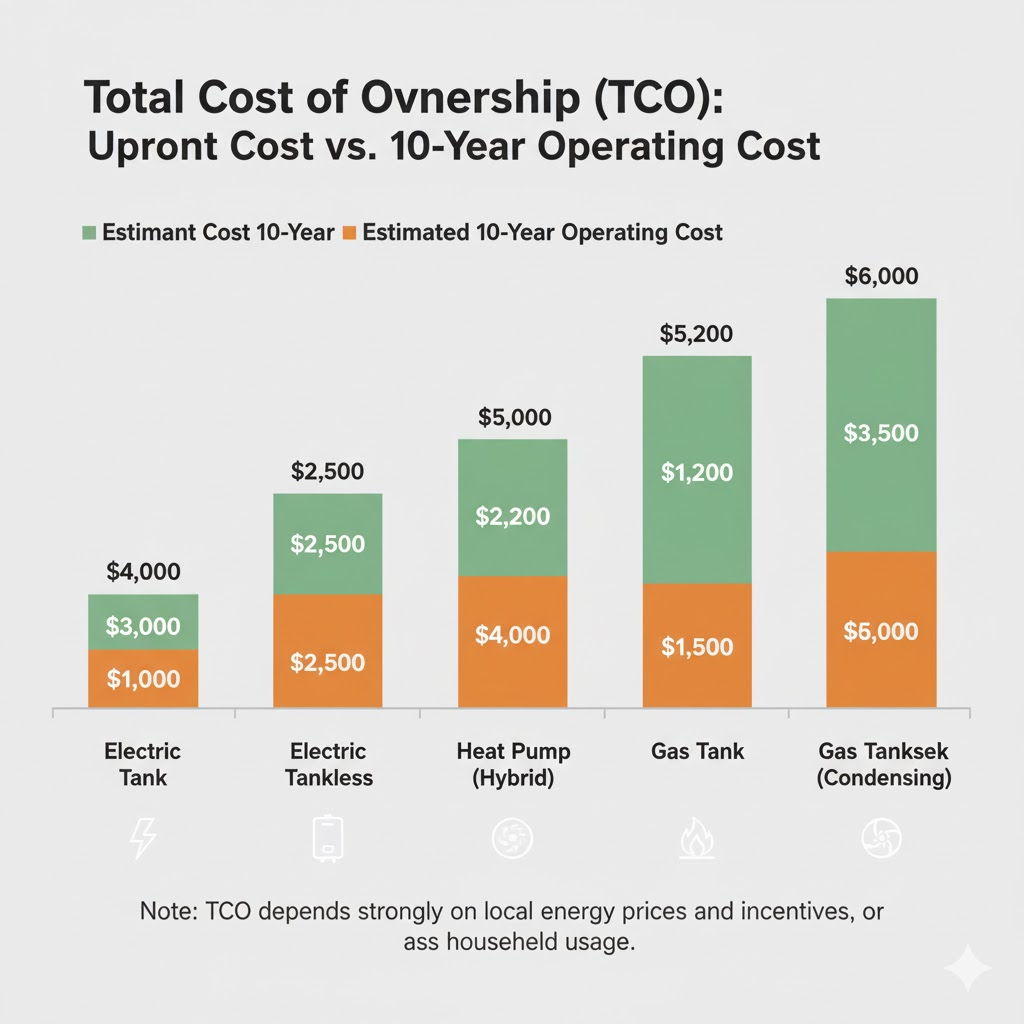
Figure peak demand, check what you already have wired/plumbed, run the 10-year cost with your actual rates and any rebates, get three quotes with the same specs.
Compare 5–10 Year Total Cost of Ownership
Blend purchase, install, fuel (using your actual rates), and expected maintenance; apply any rebates/credits.
Get Quotes & Verify UEF, FHR/GPM, and Warranty
Ask installers for model-specific ratings and written warranty terms so there are no surprises later.
Calls to action (non-affiliate):
- Compare 2–3 local quotes side-by-side with model numbers, UEF, and warranty.
- Use a simple kWh vs therm calculator to test your rates (add your utility’s pricing).
Frequent Aluminum Foil Recycling Questions

James Parker
James Parker is an environmental expert, writer, and the founder of Envirose.com. Over the years, he has dedicated his work to studying sustainable practices, renewable energy solutions, and eco-conscious lifestyles. Through Envirose, he aims to inspire individuals to make small yet powerful changes in their daily lives that can collectively create a positive impact on the planet. When he’s not writing or researching, you’ll often find him outdoors, exploring nature and finding new ways to live in harmony with it.