Home » How to Recycle and Reuse Aluminum Foil: Can You Recycle Aluminum Foil?
Natural Gas: Pros and Cons
Written by Admin | Nov 20, 2025
Key Takeaways
Natural gas burns cleaner than coal and oil at the point of use, and flexible gas plants help keep the lights on when wind and solar dip.
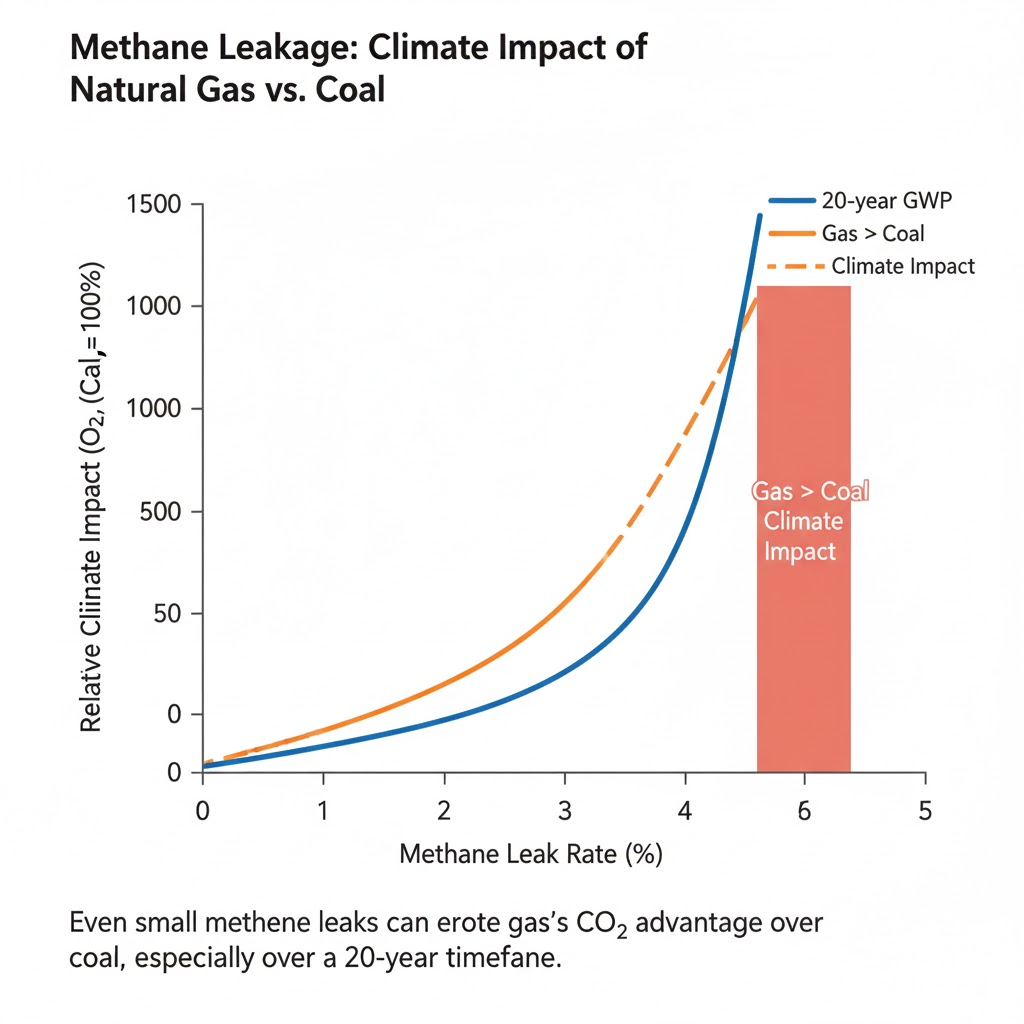
The big climate catch is methane: tiny leaks across drilling, processing, pipelines, LNG, and engines can erase much of gas’s CO₂ advantage.
Fracking unlocked abundant supply but raised worries about water, land disturbance, and induced seismicity from wastewater disposal.
Policies are tightening on methane and pipeline safety, while many cities are pushing new all-electric buildings.
Pros & Cons at a Glance
Pros
- Lower stack CO₂/air pollutants than coal/oil
- Flexible, fast-ramping power for grid balance
- Mature infrastructure + storage
- Often cost-competitive; jobs/tax base
- Works with renewables for balancing
Cons
- Methane leaks can erode climate gains
- Fracking impacts on water/land; induced quakes (wastewater)
- Non-renewable; stranded-asset risk
- Price volatility (weather, storage, LNG)
- Safety: pipelines/appliances/CO; LNG lifecycle emissions
What Is Natural Gas? (Definition, Composition, and Sources)
Natural gas is a fossil fuel found in underground rock formations and associated with oil fields. It’s mostly methane (CH₄), with small amounts of ethane, propane, butanes, CO₂, nitrogen, and water vapor. Depending on the reservoir, it’s classified as conventional, shale/tight gas (in low-permeability rock), coalbed methane, or associated gas produced alongside oil.
Quick Glossary (plain-English)
- LNG (liquefied natural gas): Natural gas chilled to a liquid for shipping; later warmed and used like pipeline gas.
- RNG (renewable natural gas): Methane captured from landfills, farms, or wastewater, cleaned to pipeline quality.
- CCUS (carbon capture, utilization & storage): Capturing CO₂ at stacks and storing or reusing it to lower emissions.
- Methane slip: Unburned methane that exits an engine or turbine.
- Mercaptan: The sulfur-based odorant utilities add so you can smell a gas leak.
How Natural Gas Is Extracted, Produced, and Distributed
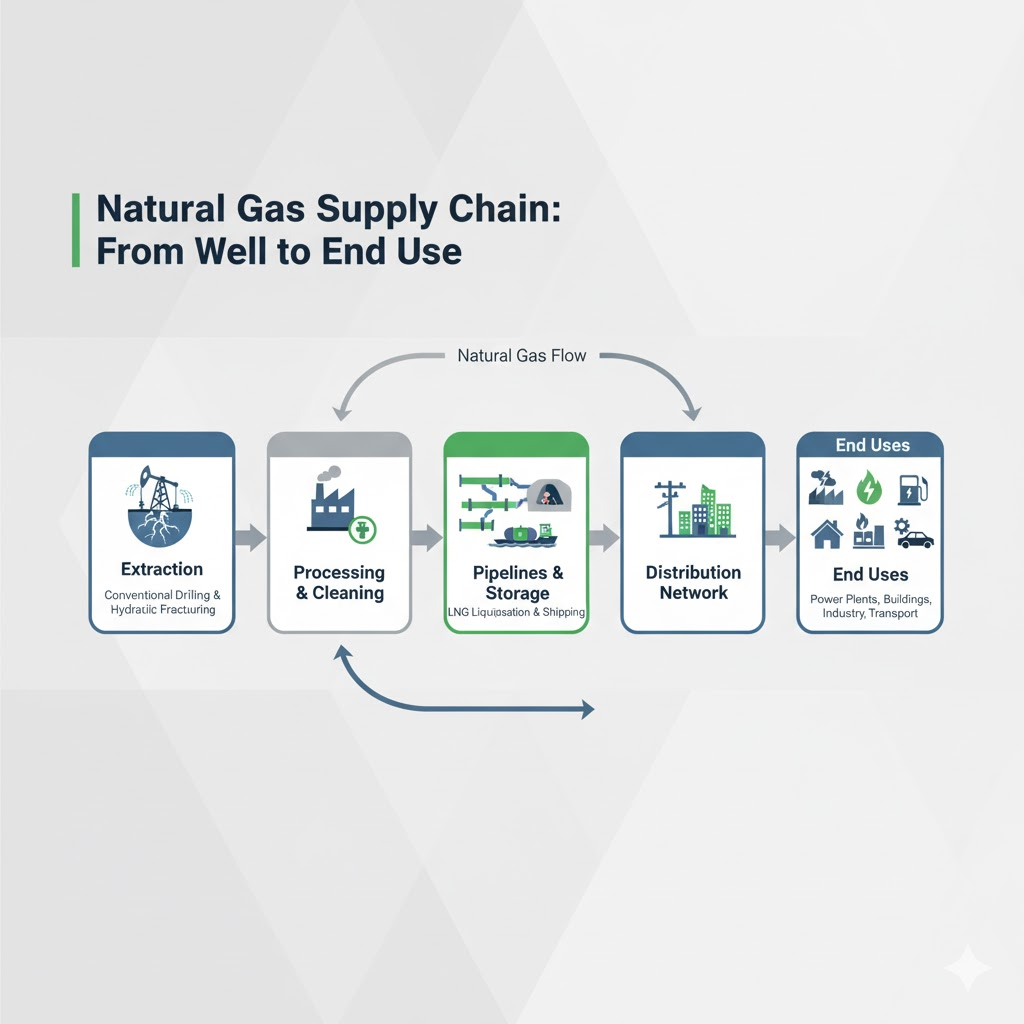
Extraction Methods (Conventional Drilling vs. Hydraulic Fracturing)
Conventional wells tap permeable formations; modern horizontal drilling and hydraulic fracturing (“fracking”) crack tight rock to release gas at scale. Fracking uses large volumes of water mixed with sand and additives; if mismanaged, spills and faulty well integrity can contaminate water, and wastewater disposal can trigger felt earthquakes—typically from deep injection rather than the fracturing itself. Communities near development also experience noise, traffic, and air emissions during drilling and completion.
Processing, Pipelines, Storage, and LNG (Liquefaction/Regasification)
How it works (simple view): After gas is produced, it’s cleaned and dried. Some is chilled into a liquid for overseas shipping. Underground storage smooths winter peaks and summer lulls.
Raw “wet” gas is treated to remove water, CO₂, H₂S, and to separate hydrocarbon liquids. Dry pipeline-quality gas then moves through a 3-million-mile U.S. network of gathering, transmission, and distribution pipelines to end users. Operators also store gas underground (depleted reservoirs, aquifers, salt caverns) to balance seasonal demand. For overseas trade, gas is liquefied to LNG (-162 °C) for shipping and later regasified near demand centers.
Visual placeholder: [Insert flow diagram] Well → Processing → Pipelines/Storage or LNG → End uses (add alt text describing each step).
Where Natural Gas Is Used
Power Generation (Baseload, Peakers, and CHP)
Combined-cycle plants provide efficient bulk power; simple-cycle “peakers” and fast-start engines ramp within minutes to cover sudden gaps; and combined heat and power (CHP) systems capture waste heat for buildings/campuses. This flexibility is valuable when variable renewables fluctuate.
Real-world example: Hospitals and data centers often pair CHP for resilience during outages.
Buildings (Heating, Water Heating, Cooking)
Millions of homes and businesses use gas furnaces, boilers, and water heaters. Gas stoves are common but can emit NO₂ and other pollutants indoors without good ventilation—one reason agencies are studying improved standards and ventilation practices.
Real-world example: Tight, modern kitchens benefit from outside-venting hoods to control NO₂ during cooking.
Industry and Petrochemicals (Feedstocks & Process Heat)
Industry depends on gas for high-temperature heat and as a feedstock (e.g., ammonia, methanol, plastics). Continuous heat supply and price stability matter deeply to manufacturers and local economies.
Real-world example: Fertilizer plants use natural gas both as fuel and as a hydrogen source to make ammonia.
Transportation (CNG/LNG & Marine Bunkering)
Natural gas powers some truck and bus fleets (CNG/LNG) and increasingly fuels ships via LNG bunkering to cut sulfur and particulate pollution relative to heavy fuel oil. Climate benefits depend on controlling methane leakage and engine “methane slip.”
Real-world example: Several ports now offer LNG bunkering for container ships to meet sulfur caps.
Advantages of Natural Gas
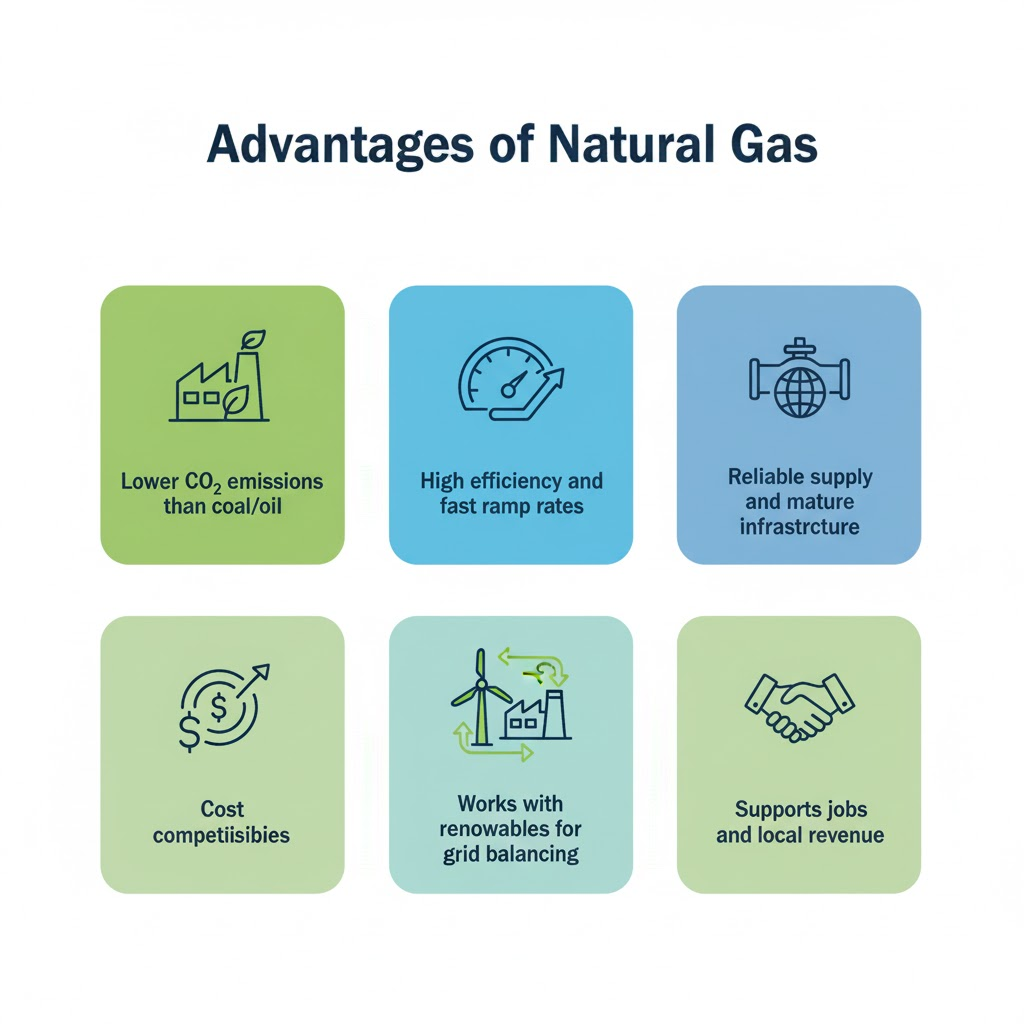
Lower CO₂ Emissions at Combustion vs. Coal and Oil
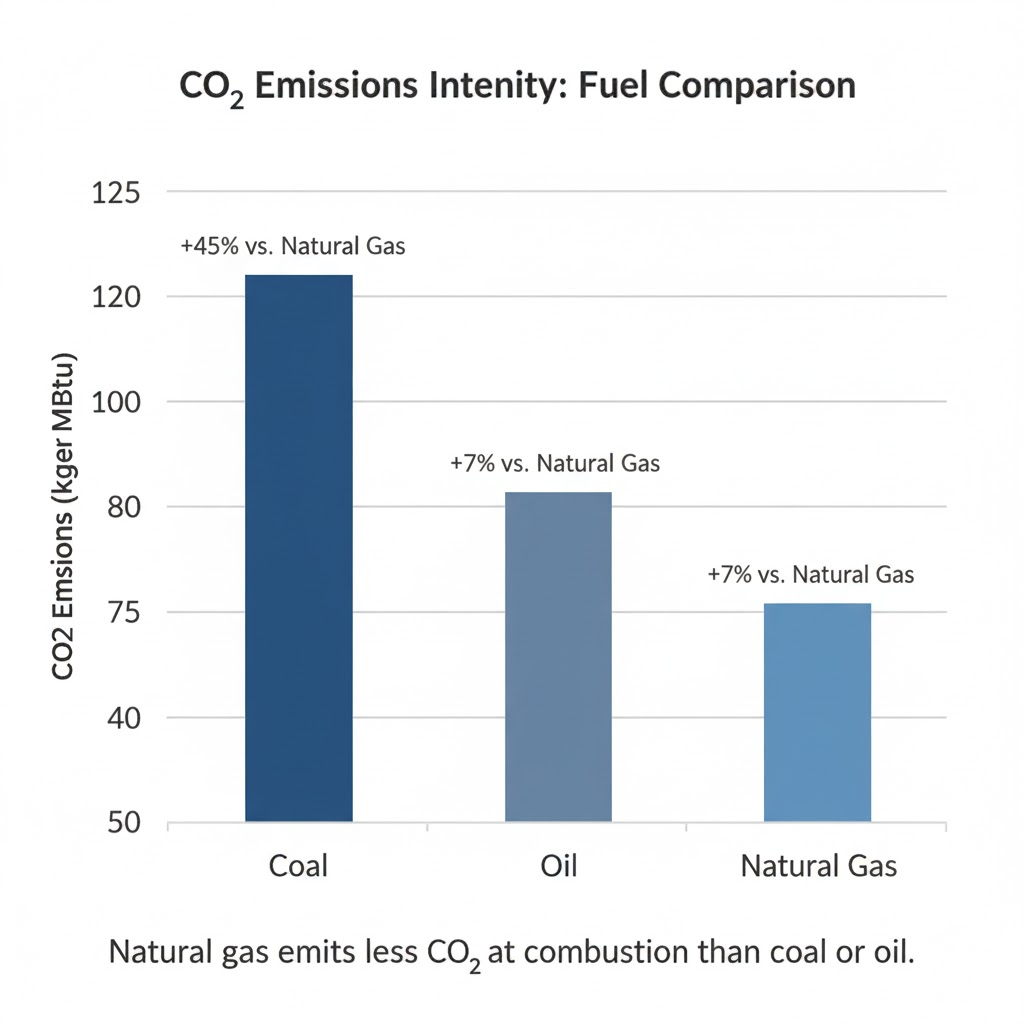
Per unit of energy, gas produces substantially less CO₂ and conventional air pollutants than coal or oil when burned—one reason many grids shifted from coal to gas over the last decade.
coal vs. oil vs. natural gas
High Power-Generation Efficiency and Fast Ramp Rates
Combined-cycle plants reach high thermal efficiencies, and simple-cycle turbines can start and hit load quickly—useful for keeping the grid stable during heat waves, cold snaps, or sudden dips in wind/solar.
Versatility Across Sectors and Reliable Supply
From peaking power and CHP to boilers, kilns, and feedstocks, gas supports diverse energy services. Underground storage and extensive pipeline interconnections help meet winter peaks and industrial demand.
Established Infrastructure and Ease of Transport
Mature processing, pipelines, and storage make delivery predictable, while LNG allows global trade between distant producers and consumers.
Cost Competitiveness and Economic Benefits (Jobs & Local Revenues)
Ample domestic supply and infrastructure can translate into competitive energy costs, while upstream, midstream, and utility operations support jobs, tax revenue, and royalties—particularly in producing regions.
Integration with Renewables (Balancing/Backup for Variable Output)
Fast-start gas units provide balancing and ancillary services that reduce curtailment and keep frequency steady as wind and solar scale—important for reliability as electrification grows.
Decarbonization Options: CCUS, Renewable Natural Gas (Biomethane), and Hydrogen Blending
Emerging options include carbon capture on gas power/industrial units, renewable natural gas from landfills and digesters, and blending small percentages of hydrogen into gas networks—each with different readiness, costs, and limits.
Disadvantages and Risks
Methane Leakage Across the Supply Chain
Methane is a powerful short-term warmer (≈81–83× CO₂ over 20 years). Even modest leak rates can erode gas’s climate edge; studies repeatedly find emissions higher than earlier inventories in parts of the system. Cutting leaks fast is critical.
Environmental and Water Impacts of Fracking
Fracking and associated operations can disturb land, strain local water, generate large wastewater volumes, and cause small earthquakes (mostly via wastewater injection). Community concerns often center on groundwater protection and truck traffic.
Air Quality and Health (NO₂, VOCs; Indoor & Outdoor)
Combustion and equipment can emit NOₓ and VOCs. Indoors, unvented or poorly vented gas cooking can raise NO₂, irritating lungs and exacerbating asthma—hence the push for better hoods, ventilation, and standards.
Non-Renewable Resource and Stranded-Asset Risk
Gas is finite. As climate policies tighten and clean technologies scale, long-lived gas assets (pipelines, plants) face utilization risk if emissions aren’t mitigated.
Price Volatility (Weather, Storage Levels, Demand, Geopolitics)
Gas prices swing with weather, storage balances, production, and global LNG dynamics—affecting power prices and fuel-switching between coal and gas.
Infrastructure and Safety (Pipelines, CO/Explosions)
Aging pipes and high-pressure lines carry safety risks—hence new rupture-mitigation valve requirements and emergency protocols. Proper appliance installation and CO detectors are essential at home.
Lifecycle Emissions of LNG vs. Pipeline Gas
Liquefaction, shipping, and regasification add emissions. So do supply-chain leaks and engine “methane slip.” Analyses differ, but several show LNG’s lifecycle climate benefit can shrink—or reverse—if methane controls are weak.
Geopolitics and Energy Security (Import Dependence & Supply Disruptions)
Shifts in pipeline flows and LNG trade alter exposure to outages and price shocks. New pipeline capacity and LNG export growth also rewire regional security and pricing.
Policy and Regulatory Landscape
Methane Rules, Monitoring, and Super-Emitter Programs
Federal actions include EPA methane standards for oil and gas and Interior rules to cut waste and flaring on public lands; satellites and aerial surveys increasingly target “super-emitters” for rapid response. (Program details continue to evolve in 2024–2025.)
Mini case: Several operators have reduced large episodic emissions by pairing continuous monitors with rapid repair teams.
Building Electrification and Gas Restrictions in New Construction
New York City’s Local Law 154 phases out on-site fossil combustion in most new buildings, steering heating, hot water, and cooking toward electric solutions on a defined schedule. Other jurisdictions are exploring similar codes or performance standards.
Pipeline and Appliance Safety Standards
PHMSA’s 2022 “Valve Rule” requires rupture-mitigation valves, faster rupture detection, 9-1-1 notification, and post-incident reviews for many new or replaced pipelines—aimed at limiting release volumes and consequences.
Economic Impacts and Market Dynamics
Jobs, Investment, and Local Tax Bases
Upstream and midstream projects bring capital spending, payrolls, and local tax/royalty flows—especially in shale regions and LNG hubs—though activity can be cyclical.
Mini case: Utilities that replaced leak-prone mains reported fewer emergency calls and lower non-revenue gas over time.
What Drives Natural Gas Prices (Weather, Storage, LNG Exports)
Cold snaps, heat waves, storage injections/withdrawals, production trends, and LNG export demand all tug on Henry Hub prices and basis differentials, influencing power dispatch and fuel-switching.
Energy Security Considerations
Diversified supply routes, storage capacity, and flexible generation contribute to resilience—but reliance on imports or single corridors heightens risk if supply is disrupted.
Natural Gas in the Energy Transition
Bridge Fuel or Transitional Role—Limits and Timelines
Gas helped cut smokestack pollutants and CO₂ where it displaced coal, but its long-term role hinges on virtually eliminating methane loss and deploying capture or low-carbon substitutes where feasible.
Technology Trends to Reduce Emissions (Leak Detection, CCUS, RNG, Blue/Green Hydrogen)
High-frequency leak detection (satellites, aircraft, continuous monitors), tighter equipment standards, CCUS pilots, RNG projects, and small-percent hydrogen blending are all expanding—each with distinct costs and system constraints.
Comparative Emissions vs. Coal, Oil, and Renewables
At the stack, gas emits substantially less CO₂ and criteria pollutants than coal or oil; over the full lifecycle, outcomes depend on methane control. Wind, solar, and hydro avoid combustion emissions entirely.
For Energy Managers: Measurement & Verification Notes
- Pick LDAR strategies (OGI cameras, fixed sensors, satellite sweeps) based on facility layout and wind patterns.
- Track rate of repair and time-to-fix as core KPIs alongside leak counts.
- For CCUS, verify capture rates with calibrated meters and disclose energy penalties in reports.
- When comparing lifecycle studies, note system boundaries (upstream only vs. full well-to-wire) and methane GWP time horizon (20 vs. 100 years).
Practical Guidance for Users
Reducing Emissions When Using Gas (Efficiency, Maintenance, Leak Checks)
If you rely on gas, keep appliances tuned, insulate and weatherize, and schedule periodic leak checks—small fixes add up for bills and emissions. Utilities and contractors can help verify tight connections and proper combustion.
Improving Indoor Air Quality (Ventilation, Hoods, Detectors)
Use a vented range hood every time you cook; open a window if you don’t have an outside-venting hood. Place carbon-monoxide detectors near sleeping areas and maintain them—simple steps that protect health and peace of mind.
When Electrification Makes Sense (Heat Pumps, Induction, Building Retrofits)
For many homes and new builds, efficient heat pumps and induction cooking can cut indoor pollution and climate impact. Local codes (like NYC’s LL154) and incentives may tip the math toward electrification in new construction.
Quick Troubleshooting
Stove fumes or eye irritation? Use the hood on high and crack a window; schedule a vent inspection.
Smell gas? Leave immediately; avoid switches; call your utility’s emergency number.
Boiler/Furnace won’t ignite? Check thermostat batteries and filters; book professional service—don’t attempt gas-line repairs.
Frequent Ask Questions

James Parker
James Parker is an environmental expert, writer, and the founder of Envirose.com. Over the years, he has dedicated his work to studying sustainable practices, renewable energy solutions, and eco-conscious lifestyles. Through Envirose, he aims to inspire individuals to make small yet powerful changes in their daily lives that can collectively create a positive impact on the planet. When he’s not writing or researching, you’ll often find him outdoors, exploring nature and finding new ways to live in harmony with it.