No-Plastic Coffee Makers
Written by Admin | Nov 20, 2025
At a Glance: Best No-Plastic Coffee Makers by Brew Method
(Quick winners with “best for” guidance to speed your choice—details below and in the table.)
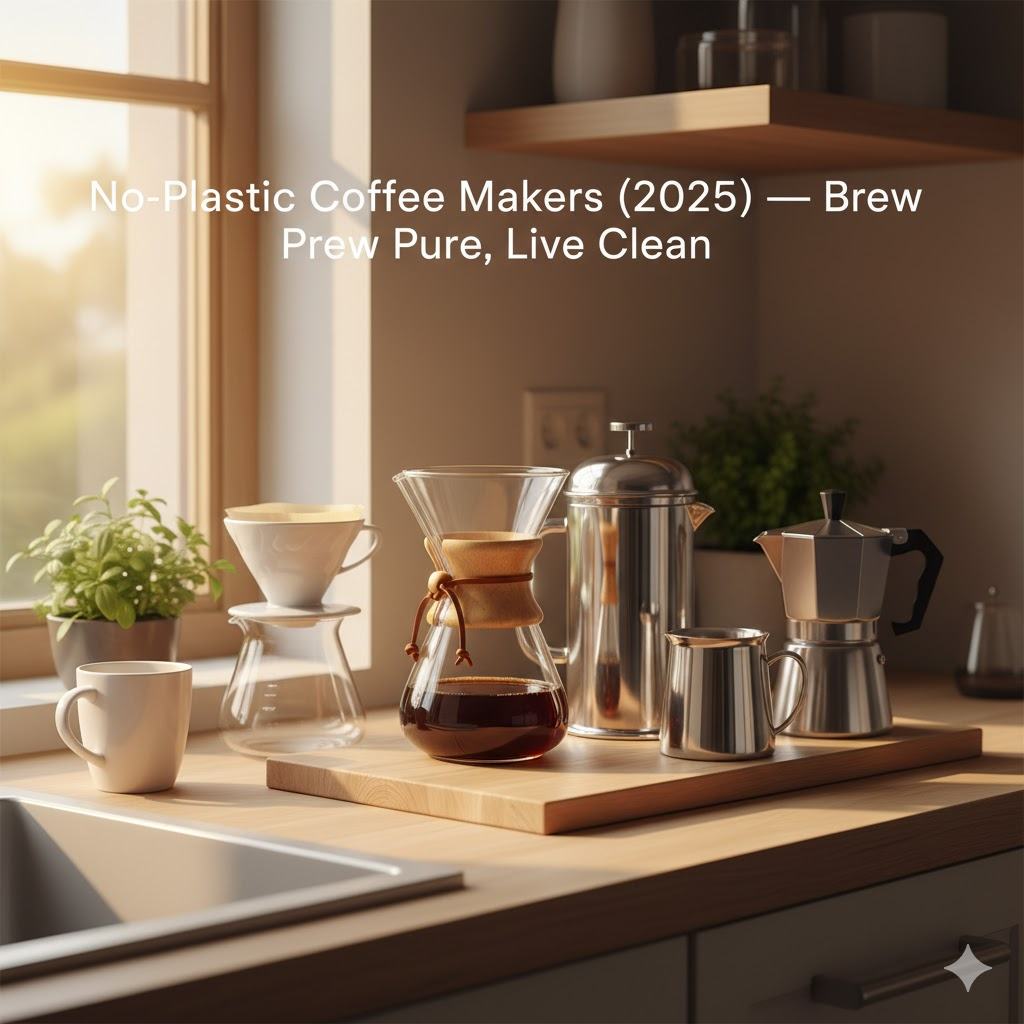
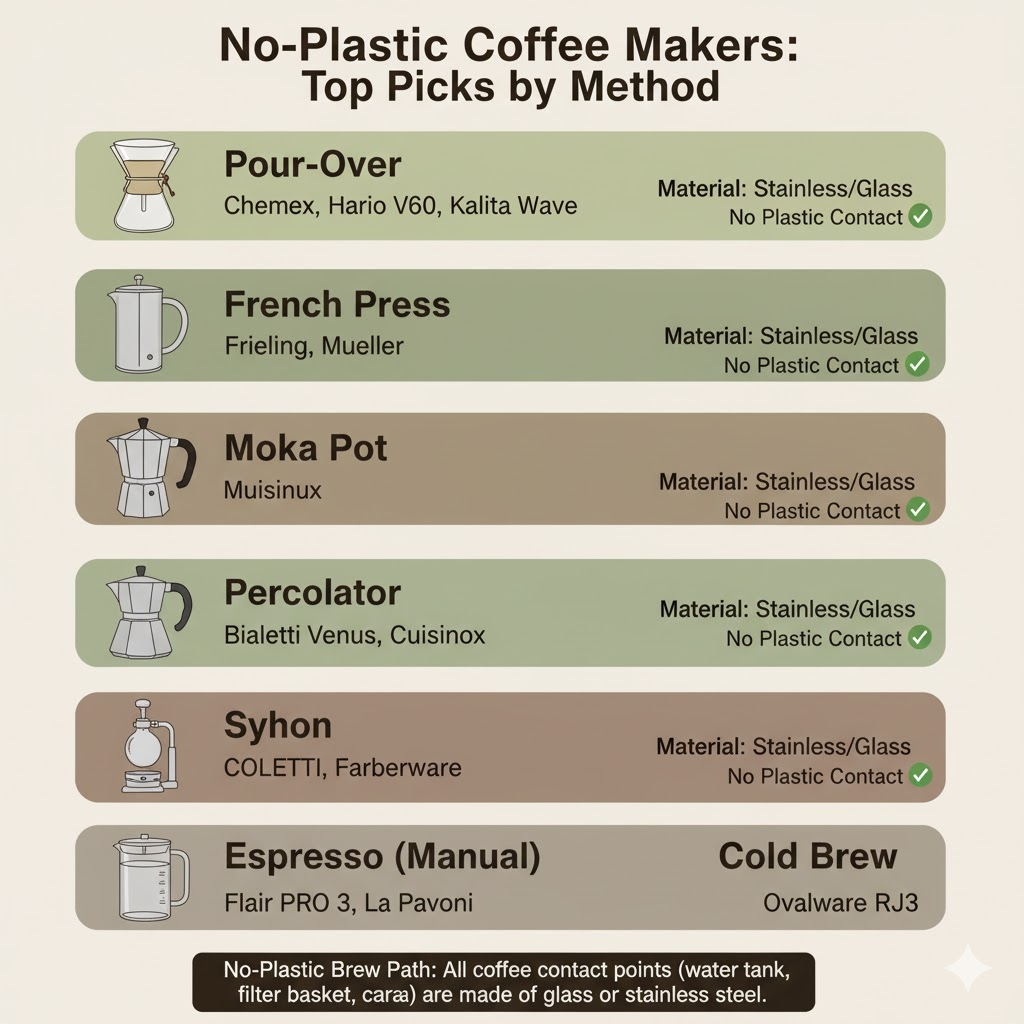
- Pour-Over: Chemex (all glass) (best for clean, bright cups), Hario V60 (ceramic) (best for control and ritual), Kalita Wave (stainless/copper) (best for even extraction).
- French Press: Frieling All-Stainless (best heat retention), Mueller All-Stainless (best budget all-metal).
- Moka / Stovetop Espresso: Bialetti Venus (18/10 stainless) (best stainless moka), Cuisinox (stainless) (premium build option).
- Percolator (Stovetop/Camp): COLETTI Bozeman (all stainless + glass dome) (camp-ready), Farberware Yosemite (stainless) (kitchen classic).
- Siphon / Vacuum: Hario Technica (borosilicate) (showpiece clarity), Yama Glass (borosilicate) (stovetop-friendly).
- Manual Espresso (Lever/Portable): Flair PRO 3 (stainless brew head) (best entry to true espresso without plastic), La Pavoni Europiccola (chrome-plated brass) (heritage lever).
- Cold Brew: Ovalware RJ3 (glass + stainless) (no-heat, clean flavor), Hario Mizudashi (glass pot; note plastic frame/filter) (budget intro).
- Electric Drip (minimal plastic contact): Technivorm Moccamaster (copper element; BPA/BPS/BPF-free plastics in non-heated areas) (best minimal-plastic electric).
Comparison Table: Materials, Capacity, Heat Source & Price
| Brewer | Brew Method | Brew-Path Materials | Capacity (approx.) | Heat Source | Typical Price* | Brew-Path Plastic |
| Chemex Classic | Pour-over | Borosilicate glass + paper/cloth/metal filter | 3–13 cups | External kettle | $40–$140 | No |
| Hario V60 (ceramic) | Pour-over | Glazed ceramic + paper/cloth/metal filter | 1–4 cups | External kettle | $20–$40 | No |
| Kalita Wave (SS) | Pour-over | Stainless steel + paper filter | 1–4 cups | External kettle | $40–$80 | No |
| Frieling Press | French press | 304 SS carafe & filter | 17–44 oz | Kettle | $100+ | No |
| Mueller SS Press | French press | 304 SS carafe & filter | 34 oz | Kettle | ~$50 | No |
| Bialetti Venus | Moka | 18/10 stainless brew path | 2–10 cups | Stovetop | $40–$70 | No (handle/knob external) |
| COLETTI Bozeman | Percolator | Stainless + glass dome | 9–12 cups | Stovetop/campfire | $40–$60 | No |
| Hario Technica | Siphon | Borosilicate glass + SS filter options | 3–5 cups | Alcohol/butane | $80–$120 | No |
| Flair PRO 3 | Manual espresso | SS brew head + cast aluminum frame | 1–2 shots | Kettle | $300+ | No |
| Ovalware RJ3 | Cold brew | Borosilicate glass + SS mesh | 1.0–1.5 L | No heat | $35–$60 | No |
| Moccamaster KBGV | Electric drip | Copper element; glass carafe; BPA/BPS/BPF-free plastics | 10 cups | Electric | $300–$350 | Low (not in heated path) |
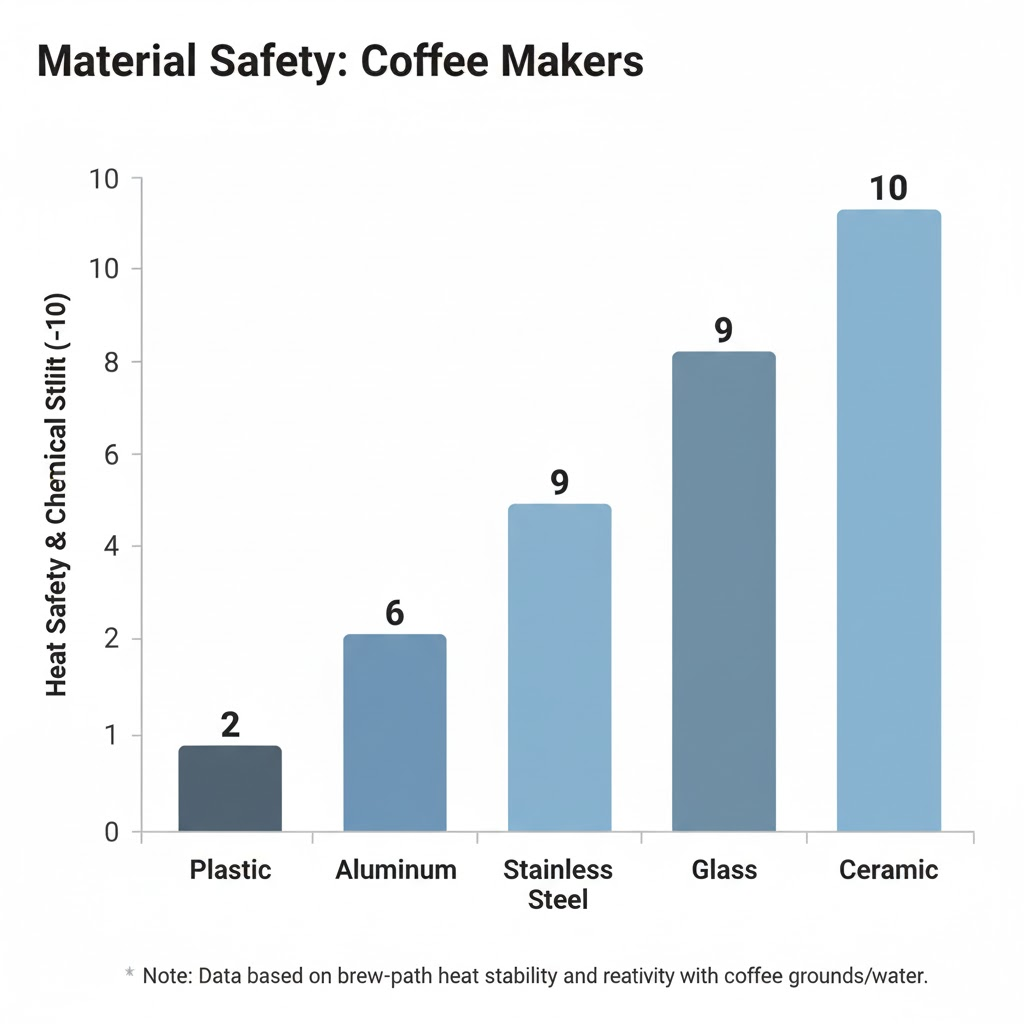
Why Brew Without Plastic?
Answer-first: Brewing with non-plastic materials protects taste, temperature stability, and your exposure profile—while cutting long-term waste.
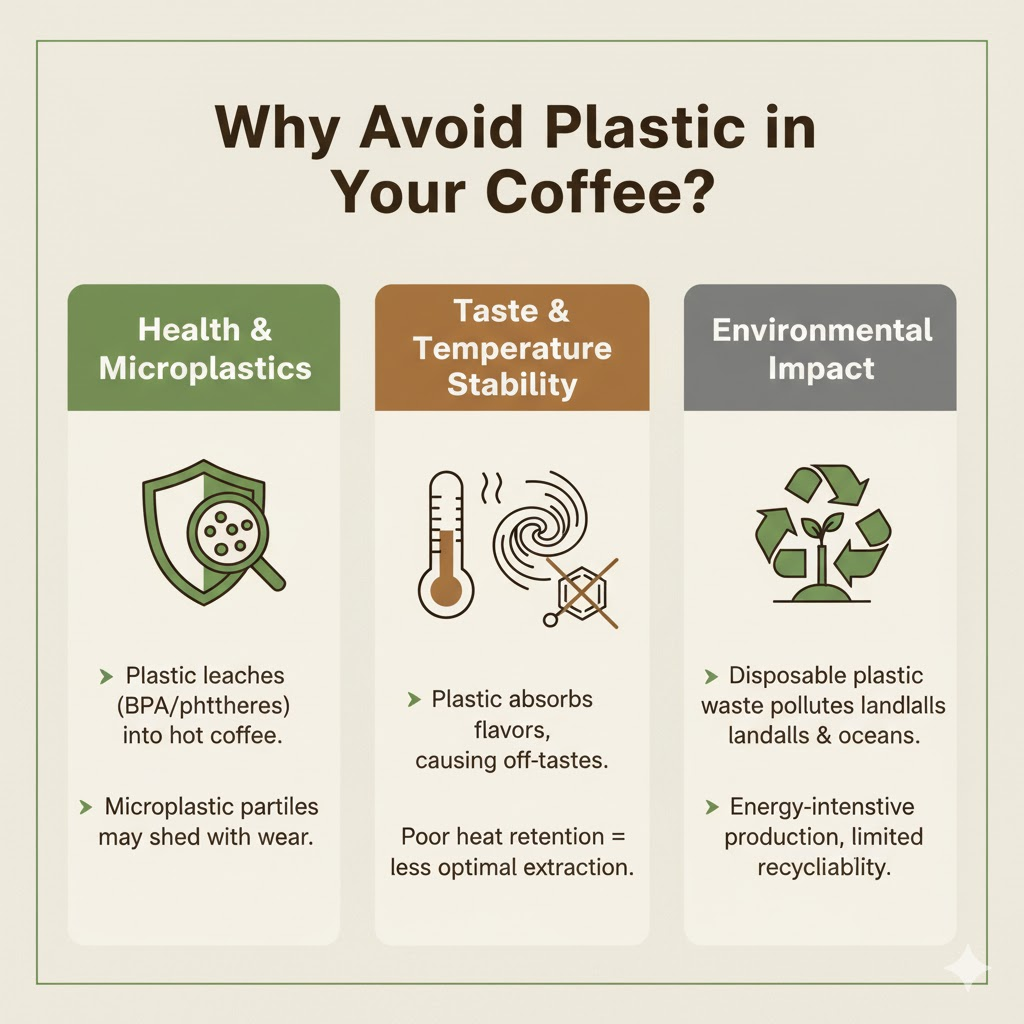
Health & Microplastics
Hot water and steam can make plastic components shed micro- and nanoplastics and can accelerate migration of additives like BPA and phthalates—a risk that climbs with temperature and acidity (coffee ticks both boxes). Choosing glass, stainless, or ceramic in the brew path avoids that exposure.
Taste & Temperature Stability
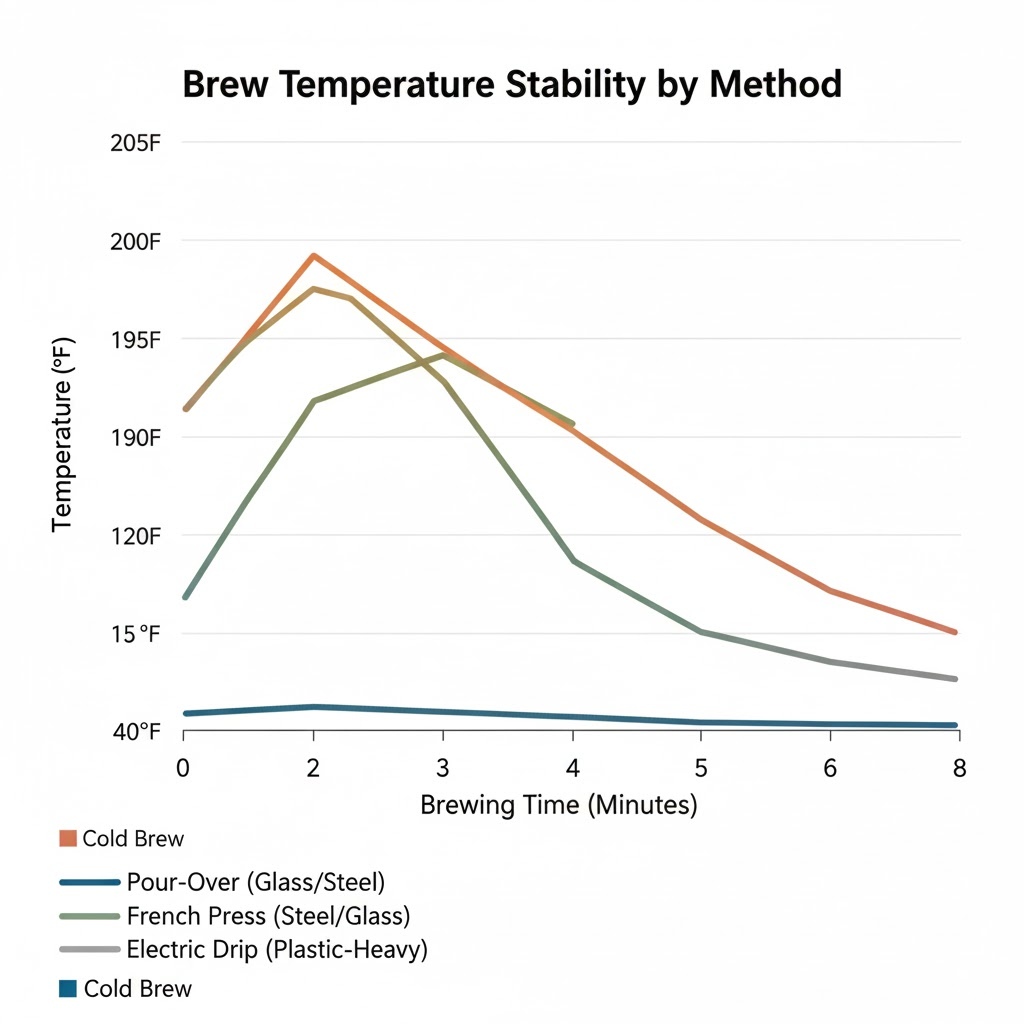
Metal and glass keep brew water in the sweet spot longer and won’t add off-flavors. For example, high-end drip machines target ~196–205°F for optimal extraction—something copper or steel boilers maintain more steadily than plastic-heavy designs.
Environmental Impact
Plastic brew-path parts and pods are hard to recycle and often persist as microplastics. Opting for durable metal/glass brewers (and reusable filters) cuts waste at the source. (See PFAS/microplastics concerns in packaging and pods under FAQs and Pods sections.)
What Counts as a “No-Plastic” Coffee Maker?
Answer-first: It’s one where no plastic touches hot water, steam, or coffee—only glass, stainless steel, or ceramic do.
Contact-Path Rule (Water, Steam, Brew, and Storage Surfaces)
Only count materials that touch hot water, steam, or coffee: boiler/kettle, filter assembly, basket, siphon chambers, carafe interior, and any gaskets/valves on that path.
BPA-Free vs. Truly Plastic-Free
“BPA-free” just removes one chemical; it doesn’t mean no plastic or no other additives. Plastic-free brew paths avoid the category altogether. Prop 65 lists BPA due to reproductive toxicity; warnings may apply to products with BPA-containing components.
Hidden Plastics to Watch For (Lids, Gaskets, Valves, Coatings)
Common hideouts: lid liners, valve seats, showerhead plates, “non-stick” coatings, and filter baskets. Food-grade silicone is an elastomer (not plastic) commonly authorized for food contact when formulated correctly, but confirm it’s used only where needed (e.g., gaskets) and not in the hot-water path as bulk parts.
Safe Materials (304/316 Stainless, Borosilicate Glass, Inert Ceramics)
304 (18/8) and 316 stainless, borosilicate glass, and well-fired ceramics are stable at brew temperatures and don’t rely on plasticizers.
Use-With-Caution Materials (Aluminum, Brass/Chrome, Non-Stick Coatings)
Aluminum can pit/leach in acidic environments over time; brass/chrome parts vary by maker (look for reputable brands and disclosed alloys); avoid mystery non-stick linings in any hot-contact area.
Labels & Standards to Check (LFGB, FDA Food-Contact, Proposition 65)
Look for FDA food-contact compliance (US), LFGB (Germany/EU), and awareness of California Prop 65 warnings on plastics. These don’t guarantee plastic-free, but they flag how a brand approaches safety.
How the Brew Path Works (in 20 seconds)
Kettle or boiler heats water → water meets showerhead or passes through a filter basket → hot water extracts coffee → brewed coffee collects in a carafe or cup. Only these contact points should be glass, stainless, or ceramic.
Quick Glossary (Plain-English)
- Brew path: Every surface hot water/steam/coffee touches from heat to cup.
- Borosilicate glass: Lab-grade, heat-resistant glass that won’t absorb flavors.
- 304/316 stainless: Food-grade steels; 316 has higher corrosion resistance.
- Food-grade silicone: Heat-tolerant elastomer used for gaskets/seals—not a bulk plastic part.
- LFGB: German/EU food-contact standard often stricter than basic compliance.
- Prop 65: California list of chemicals requiring warnings (e.g., BPA).
Best No-Plastic Coffee Makers by Brew Method
Pour-Over (Manual Drippers)
What to Look For (Filter Type, Flow Control, Thermal Management)
Choose glass/ceramic/metal drippers, a kettle you can control, and a filter you trust (unbleached paper, cloth, or stainless). Thick glass/ceramic retain heat well; flat-bottom designs (e.g., Kalita) aid even extraction.
Top Picks
Chemex – All-glass carafe; pairs with paper, cloth (CoffeeSock), or metal filters. Iconic, simple, plastic-free brew path.
Why you’ll love it: brilliantly clean flavor and easy to rinse.
Hario V60 Ceramic – Japanese Arita-yaki porcelain dripper; pure ceramic in the brew path.
Why you’ll love it: incredible control over flow and strength.
Kalita Wave (Stainless or Copper) – Flat-bottom geometry for even flow; stainless or copper options with paper filters.
Why you’ll love it: forgiving, consistent extractions for everyday use.
French Press
What to Look For (All-Metal Internals, Double-Wall Options)
Seek all-stainless internals (plunger screens, walls, spout) and double-wall insulation for heat retention without plastic linings.
Top Picks
Frieling All-Stainless – Double-wall 304 SS, metal plunger/filter assembly.
Why you’ll love it: stays hot for ages; durable and dishwasher-friendly.
Mueller All-Stainless – 304 SS, multi-screen filtration, no glass to break.
Why you’ll love it: budget-friendly and camp-proof.
Moka Pot / Stovetop Espresso
Stainless vs. Aluminum: Pros, Cons, and Care
Stainless models avoid aluminum reactivity and are easier to keep spotless; aluminum is lighter and classic but can react with acids. If you choose aluminum, gentle hand-wash and dry promptly.
Top Picks
Bialetti Venus (18/10 stainless) – Stainless brew path; external plastic handle/knob away from coffee.
Why you’ll love it: classic moka flavor without aluminum.
Cuisinox – Stainless moka options with full metal brew path (confirm size and gasket material per model).
Why you’ll love it: premium finishes and induction-ready bases (model-dependent).
Percolator (Stovetop & Camp)
All-Metal Builds & Basket Design
Look for all-stainless bodies and baskets with a glass dome to monitor percolation; no interior plastics.
Top Picks
COLETTI Bozeman – Stainless construction, glass view dome, built for stovetop or campfire.
Why you’ll love it: rugged, simple, and perfect for groups.
Farberware Classic/Yosemite – All-stainless stovetop percolators with metal baskets.
Why you’ll love it: economical and easy to service.
Siphon / Vacuum Pot
All-Glass Assemblies & Alcohol vs. Butane Burners
Go for borosilicate glass upper/lower bowls; choose alcohol or butane burner kits you’re comfortable with.
Top Picks
Hario Technica – Heat-resistant glass with metal stand components; theatrical, clean-tasting cups.
Why you’ll love it: show-stopping clarity and aroma.
Yama Glass Stovetop – Borosilicate glass design intended for stovetop use.
Why you’ll love it: mesmerizing brew with minimal bitterness.
Manual Espresso (Lever & Portable)
Metal Brew Paths, Pressure & Crema Considerations
You want all-metal brew groups, baskets, and showers. Preheating and grind quality are key for crema.
Top Picks
Flair PRO 3 – Stainless steel brewing head; lever-driven, no electricity; 5-year warranty on core parts.
Why you’ll love it: café-level shots with zero plastic in the brew group.
La Pavoni Europiccola – Chrome-plated brass classic with minimal plastic; lever control and proven longevity.
Why you’ll love it: timeless ritual and heirloom durability.
Cold Brew (No-Heat, Immersion)
Mesh Quality & Glass Canisters
Favor borosilicate glass canisters and stainless filters for clean flavor and zero heat-plastic contact.
Top Picks
Ovalware RJ3 – Hand-blown glass + 18/8 stainless filter; “nothing plastic” in brew path.
Why you’ll love it: smooth, low-acid concentrate with minimal cleanup.
Hario Mizudashi – Glass pot with removable fine-mesh filter; note plastic frame/filter components (not ideal if you want zero plastic).
Why you’ll love it: easy entry to cold brew on a budget.
Electric Drip With Minimal Plastic Contact
Answer-first: Truly plastic-free electric machines are rare—verify metal boiler/shower, and keep any plastics away from heat and water flow.
What to Verify (Water Path, Boiler, Basket, Carafe)
Confirm metal boilers/showerheads, glass or thermal-steel carafes, and that any necessary plastic parts are BPA/BPS/BPF-free and not heated.
How do I verify my brew path in 60 seconds?
- Open the basket: check material of the shower plate and basket (look for metal).
- Peek at the reservoir & lines: translucent plastic inside a heated path is a red flag.
- Check the carafe & lid interior: glass or stainless preferred; avoid plastic liners.
- Ask support for a materials map: save their response for your records (link to brand support).
Shortlist Candidates
Technivorm Moccamaster KBGV – Copper boiling element, glass carafe, and BPA/BPS/BPF-free plastics in non-heated areas; handmade in the Netherlands.
Brief compare: Moccamaster vs. Ratio (materials focus)
- Boiler: Copper (Moccamaster) vs. high-spec heating on Ratio models.
- Carafe: Glass (Moccamaster) vs. glass/thermal options (Ratio).
- Plastic in path: Both minimize; verify each model’s basket and lid internals before purchase.
Brewing Quality & Performance
Brew Temperature & Heat Retention
Stable brew temps (roughly 196–205°F) unlock sweetness without bitterness. Double-wall stainless and thick glass hold heat; copper elements in quality drip machines reach and maintain target temperatures reliably.
Saturation, Bloom, and Extraction Control
Pour-over rigs let you pre-wet (bloom) and control flow for even extraction; flat-bottom baskets (e.g., Kalita) help reduce channeling.
Grind Size, Flow Rate, and Filter Choice
Grind coarser for press/percolator, medium for pour-over, medium-fine for moka/siphon, and espresso-fine for levers. Paper filters strip oils for clarity; metal/cloth preserve body.
Cold Brew & No-Heat Options for Ultra-Low Plastic Exposure
Cold brew avoids heat-driven migration entirely; pair glass canisters with stainless filters for the cleanest path.
Setup & Supporting Gear (Plastic-Free)
Kettles (Stainless or Enameled)
Use all-stainless or enamel-on-steel kettles/goosenecks for temp control and clean flavor.
Filters (Unbleached Paper vs. Metal Mesh)
Unbleached paper or stainless/cloth are reliable. Be aware that some paper food packaging has used PFAS; look for brands that confirm PFAS-free filters or choose stainless/cloth to avoid coatings entirely.
Grinders (Burr Types & Materials)
Burr grinders (steel/ceramic) give consistent particle size for predictable extraction.
Scales, Canisters, and Storage
Stainless or glass airtight canisters protect beans; a simple gram scale keeps recipes consistent.
Cleaning & Maintenance
Daily Rinse-Throughs
Empty grounds, rinse carafes/filters with warm water, and let parts dry fully to prevent stale aromas.
Weekly Deep Clean
Disassemble plungers and filter stacks; wash glass/steel with mild soap and a soft brush. Avoid harsh abrasives on polished metal.
Monthly Descaling & Gasket Care
Descale metal parts as needed (check maker’s guidance); inspect and replace silicone gaskets when hardened or cracked to maintain pressure and safety. (Silicone is commonly permitted for food contact when properly formulated.)
How-To (Quick Steps)
- Fill reservoir/carafe with 1:1 water–white vinegar (or manufacturer-approved citric solution).
- Run a brew cycle (or soak for 30–45 minutes for presses/moka parts).
- Rinse with 2–3 full cycles of clean water (or multiple thorough rinses).
- Dry all parts completely; lightly lubricate silicone gaskets (food-safe) if specified by the maker.
Troubleshooting
- Metallic taste (press/moka): Descale thoroughly; switch to filtered water; confirm stainless, not aluminum.
- Weak moka coffee: Use medium-fine grind, fill to the valve, don’t tamp; replace gasket if steam leaks.
- Sediment in French press: Confirm screen stack order; try slightly coarser grind; let grounds settle 30 seconds before pouring.
- Drip overflow: Grind is too fine or filter collapsed; use proper filter size and even bed; check showerhead holes for mineral buildup.
- Siphon stalling: Increase heat until full rise; ensure cloth filter is clean and not clogged.
Travel & Camping Without Plastic
Compact Pour-Over & Percolator Setups
Pack a stainless percolator (e.g., COLETTI Bozeman) or a small metal/ceramic dripper plus a kettle; both avoid plastic and handle rough use.
Induction & Open-Flame Compatibility
Stainless moka/percolators work on most cooktops; check induction compatibility per model.
Buying Tips & Longevity
Warranty, Replaceable Parts, and Repairability
Prefer brands that publish materials and sell replacement screens, gaskets, baskets, and carafes. It’s better for your wallet—and the planet.
Budget vs. Premium: Where to Spend
Invest in the brew path (materials and design) first; fancy cosmetics can wait. A solid kettle and grinder often improve flavor more than upgrading the brewer itself.
Advanced: Parts, Gaskets & Materials Upgrades
- Moka gaskets: Replace yearly or when hardened; silicone upgrades last longer than generic rubber.
- Shower screens & baskets (espresso/manual): Stainless replacements improve consistency and resist pitting.
- Induction diffusers: If your moka base isn’t induction-ready, add a stainless diffuser plate.
- Handle/knob swaps: External-only components can be replaced for ergonomics without touching the brew path.
- Verify alloys: Manuals/spec pages often list 18/8 (304) or 18/10 (316) stainless—prefer these grades.
Pods & Single-Serve Systems: Can They Be Plastic-Free?
Why Most Pod Machines Aren’t Truly Plastic-Free
Pod systems typically include plastic brew chambers, valves, and capsules that meet heat and pressure—making “no-plastic brew path” very rare in this category.
Emerging Compostable Pod Options & What to Verify
Even with fiber/compostable pods, watch for PFAS-treated papers/liners and confirm what touches hot water. Studies are beginning to measure PFAS migration from capsule systems; paper-filtered controls can show lower PFAS than capsules.ne small action at a time.
Frequent Aluminum Foil Recycling Questions

James Parker
James Parker is an environmental expert, writer, and the founder of Envirose.com. Over the years, he has dedicated his work to studying sustainable practices, renewable energy solutions, and eco-conscious lifestyles. Through Envirose, he aims to inspire individuals to make small yet powerful changes in their daily lives that can collectively create a positive impact on the planet. When he’s not writing or researching, you’ll often find him outdoors, exploring nature and finding new ways to live in harmony with it.