Non toxic cleaning products
Written by Admin | Nov 20, 2025
1. What “non-toxic” really means for cleaning products
“Non-toxic” isn’t a regulated promise for household cleaners—it’s marketing shorthand. In practice, aim for products that disclose ingredients, avoid known hazard classes (e.g., carcinogens, reproductive toxins, strong respiratory irritants), and carry credible third-party certifications that vet both safety and performance. California’s Cleaning Product Right to Know Act (SB 258) requires manufacturers to list ingredients (including many fragrance allergens) online and on labels, which helps you make informed choices.
1.1 How “natural,” “biodegradable,” and “plant-based” differ
Natural / plant-based speaks to ingredient origin (e.g., plant-derived surfactants). Origin alone doesn’t guarantee safety—plant-based chemicals can still irritate skin or airways. Look for verified safer-ingredient lists (like EPA Safer Choice) rather than origin claims.
Biodegradable means something can break down—but the FTC Green Guides warn that unqualified “biodegradable” claims can mislead unless the product fully degrades in a “reasonably short period” under conditions where it’s typically disposed of. Qualified claims should specify conditions/timeframes (e.g., industrial compostability to ASTM standards).
1.2 Ingredient disclosure and transparency standards
California SB 258 (in force) requires online and on-label disclosure for many cleaners, including fragrance allergens and nonfunctional constituents—raising the bar nationwide.
New York’s disclosure program similarly pushes detailed ingredient posting.
These rules make it easier to compare products and avoid specific chemicals of concern.
2. How to verify safer products: EPA Safer Choice, Green Seal & EWG ratings
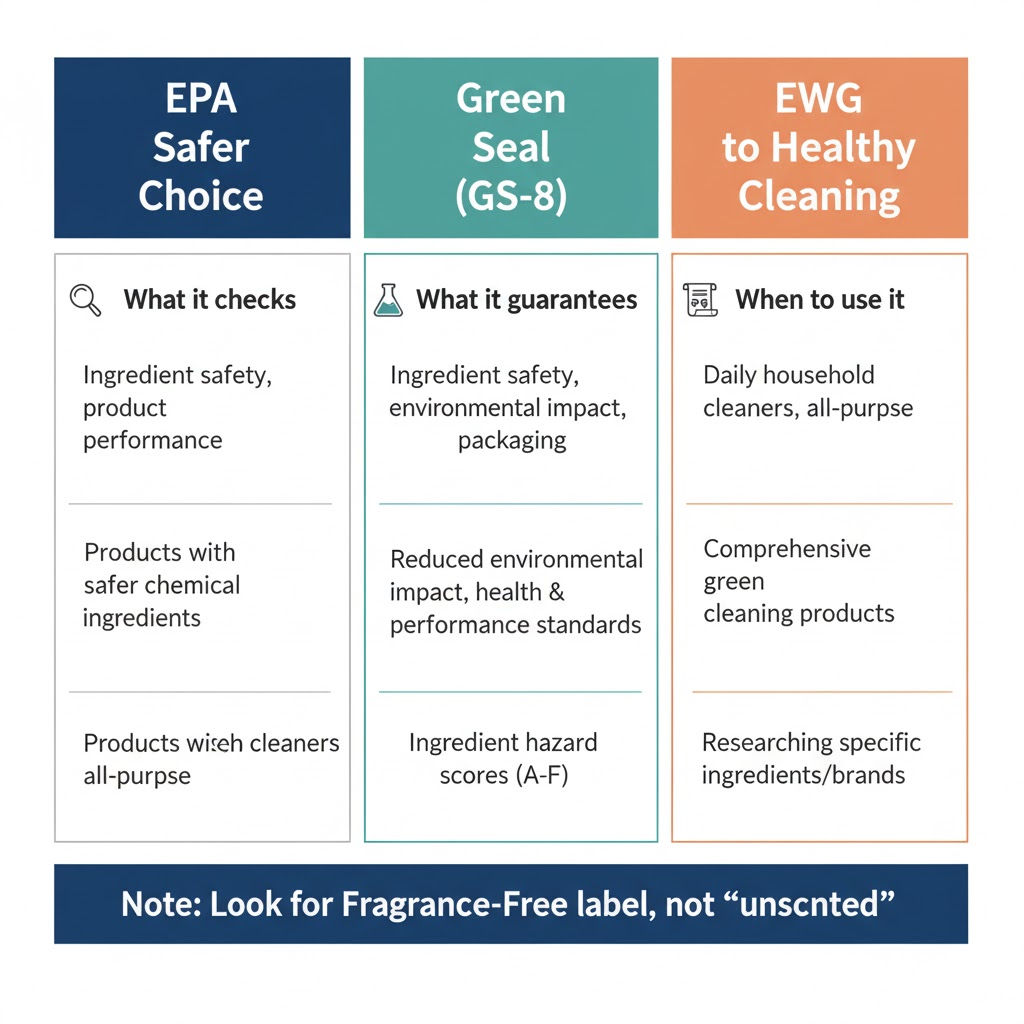
2.1 Safer Choice label—what it guarantees (and what it doesn’t)
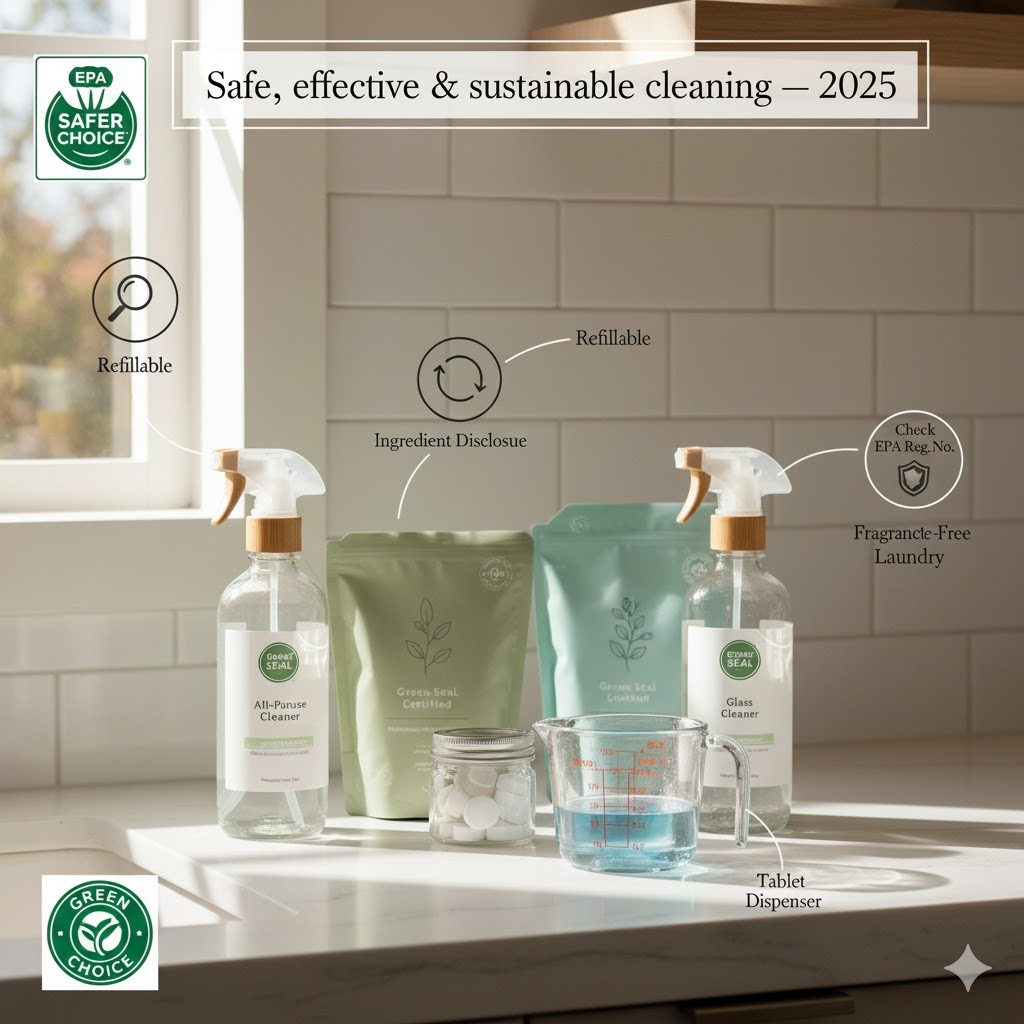
EPA Safer Choice reviews every ingredient (down to dyes and preservatives) against strict human and environmental health criteria and requires products to perform. Some products also carry a Fragrance-Free variant of the label, and a “certified for outdoor use” badge for direct-release uses. It’s a strong signal for home use—but it’s not a disinfectant approval (that’s a different EPA program).
2.2 Green Seal certification basics (GS-8 and related standards)
Green Seal certifies household cleaners under GS-8 (all-purpose, glass, bathroom, carpet, and enzymatic options), with complementary standards for degreasers and specialty products. Criteria cover performance, low-VOC limits, ingredient hazards, and increasingly PFAS-free expectations.
2.3 Using EWG’s Guide to Healthy Cleaning wisely
EWG’s Guide can help you spot concerning ingredients and compare products quickly. Treat EWG ratings as one input—they’re not a government standard and may weigh hazards differently than EPA or Green Seal. Cross-check with Safer Choice or Green Seal for a balanced view.
2.4 Fragrance-free criteria & labels for sensitive homes
If you’re sensitive to scent, look for “Fragrance-Free” (no fragrance chemicals added), not “unscented” (may include masking fragrances). Safer Choice Fragrance-Free and asthma & allergy friendly® certifications help households with asthma and allergies minimize triggers.
Mini table: certifications at a glance
- EPA Safer Choice — Ingredient-by-ingredient screen + performance; optional Fragrance-Free notation; not a disinfectant approval.
- Green Seal GS-8 — Performance + human/environmental criteria; VOC limits; household cleaner scope.
- asthma & allergy friendly® — Tests products for asthma/allergy considerations (useful for fragrance-sensitive homes).
How it works (60-second label check)
- Look for Safer Choice or Green Seal.
- Prefer Fragrance-Free if sensitive.
- Match product to task (all-purpose vs. bathroom vs. glass).
- If you need disinfection, find the EPA Reg. No. and check the relevant EPA list below.
3. Ingredients to avoid (and safer alternatives) in household cleaners
Chlorine bleach & ammonia vs. safer options (HOCl, hydrogen peroxide, alcohol)
Bleach and ammonia are powerful but can irritate eyes and lungs and form hazardous gases if mixed with acids or each other. When disinfection is needed, safer activities include hydrogen peroxide, alcohols, or hypochlorous acid (HOCl) in EPA-registered products—effective with fewer respiratory concerns when used as directed.
Quats, synthetic musks & undisclosed fragrance—why they’re flagged
Some quaternary ammonium compounds (quats) are associated with work-related asthma and respiratory irritation; minimizing routine quat exposure can reduce risks. Fragrance mixtures (including some synthetic musks) can be persistent and irritating, especially without full disclosure. Seek fragrance-free or fully disclosed fragrance systems.
PFAS (“forever chemicals”)—current restrictions & compliance trends (2025)
States are rapidly restricting PFAS in consumer goods. Minnesota’s Amara’s Law began prohibitions on products with intentionally added PFAS (including cleaning products) starting January 1, 2025; additional categories phase in through 2032. Washington’s Safer Products for Washington program is also targeting PFAS across product categories, including cleaning products. Expect more “no intentionally added PFAS” claims and third-party verification in 2025.
4. Disinfecting vs. cleaning: when you actually need a disinfectant (and when you don’t)
Routine messes usually need cleaning (removing soils and many germs). Use disinfectants for high-touch surfaces during illness, after handling raw meat, or when a vulnerable person is present. Always follow label contact times. CDC and EPA both emphasize targeted, label-directed use rather than everyday blanket disinfection.
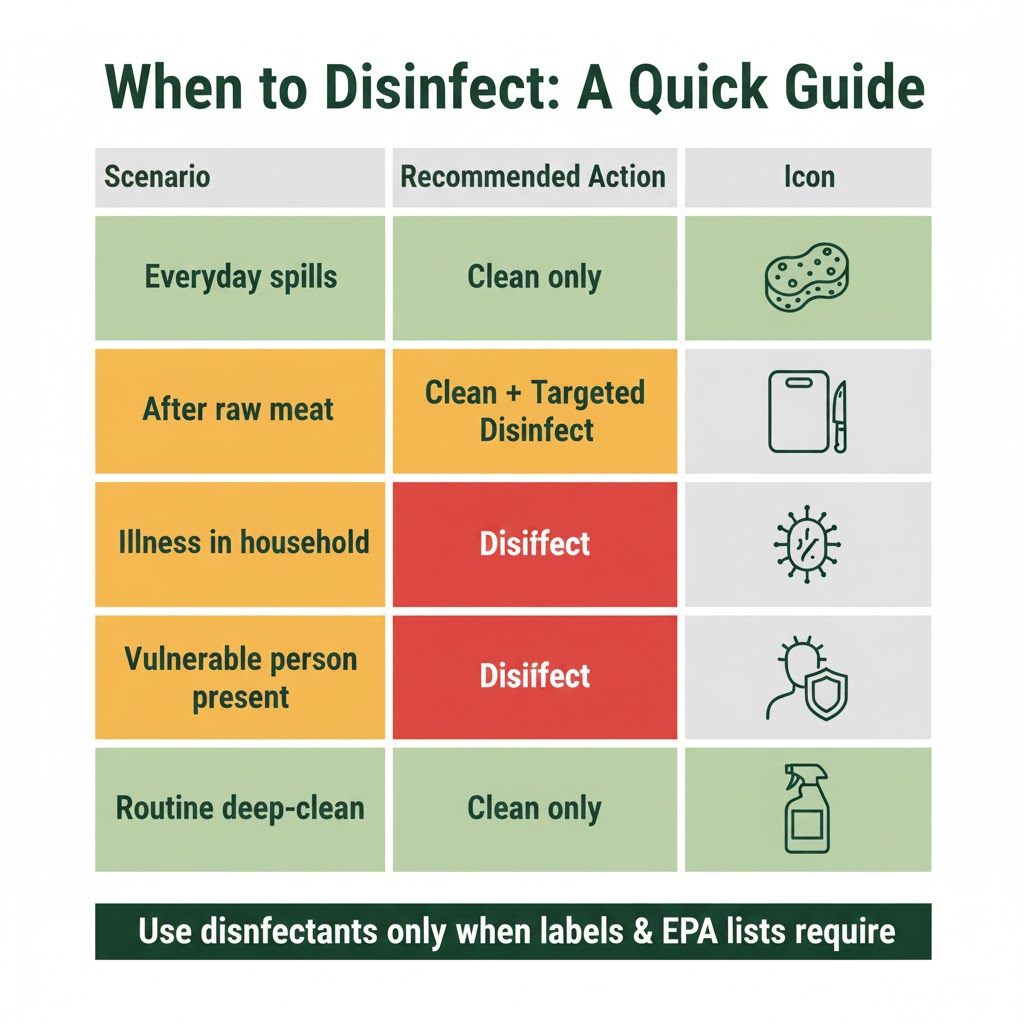
4.1 EPA-registered disinfectants & List resources to check efficacy
To confirm a product’s pathogen claims, use EPA’s List N (COVID-19), List K (C. difficile spores), and List Q (emerging viral pathogens); search by EPA Registration Number on the label.
4.2 Hypochlorous acid (HOCl): what it is and where it fits in a non-toxic routine
HOCl is a disinfectant active that mirrors a compound our immune cells produce. EPA registers many HOCl products; it’s a safer-profile active when used per label. It’s best for targeted disinfection (e.g., high-touch points), not for everyday all-purpose cleaning. Store per label, protect from heat/light, and never mix with other chemistries.
5. Formats & packaging that cut waste (without sacrificing performance)
Concentrates, refill tablets & powders vs. ready-to-use sprays
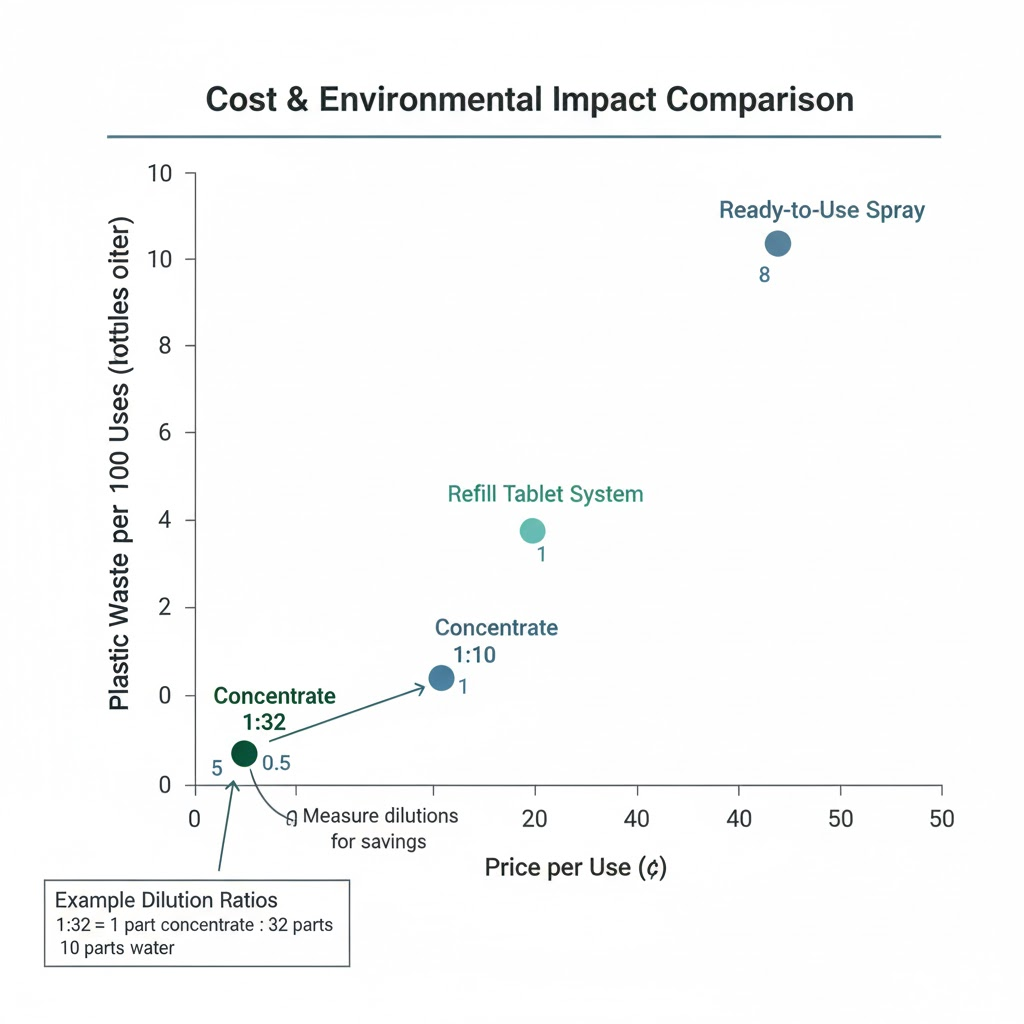
Concentrates and dissolvable tablets/powders slash plastic and freight impacts and often cost less per use—without compromising cleaning when properly diluted.
Refillable systems, plastic-reduced packaging & biodegradability claims
Refillable bottles and bulk formats trim waste. Be cautious with “biodegradable/compostable” claims—FTC’s Green Guides say they must be qualified with disposal conditions and timeframes; look for standards like ASTM D6400/D6868 and municipal compost acceptance.
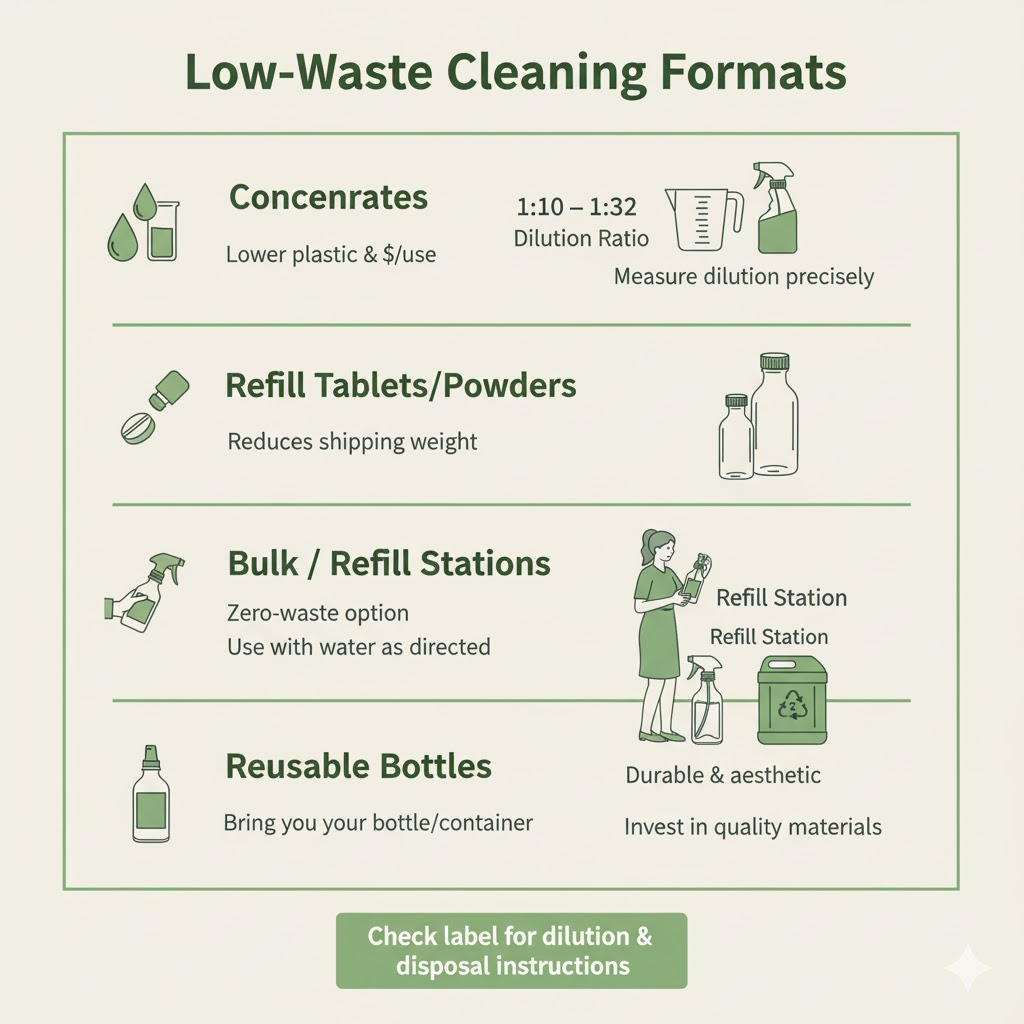
Quick table: lower-waste formats
- Concentrate (e.g., 1:10–1:32) → fewer bottles, lower price-per-use; measure precisely.
- Refill tablets/powders → tiny packaging; add water at home; ensure label-compatible bottles.
- Bulk/refill stations → bring your own bottle; check local recycling guidance.
6. Best non-toxic cleaning products by task (2025)
(Choose products with Safer Choice/Green Seal where possible; prefer fragrance-free if you’re sensitive.)
All-purpose & multi-surface
Look for pH-neutral formulas with Safer Choice-listed surfactants; avoid unnecessary disinfectant activities for daily wipe-downs.
Kitchen degreasers & stovetops
Citrus- or alcohol-based solvents and enzyme boosters tackle oils without heavy butyl ethers; verify low-VOC claims via Green Seal or Safer Choice listings.
Bathroom: soap scum, limescale & grout
Acidic cleaners (citric/lactic) break down mineral buildup; for stubborn limescale, use certified specialty products rather than harsh acids.
Glass & mirrors (streak-free)
Alcohol-based glass cleaners (or a small amount of isopropyl alcohol in water) reduce streaking; choose fragrance-free to minimize VOCs.
Troubleshooting: Streaks? You may be using too much product—spray less and use a clean microfiber.
Floors (sealed wood, tile, laminate)
Use pH-neutral cleaners; for wood, avoid high water or ammonia/bleach. Steam can sanitize sealed floors without chemicals (check manufacturer guidance).
Stainless steel & specialty surfaces
Mild surfactants plus a tiny oil fraction or alcohol help with fingerprints; confirm label compatibility to avoid residue or corrosion.
Toilet bowl cleaners
Opt for citric acid or hydrogen-peroxide-based formulas; reserve chlorine bleach for special disinfection needs with ventilation.
Laundry detergents & boosters (enzyme-based, dye/fragrance-free)
Enzymatic, fragrance-free detergents clean effectively at lower temps; for households using greywater, avoid boron and high-sodium formulas.
Dishwashing (hand soap & automatic pods)
Look for low-fragrance, Safer Choice-certified formulas; avoid quats in routine dish soaps.
7. Top non-toxic cleaning brands & marketplaces (2025 overview)
(Quick-glance strengths—verify current certifications on each brand’s site or EPA/Green Seal finders.)
- Branch Basics — simple concentrate system with refillables; strong for whole-home routines.
- Blueland — refill tablets and reusable bottles to cut plastic.
- Puracy — plant-based, fragrance-free options; baby- and pet-conscious lines.
- ECOS — decades-old, family-owned brand with accessible pricing and greener facilities.
- ATTITUDE — broad range; many products EWG Verified; Canadian-made.
- Dirty Labs — enzyme-forward detergents with minimal packaging.
- Common Good — refill stations and glass bottles for low-waste basics.
- Grove Collaborative — marketplace with refillable house brands and curated third-party options.
- Thrive Market (private-label & curated picks) — membership marketplace for better-ingredient essentials.
- Package Free Shop — low-waste tools and simple-ingredient cleaners for a minimalist kit.
8. DIY non-toxic cleaning: core pantry ingredients & simple mixes
(Spot-clean first; label your bottles; never mix acids with bleach or with peroxide.)
Baking soda
A gentle abrasive/deodorizer for sinks, tubs, and ovens.
Washing soda
Stronger alkali for greasy pans or laundry stripping; avoid aluminum.
Distilled white vinegar (what it can—and can’t—do)
Great for mineral deposits, soap scum, and deodorizing—but not an EPA-registered disinfectant. Don’t use stone or mix with bleach.
Castile soap
Versatile surfactant base for hand soap and light surface cleaning; rinse well to avoid film.
Lemon juice & citric acid
Effective descalers and polishers; spot-test surfaces.
Cornstarch (polish & glass)
Old-school trick for streak-free glass and metal polish pastes.
Optional: essential oils—benefits & cautions for sensitive users
Use very sparingly for scent; many oils can irritate lungs or pets—fragrance-free is the safer default for sensitive homes.
DIY troubleshooting: Film after cleaning? Too much castile soap—wipe with clean water. Vinegar smell lingering? Improve ventilation and use a rinse pass; avoid vinegar anywhere near stone surfaces.
9. Fragrance-free & low-VOC cleaning for asthma- and allergy-friendly homes
How to spot true fragrance-free labels (not just “unscented”)
Prefer “Fragrance-Free” with credible labels (e.g., Safer Choice Fragrance-Free), or asthma & allergy friendly® where available.
Ventilation, storage & usage tips to minimize irritants
Open windows/exhaust fans when cleaning, dilute concentrates precisely, cap bottles tightly, and store away from heat. Reducing VOCs helps indoor air quality, especially for kids and people with asthma.
10. Building a minimalist non-toxic cleaning kit (5 items that cover the whole home)
- All-purpose concentrate + labeled spray bottles
- Bathroom/mineral remover (citric or lactic acid)
- Streak-free glass cleaner (alcohol-based or DIY with a little isopropyl)
- Laundry detergent (enzyme-based, fragrance-free)
- Targeted disinfectant (EPA-registered hydrogen-peroxide, alcohol, or HOCl) for when it’s truly needed.
11. Cost & performance: dilution ratios, price-per-ounce & where to buy smart
Compare price-per-use by noting concentrate ratios (e.g., 1:10 vs. 1:32).
Use EPA’s Safer Choice Product Finder and Green Seal’s directories to filter by product type, then compare unit costs at local stores and marketplaces.
12. Sustainability & disposal
Greywater- & septic-safe considerations
If you reuse laundry water outdoors, choose biocompatible detergents: low sodium, no boron/borax, and no chlorine bleach. Septic and greywater systems benefit from low-salt, low-additive products.
Refill stations, bulk buys & recycling cues
Refill when possible; buy concentrates or tablets to reduce plastic; follow local guidance for recycling sprayers and rigid bottles. The Green Guides caution against vague “recyclable” claims—look for clear instructions and accepted streams.
13. Greenwashing red flags & how to shop smarter (claims to question, labels to trust)
Be skeptical of: unqualified “eco-friendly/natural/biodegradable”, made-up seals, and claims that spotlight one green attribute while ignoring bigger issues. Prefer verifiable labels (Safer Choice, Green Seal, asthma & allergy friendly®), full ingredient lists, and performance data.
14. Room-by-room non-toxic checklists
Kitchen
All-purpose cleaner for counters, fragrance-free dish soap, mineral remover for kettles, spot disinfect only after raw meat prep (EPA List N).
Bathroom
Acidic cleaner for limescale/soap scum, baking soda paste for grout, targeted disinfectant for high-touch zones when needed.
Laundry room
Enzymatic detergent; oxygen bleach (percarbonate) as booster; avoid fabric softeners with quats if you’re minimizing respiratory irritants.
Nursery & kid zones
Stick to fragrance-free, low-VOC basics; disinfect toys only when ill and with EPA-registered products, rinsing if the label requires.
Pet areas
Fragrance-free cleaners; avoid essential oils around sensitive pets; disinfect food bowls only with pet-safe, properly rinsed products.
Frequent Ask Questions

James Parker
James Parker is an environmental expert, writer, and the founder of Envirose.com. Over the years, he has dedicated his work to studying sustainable practices, renewable energy solutions, and eco-conscious lifestyles. Through Envirose, he aims to inspire individuals to make small yet powerful changes in their daily lives that can collectively create a positive impact on the planet. When he’s not writing or researching, you’ll often find him outdoors, exploring nature and finding new ways to live in harmony with it.