Non toxic dryer sheets: the complete guide (safer brands, DIY & alternatives)
Written by Admin | June 22, 2025
Introduction
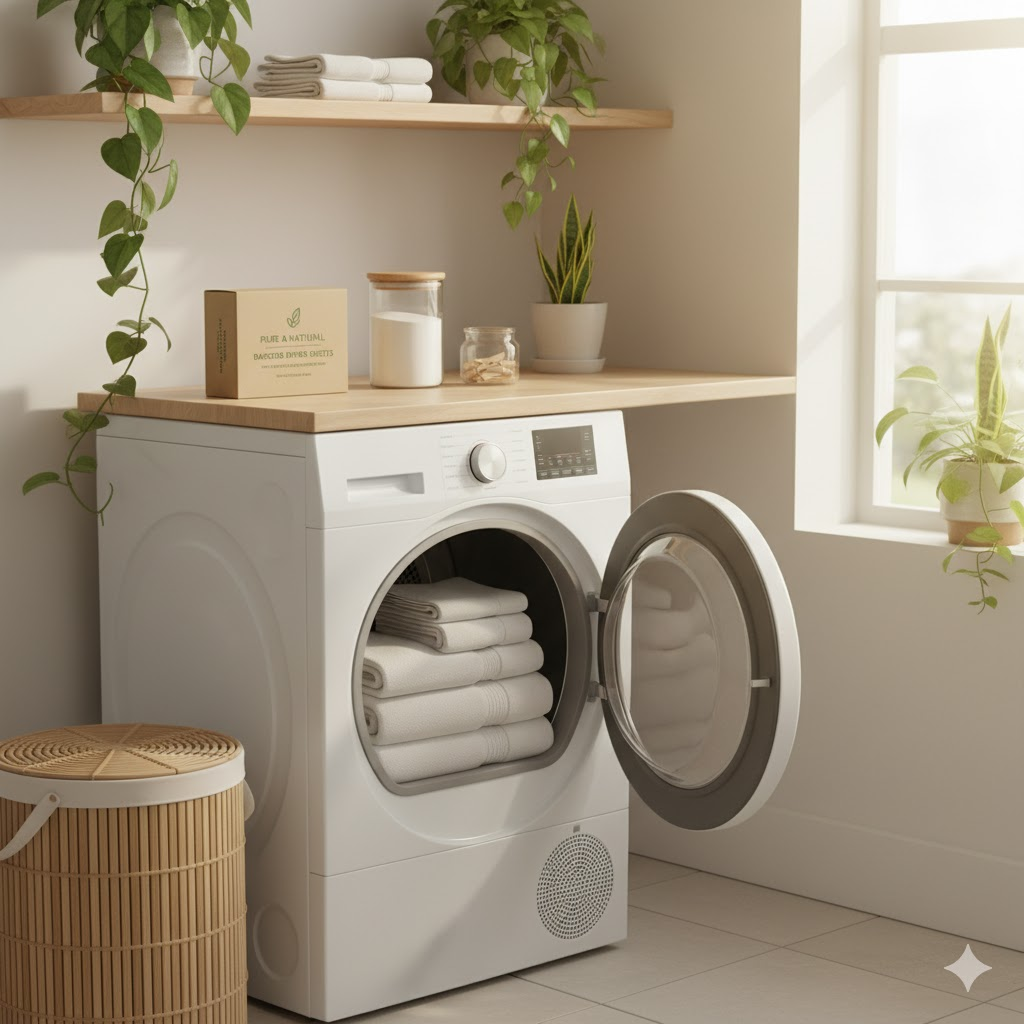
Static, scents, and skin sensitivities don’t have to be part of laundry day. This guide rounds up the safest non-toxic dryer sheet options for 2025, a fast DIY that actually works, and simple alternatives that keep towels fluffy—without the headaches.
What dryer sheets do and how they work
Dryers build static because tumbling fabrics rub together and swap electrons. Dryer sheets temper that static and “soften” feel by depositing a very thin layer of positively charged surfactants on fiber surfaces; the coated fibers slide more easily and hold less charge, so clothes cling less and feel smoother. In most conventional sheets those surfactants are quaternary ammonium compounds (“quats”). The coating transfers from a thin non-woven sheet (often polyester or paper) as heat and friction do their thing.
Key terms (added for clarity):
Quats (quaternary ammonium compounds): common antistatic/softening agents that coat fibers to reduce static.
VOCs: volatile organic compounds that can be released when fragranced laundry products are heated/vented.
USDA Certified Biobased: label showing the % of renewable (plant-based) content in a product, verified by the USDA BioPreferred® Program.
Compostable (municipal): designed to break down in industrial/municipal facilities—not backyard piles.
The problem with conventional dryer sheets
Common chemicals to avoid (fragrance blends, quats, dyes, preservatives)
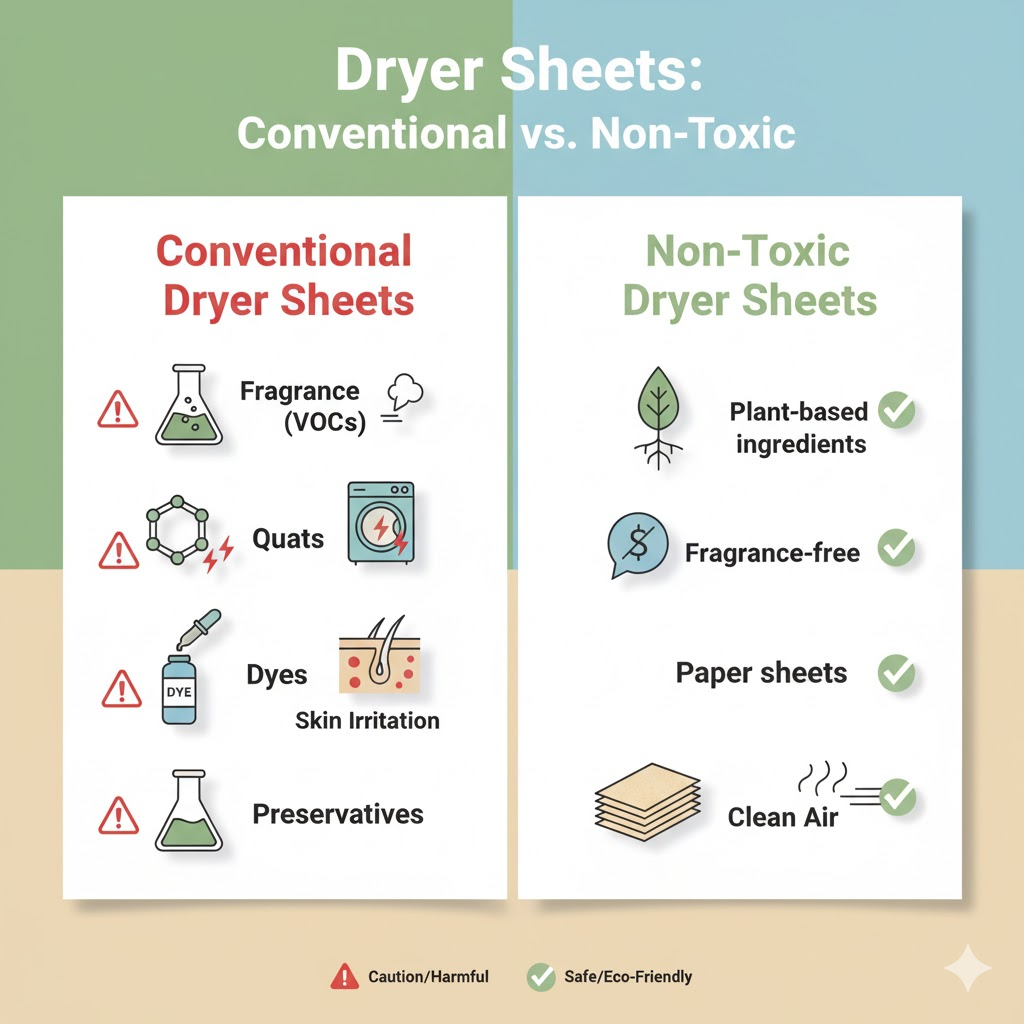
If you’re minimizing exposures, the main red flags are: generic “fragrance” mixes (which can hide many aroma chemicals and allergens), quats used as softeners/antistats, plus colorants and certain preservatives. Look for full ingredient disclosure and skip vague “parfum/fragrance” when sensitivity is an issue; choose fragrance-free or clearly labeled essential-oil scents instead.
Health & indoor air considerations
Independent testing has found more than two dozen volatile organic compounds (VOCs) venting from dryers when fragranced laundry products (detergent and/or dryer sheets) are used—most notably acetaldehyde and others—though levels depend on product and use. Researchers at the University of Washington highlighted that fragranced laundry products can be a non-trivial local VOC source. If anyone in your home is scent-sensitive or asthmatic, unscented products (or no sheet at all) are simplest.
Fabric and pet safety caveats
Softener residues can reduce the absorbency of towels and microfiber and can interfere with performance finishes; many pros advise skipping sheets for those loads. For a static fix on towels, use dryer balls and dial back heat instead of softeners. Also keep all sheets—new or used—away from pets; ingestion can be dangerous due to cationic surfactants.
How to choose non toxic dryer sheets
Ingredient checklist
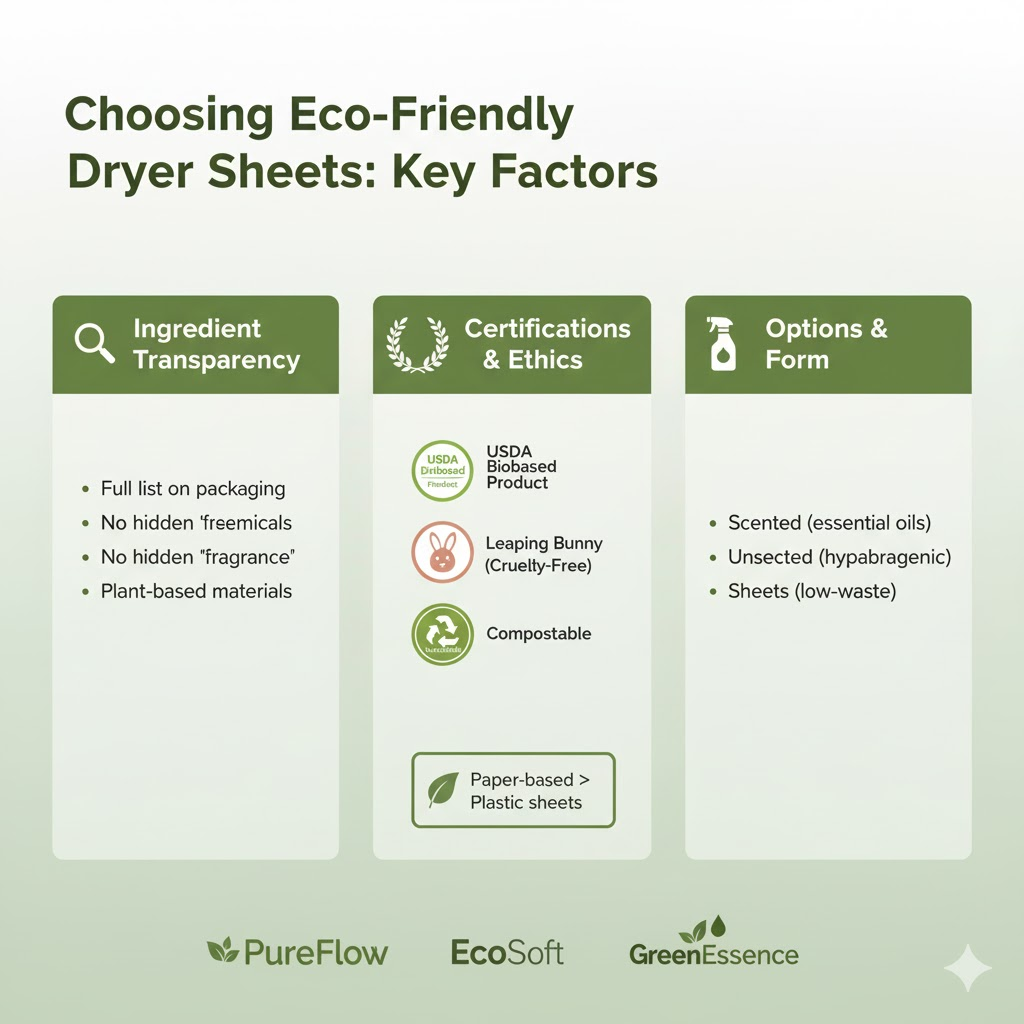
Favor paper-based or plant-based formulas with clear labeling; pick fragrance-free when sensitivities exist or essential-oil scented if you want aroma but not synthetics. Seventh Generation’s Free & Clear sheet, for example, is a USDA 97% biobased paper sheet with plant-based ingredients; Molly’s Suds lists 97% plant-based ingredients and offers unscented and essential-oil options. Seek simple formulas and full disclosure.
Certifications & labels to look for
Useful signals include USDA Certified Biobased (percentage of renewable content), Leaping Bunny/Vegan (no animal testing/ingredients), and compostable paper claims (often “municipal/industrial composting only”). Method’s paper sheets are labeled compostable in municipal facilities and come in a fully recyclable box made from 100% recycled paperboard. Always check local compost rules—“compostable” may not mean backyard-safe.
Scented vs. unscented: what to know
Scent is personal; it’s also the biggest trigger for headaches or skin irritation. If anyone in the household is sensitive, choose unscented (“free & clear”) or rely on alternative static control and skip added fragrance entirely.
Best non toxic dryer sheet options (2025)
How we evaluate products
Shortlist criteria: clear ingredients; low-irritant fragrance strategy (or none); credible certifications (biobased, cruelty-free/vegan, compostable paper where relevant); and real-world performance/static control. We also cross-reference third-party frameworks used by consumer guides for additional context.
Top picks by need (fragrance-free, compostable/plastic-free, budget, baby/sensitive skin, reusable sheets)
Fragrance-free: Seventh Generation Free & Clear Fabric Softener Sheets — paper sheet, 97% biobased; straightforward, low-scent pick. Best for fragrance-sensitive homes and simple ingredient lists.
Compostable paper sheet: method (Beach Sage) — paper dryer sheets with plant-based static control, compostable under municipal conditions, and a 100% recycled paperboard box. Best for those cutting plastic and seeking an approachable scent line (or use on non-baby loads if you prefer unscented for infants).
Plant-based with essential oils: Molly’s Suds Plant-Based Fabric Softener Dryer Sheets — 97% plant-based, essential-oil scented or unscented; recyclable packaging; Leaping Bunny/Vegan. Best for users who want a light, naturally scented option.
Reusable, no chemicals: ATTITUDE Static Eliminator & Softener (reusable dryer cloths) — 2 cloths, fragrance-free; marketed for ~300 loads. Best for zero-waste households and scent-avoidant users.
Reusable, long-life: PurEcosheet Reusable Dryer Sheets — two unscented sheets advertised for 500+ loads. Best for cutting single-use waste and ongoing costs.
DIY non toxic dryer sheets
Ingredients & tools
A simple, reusable approach uses clean cotton squares (old T-shirts or quilting cotton), distilled white vinegar + water as the softening base, and optional vegetable glycerin for extra softness. A few drops of essential oil can add light scent (optional). This mirrors DIY methods you’ve seen, but we’ll keep the formula gentle and reusable. (Occasional vinegar use is fine, but appliance experts warn that frequent vinegar in machines can degrade rubber seals—use sparingly.)
Step-by-step instructions
Mix 1 cup distilled water + 1 cup white vinegar in a wide-mouth glass jar (~24–32 oz).
Optional: stir in 1–2 Tbsp vegetable glycerin for extra softness.
Add 10–15 cotton squares, press to saturate, then wring until damp, not dripping.
To use: toss one damp square into the dryer with a load.
After drying, return the square to the jar; top up liquid as needed.
Usage, storage & shelf life
Keep the jar sealed between uses and refresh the liquid monthly. If you prefer zero scent, skip oils entirely; for the lightest touch, scent the jar liquid, not the squares directly, so fragrance stays subtle.
Natural scent options (and safety)
Try 2–6 drops of lavender, lemon, or sweet orange in the jar—avoid heavy dosing, which can linger or irritate. Skip strong oils for infant items and anyone with fragrance sensitivity; unscented is safest.
Alternatives to dryer sheets (static-free without the sheet)
Wool dryer balls (pros, cons, how to use)
Wool balls work by improving airflow and tumbling action, which shortens dry time and reduces static—no coatings required. They’re quiet, reusable, and typically last around 1,000 loads; refresh by washing warm and re-drying or briefly boiling to re-felt the fibers. Use 3–6 balls per load.
Vinegar rinse as a fabric softener alternative
A ¼–½ cup of white vinegar in the rinse (not the wash) can help dissolve detergent buildup and leave fabrics softer. Use occasionally, not every load—appliance makers and testers warn that routine vinegar exposure can be hard on rubber seals and hoses. Never mix vinegar with bleach.
Dryer settings & laundry habits to reduce static (load size, heat, humidity, fabrics)
Static thrives in over-drying and low humidity. Dry in smaller, like-for-like loads, reduce heat for synthetics, and stop cycles when just dry. Dryer “low heat” or “air fluff” helps for cling-prone fabrics.
Reusable anti-static cloths
If you like the simplicity of a “sheet” without single-use waste, go with ATTITUDE (reusable, fragrance-free, ~300 loads) or PurEcosheet (unscented, 500+ loads). They control static mechanically rather than by coating fibers.
Aluminum foil ball (when to use & cautions)
A crumpled foil ball can cut static on synthetics in a pinch, but it’s not truly “non-toxic” in the sense of natural materials, and edges can snag delicate items—use with care and avoid for baby clothes and silks.
Wool dryer balls vs. non toxic dryer sheets: which is better?
Mini comparison (added, including liquids):
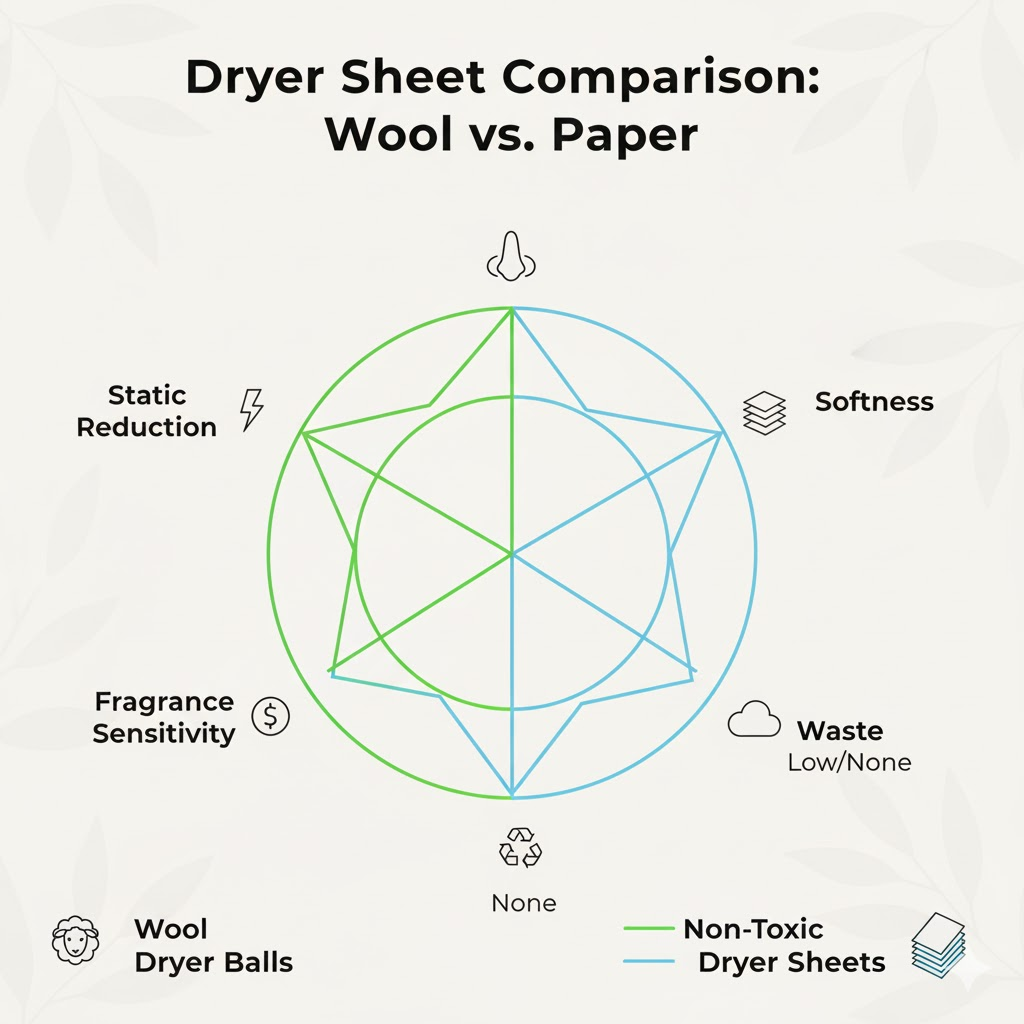
Wool balls: reusable, no coating; may need heat/over-drying tweaks.
Non-toxic paper sheets: familiar format; single-use; choose unscented for babies/sensitive skin.
Reusable dryer cloths: sheet-like convenience, 300–500+ loads.
Liquid softeners: effective soft feel but can reduce absorbency and add residues; avoid on towels/microfiber/performance wear.
Environmental impact & sustainability
Compostability and plastic content
Conventional sheets are typically a non-woven polyester substrate—i.e., plastic—coated with softeners; that substrate isn’t backyard-compostable. Some brands switch to paper sheets labeled compostable in municipal facilities (not backyard).
Waste & packaging considerations
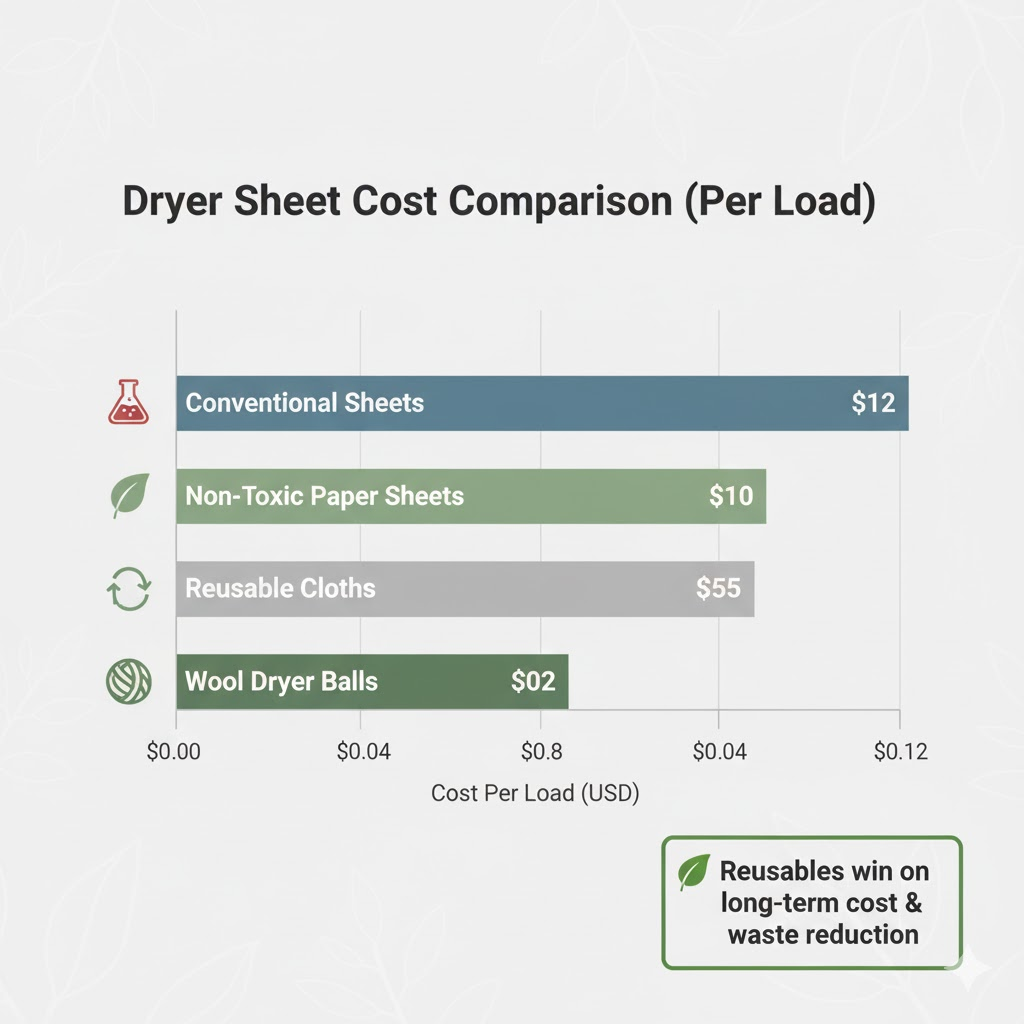
Prefer reusable options (wool balls, reusable cloths) or paper sheets in recyclable boxes. Method’s dryer-sheet line, for instance, uses a 100% recycled paperboard box.
Effects on absorbency and microfiber performance
Because softeners deposit hydrophobic compounds, they can hurt towel and microfiber absorbency; reserve sheets for clothes/linens where softness matters, not performance textiles.
Cost comparison: disposable sheets vs. reusables over time
What to do with remaining conventional dryer sheets
Safe disposal
Don’t compost typical polyester sheets; toss them in household trash unless your brand clearly states paper + municipal compostable and your local facility accepts them.
Non-laundry reuse ideas
Use leftover sheets (preferably unscented) for dusting baseboards/blinds, wiping pet hair off upholstery, or freshening trash cans—then discard.
Special cases & fabrics to avoid softening
Towels and microfiber
Skip all softeners (liquid or sheets) to preserve absorbency; use dryer balls and occasional vinegar rinse to bust residue.
Athletic wear & moisture-wicking fabrics
Softeners can hinder wicking/breathability on performance synthetics; wash cool, skip softeners, and dry on low.
Children’s flame-resistant sleepwear
U.S. regulations require children’s sleepwear to meet flammability standards; avoid softeners on FR-labeled garments because surface coatings can interfere with finishes—always follow the garment care label.
Frequently Asked Questions about Biofuels

James Parker
James Parker is an environmental expert, writer, and the founder of Envirose.com. Over the years, he has dedicated his work to studying sustainable practices, renewable energy solutions, and eco-conscious lifestyles. Through Envirose, he aims to inspire individuals to make small yet powerful changes in their daily lives that can collectively create a positive impact on the planet. When he’s not writing or researching, you’ll often find him outdoors, exploring nature and finding new ways to live in harmony with it.