Prosciutto Bread / Pane con Ciccioli
Written by Admin | June 22, 2025
Introduction
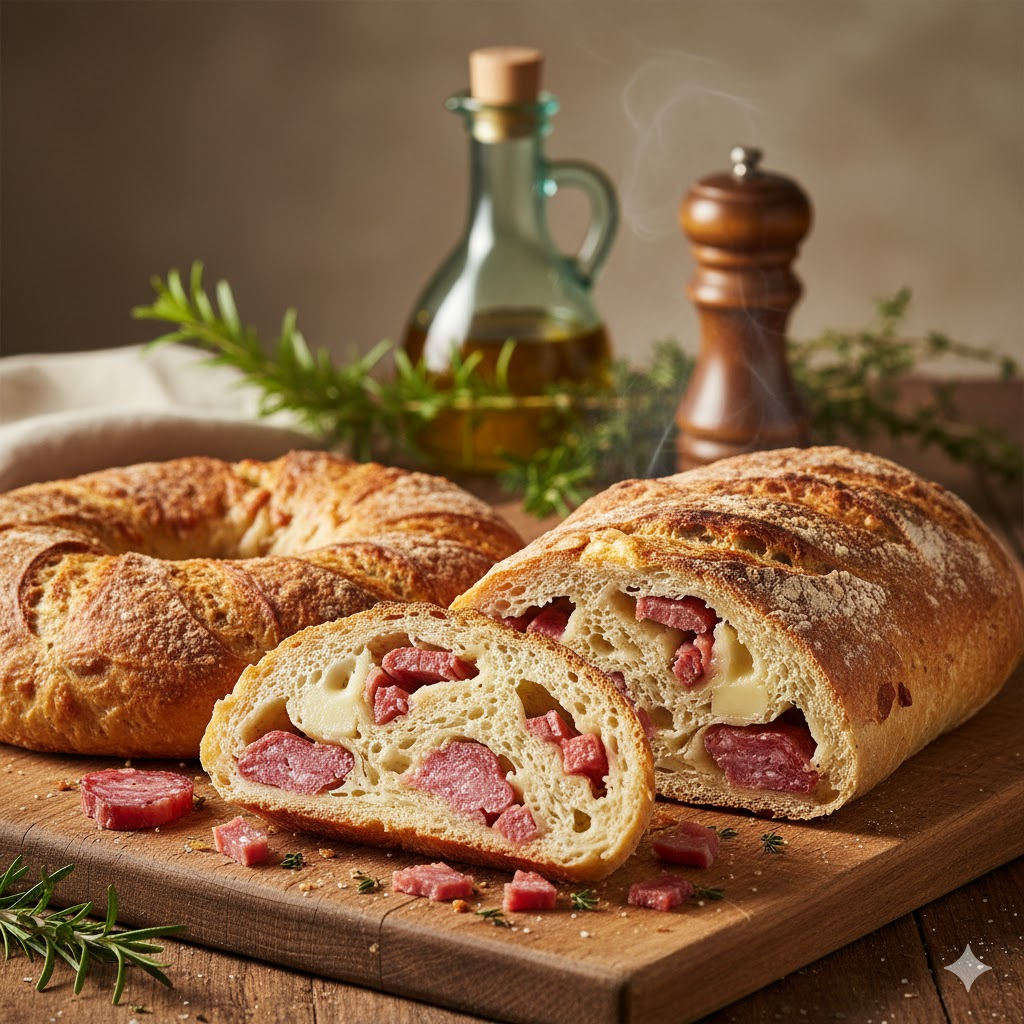
Lard bread—also called prosciutto bread or pane con ciccioli—is a savory Italian/Italian-American loaf enriched with pork fat and speckled with cured meats and cheese. It bakes into a tender, peppery bread that’s often shaped as a ring and served warm at holidays.
Lard bread is a savory, celebration-style loaf built on simple dough and enriched with pork fat, cured meats, cheese, and a good hit of black pepper. In Italy you’ll hear it called pane con ciccioli (bread with pork cracklings), while in Italian-American bakeries it’s often sold as prosciutto bread. The idea is consistent across versions: a tender wheat loaf streaked with rendered fat and studded with meaty bits so aromatic that the paper bag sometimes turns translucent before you get home. In the U.S., the tradition is strongest around New York City and parts of New Jersey and Philadelphia, where Italian-American communities kept it alive and turned it into a holiday staple.
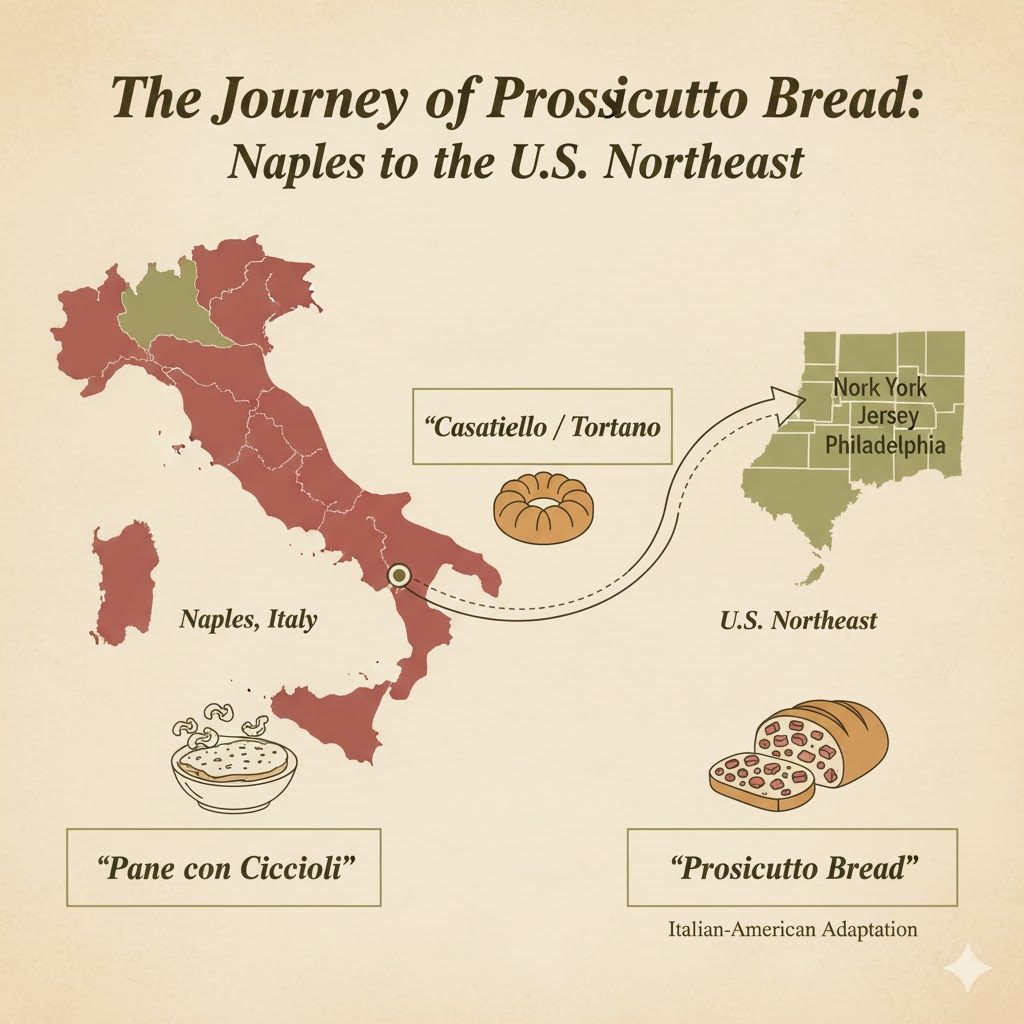
Origins & Regional Variations
Naples Traditions: Casatiello vs. Tortano
In Naples, two ring-shaped festival breads loom large. Casatiello is the Easter showstopper: a rich, lard-enriched dough woven with salumi and cheese and decorated with whole eggs caged on top—symbols tied to the holiday. Tortano is a close cousin shaped as a ring, historically simpler and without the egg “cage” on top (eggs may appear inside in pieces). Modern recipes blur lines, but the defining visual cue remains those shell-on eggs atop casatiello.
Pane con Ciccioli (Cracklings Bread)
Pane con ciccioli bakes pork cracklings—pressed, crispy bits left after rendering lard—right into the crumb. Ciccioli (called cicoli in Naples) are made by slowly rendering pork fat, then pressing and seasoning the solids; they can be soft or shatteringly crisp depending on the style. This farmhouse practice preserved precious scraps and gives the bread its unmistakable porky perfume.
Italian-American Prosciutto Bread
Across the Northeast corridor, immigrants adapted the idea using deli staples like prosciutto, Genoa salami, provolone, and plenty of black pepper. Families and bakeries popularized a flaky, meat-and-cheese-packed ring or batard that shows up at Christmas, Easter, and Sunday antipasto spreads—and yes, the grease-stained bag is part of the romance.
Not the Same as Southern Cracklin’ Cornbread
Southern cracklin’ cornbread is a different tradition: it’s a cornmeal batter (often buttermilk-leavened) baked in cast iron with pork cracklings folded in. Lard bread is a yeasted wheat loaf with cured meats and sometimes cheese. Different grains, different textures, different histories.
Ingredients & Substitutions
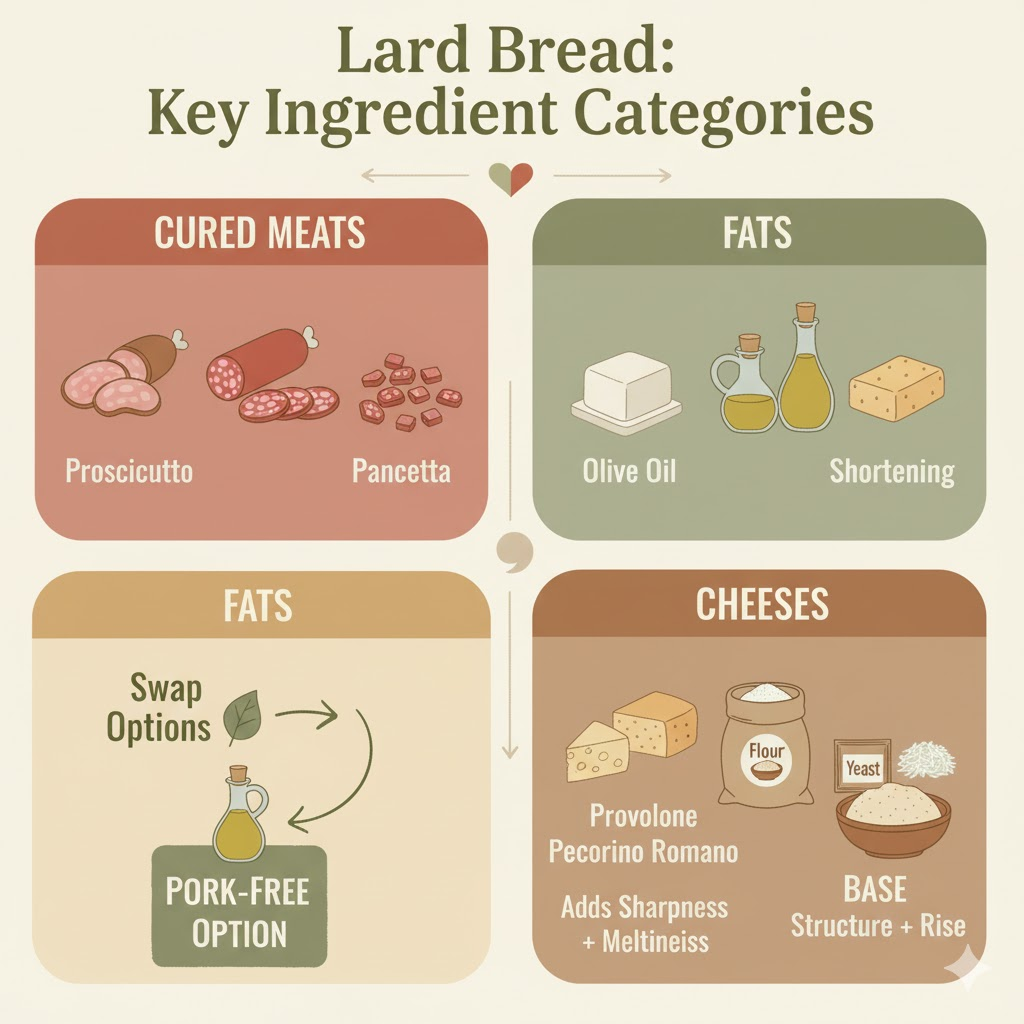
Cured Meats (Prosciutto, Salami, Pancetta, Bacon/Guanciale)
Choose one star or blend a few: prosciutto for silky saltiness, Genoa salami for peppery chew, pancetta for fatty depth, or crisped bacon for smoky notes. Dice inclusions small so they distribute evenly and don’t weigh the dough down. Italian-American versions commonly pair salumi with sharp provolone and black pepper for a bold bite.
Fats (Types of Lard & Acceptable Swaps)
Rendered pork fat brings tenderness and lamination-like flakiness. Leaf lard (from around the kidneys) is prized for its neutral flavor and fine texture; it’s the baker’s top choice. If you can’t source leaf lard, standard rendered lard works; olive oil can stand in for a pork-free version (flavor changes), while vegetable shortening mimics texture but not savor. Sourcing tip: ask local butchers for leaf lard; standard lard is often near baking fats, and you can also render at home from clean pork fat trimmings.
How lard affects dough (plain-English):
Lard lightly coats gluten strands so the crumb bakes up tender and slightly flaky. It also changes handling—dough may feel softer even at moderate hydration.
Cheeses & Aromatics (Provolone, Pecorino, Black Pepper, Herbs)
Sharp aged cheeses—provolone, pecorino, Parmigiano—stand up to salumi. Fresh herbs like rosemary or a touch of garlic can be folded in sparingly. Classic Italian-American loaves lean on black pepper for heat that blooms during baking.
Flour, Leavening & Hydration (Yeast or Sourdough)
Use strong all-purpose or bread flour. Instant yeast makes a straightforward same-day loaf; sourdough introduces tang and a chewier crumb. Aim for moderate hydration (roughly mid-60s% by baker’s math) and adjust for add-ins, which can change how dough feels. Understanding hydration helps you keep the crumb tender instead of greasy-dense. (Hydration = water as a percentage of flour weight.)
Equipment
Mixing bowl, scale (for baker’s percentages), bench scraper, sharp knife or lame, baking sheet or stone, and—if you’re making a ring—a tube, savarin, or parchment-lined sheet to hold the shape. A cast-iron skillet for steam and a wire rack for cooling round out the kit. (A loaf pan contains rendered fat if you prefer a tidier bake.)
Baker’s Math & Make-Ahead Plan
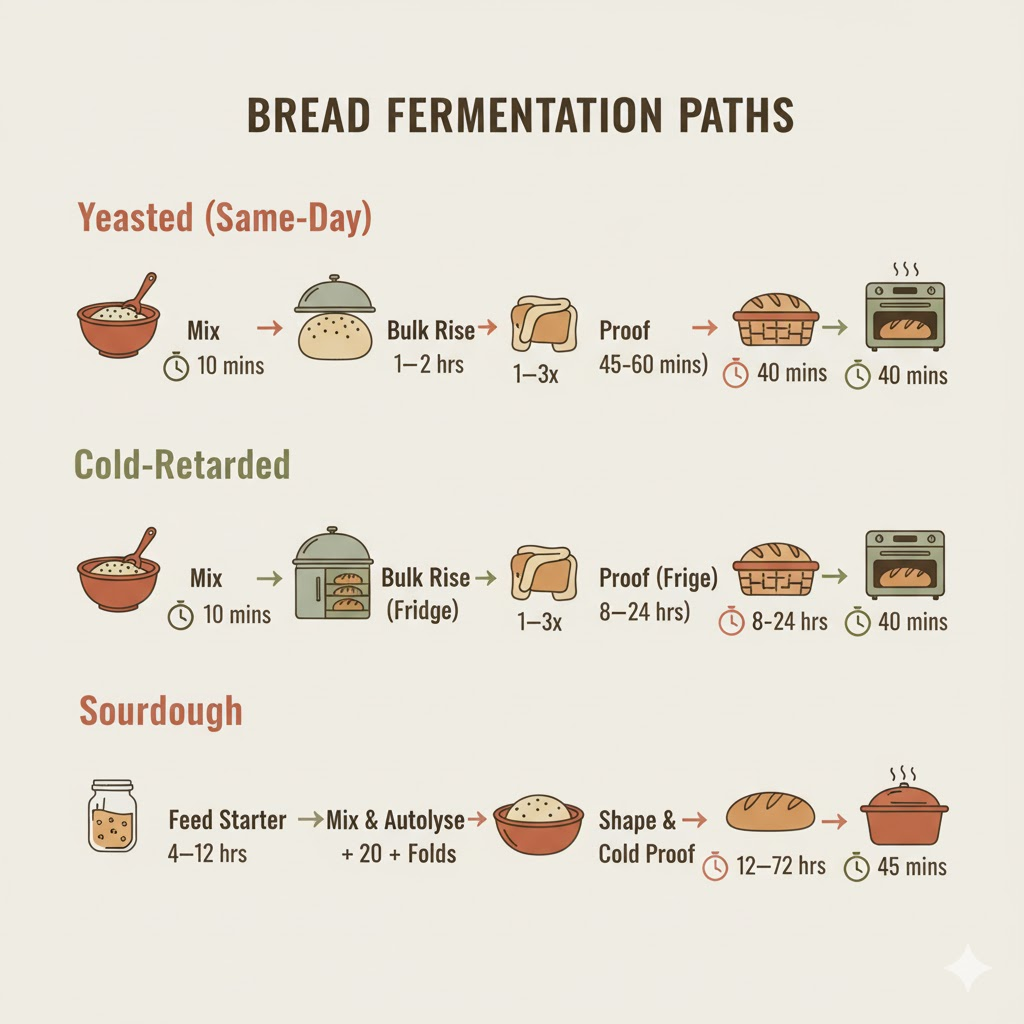
Timeline & Fermentation
Decide on your path before you start:
Same-day yeast: Mix → 1st rise → add-ins → shape → proof → bake.
Cold-retarded yeast: Mix → short bulk → fold in fat/cheese/meats → overnight chill for deeper flavor, then shape and bake.Sourdough: Build levain, bulk with folds, incorporate inclusions late, shape, chill overnight, bake next morning.
Baker’s math (percentages relative to flour) lets you scale these plans precisely and anticipate the dough’s behavior.
Biofuels can significantly reduce carbon dioxide emissions when compared to fossil fuels. The carbon dioxide released during combustion is offset by the carbon absorbed by plants during growth, making them a carbon-neutral energy source.
Hydration & Salt Percentages
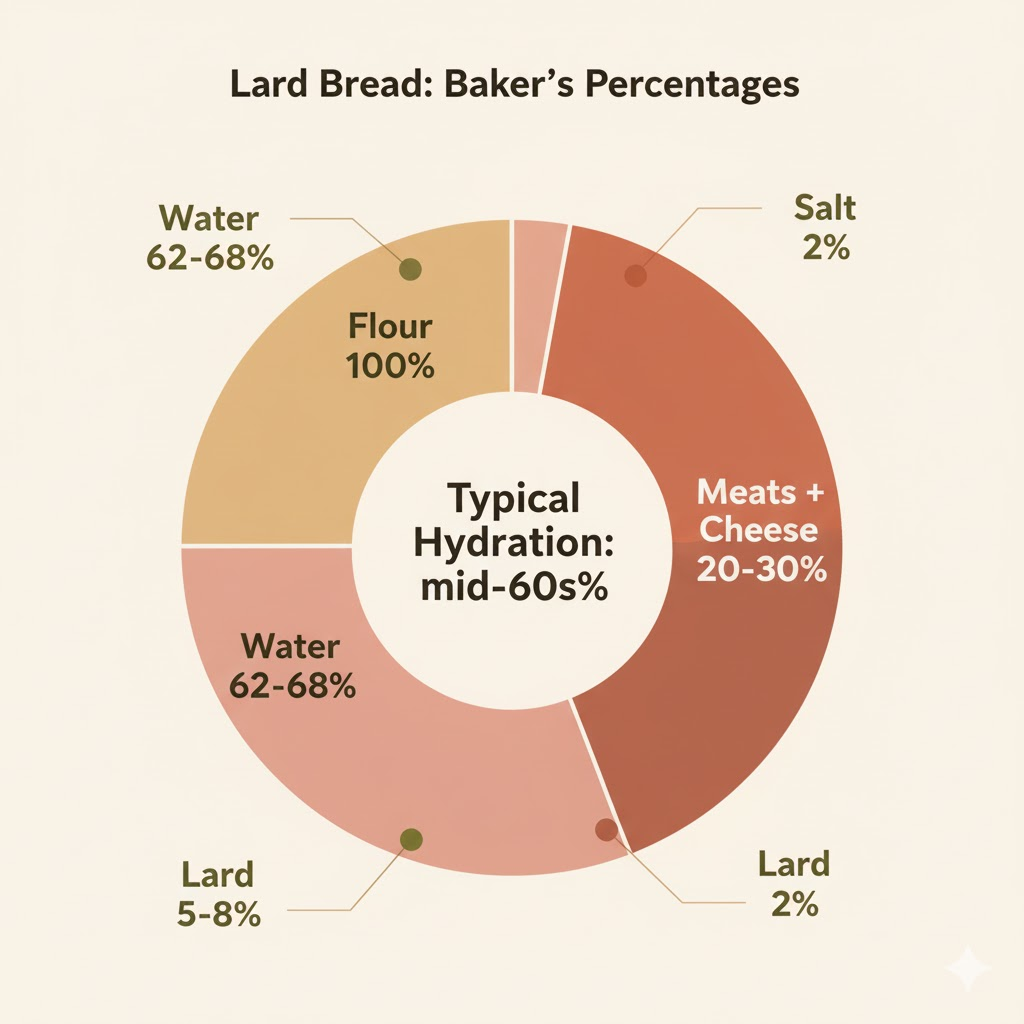
Because meats and cheeses release fat and a little moisture, a mid-60s% hydration is a practical starting point; adjust based on flour strength and handling comfort. Keep salt at ~1.8–2.2% of flour weight—lower if your meats and cheeses are very salty.
Guideline baker’s percentages (example): Flour 100% · Water ~62–68% · Salt 1.8–2.2% · Lard ~5–8% · Inclusions 20–30% (combined meats/cheese by flour weight).
Step-by-Step: Classic Yeasted Lard Bread
Make the Dough
Step 1: Whisk flour and salt. Bloom instant yeast only if the label suggests; otherwise mix it straight in. Add water and melted lard; stir to a soft, slightly tacky dough. Knead until smooth and elastic—you’re aiming for structure that will carry inclusions without tearing. (Consider adding a small photo showing the dough at the “smooth and elastic” stage.)
First Rise
Step 2: Cover and let the dough rise until noticeably puffy. A gentle, warm spot helps; avoid overheating, which softens fat too much and reduces strength.
Fold In Meats & Cheese (or Laminate)
Step 3: Pat dough into a rectangle. Scatter finely diced meats and cheese; add cracked black pepper. Roll up tightly, then perform a few gentle folds to distribute. For extra tenderness, lightly spread a thin film of softened lard over the rectangle before rolling (a shortcut to lamination). (A simple 3-frame visual—spread → roll → seal—makes this step foolproof.)
Shape (Batard or Ring)
Step 4: For a batard, tension-shape into a snug loaf. For a ring, twist the filled log and join the ends. Pinch seams well so rendered fat doesn’t leak.
Proof
Step 5: Let the shaped loaf sit until slightly springy to the touch. Over-proofing can encourage leaks; under-proofing can cause blowouts.
Bake & Cool
Step 6: Bake on a hot stone or sheet at a moderately high temperature with initial steam. Bake until the center of the loaf reaches ~190–205°F (88–96°C) for doneness. Brush lightly with melted lard in the last minutes for sheen. Cool fully on a rack before slicing so the crumb sets and fat redistributes.
Sourdough Version
Formula Adjustments
Swap commercial yeast for a lively starter (for example, ~20% inoculation relative to flour), shorten kneading, and rely on stretch-and-folds. Add inclusions late in bulk so gluten has time to organize before the extra fat arrives.
Timetable
Expect a longer, cooler fermentation: bulk until the dough rises and feels airy, shape, then retard overnight for flavor and easier scoring. Bake straight from cold for best definition.
Filling & Flavor Variations
Prosciutto-Only
A minimalist loaf with diced prosciutto and cracked pepper highlights the dough’s tenderness and the fat’s aroma.
Salami-and-Cheese
Genoa salami plus sharp provolone creates the classic peppery, cheesy profile that many Northeast bakeries popularized.
’Nduja or Calabrian Chili
Work in small ribbons of ’nduja or a pinch of Calabrian chili flakes for gentle heat without overwhelming the crumb.
Rosemary, Fennel & Garlic Options
Finely chopped rosemary or a whisper of fennel seed plays well with pork. Keep garlic restrained so it doesn’t dominate.
Shape Variations
Ring (Tortano/Casatiello-Style)
A twisted ring bakes up flaky and dramatic—great for the center of a feast table and easy to tear into wedges.
Loaf Pan to Contain Rendered Fat
A pan supports weak doughs and corrals fat, giving tidy slices and fewer leaks—helpful when you’re generous with inclusions.
Individual Rolls / Torcetti
Portion the filled dough into small twists for party-friendly snacks with lots of crust.
Frequently Asked Questions about Biofuels

James Parker
James Parker is an environmental expert, writer, and the founder of Envirose.com. Over the years, he has dedicated his work to studying sustainable practices, renewable energy solutions, and eco-conscious lifestyles. Through Envirose, he aims to inspire individuals to make small yet powerful changes in their daily lives that can collectively create a positive impact on the planet. When he’s not writing or researching, you’ll often find him outdoors, exploring nature and finding new ways to live in harmony with it.